AI
Sep 30, 2026
AI
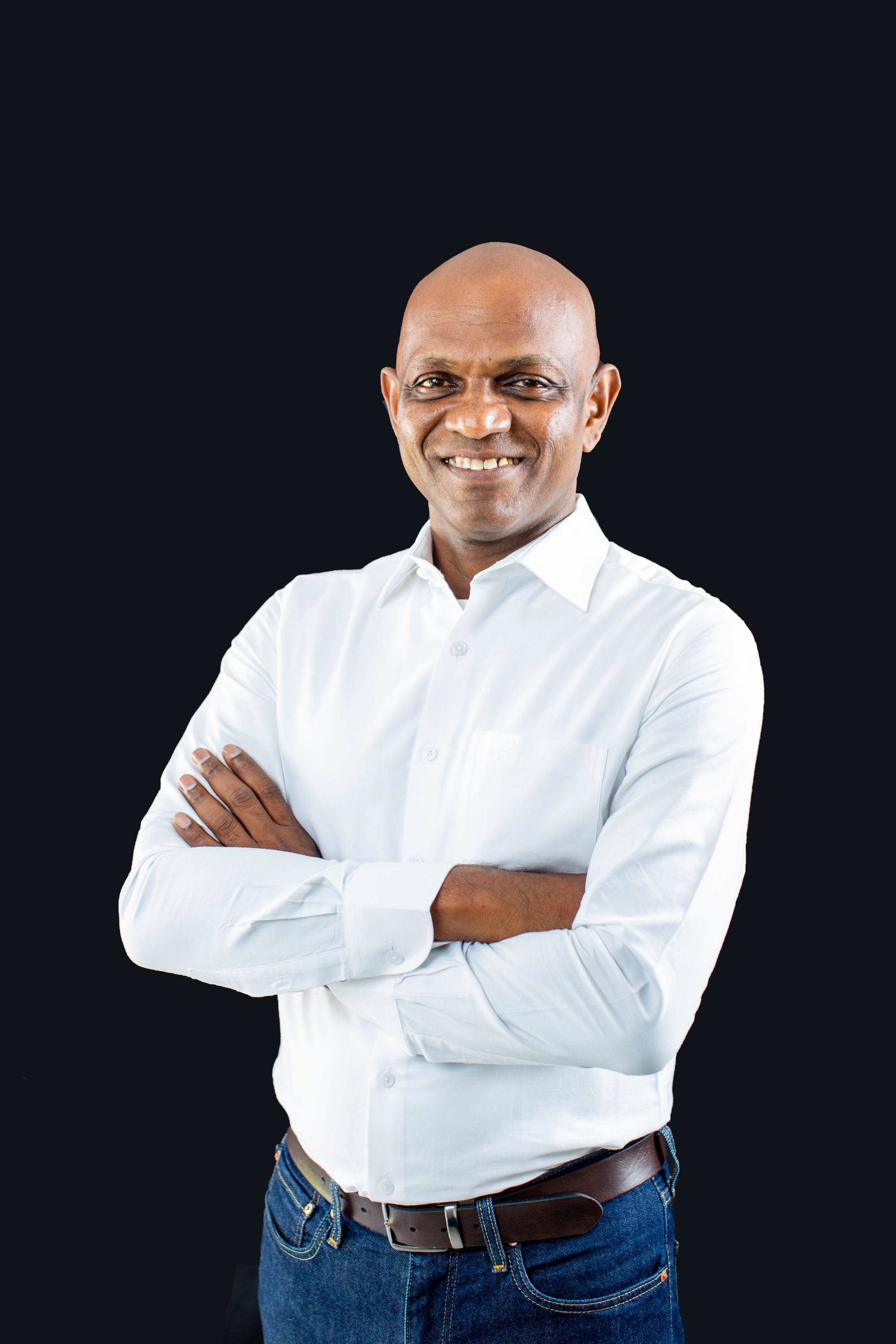
After two decades building one of the world's most quietly influential technology companies, Dr. Sanjiva Weerawarana is handing over the reins at WSO2. What happens next says a lot about where enterprise software is heading.
by Kasun Illankoon, Editor in Chief at Tech Revolt
There is a particular kind of company that quietly powers the digital world without most people ever knowing its name. WSO2 is one of them. Its software sits inside the infrastructure of banks, telecoms, and governments across dozens of countries, managing the invisible plumbing that connects applications, authenticates users, and keeps data flowing securely. And for nearly all of its twenty-year existence, the person steering that work has been its founder, Dr. Sanjiva Weerawarana.
That is about to change.
WSO2 has confirmed that Weerawarana will step down as Chief Executive Officer effective June 2026, ending a founding tenure that began when he launched the company in 2005. The WSO2 Board of Directors has appointed Chief Revenue Officer Devaka Randeniya as Acting CEO while a search for a permanent replacement gets underway.
For a company of WSO2's profile, this is a significant moment. But the framing matters: this does not look like a forced exit or a company in distress. It looks more like a deliberate handoff at precisely the right inflection point, timed to a technology shift that could define the next decade of enterprise software.
To understand why this transition matters, you need to understand what WSO2 actually does and how unusual it is that Weerawarana built it the way he did.
WSO2 makes what the industry calls middleware, the software layer that sits between the applications businesses use every day and the underlying data and services those applications depend on. It handles things like API management, identity and access management, and integration between systems. These are not glamorous product categories, but they are foundational ones. Without them, modern digital services simply do not work.
What made WSO2 distinctive was its commitment to open-source principles at a time when enterprise software companies were largely still selling expensive proprietary licenses. Weerawarana, a computer scientist who spent years at IBM Research and played a significant role in the early development of web services standards, believed that open-source was not just a business model but a better way to build reliable software. That conviction shaped everything about WSO2's culture and product strategy.
"It has been an incredible journey building WSO2 over the past two decades," Weerawarana said. "I am proud of what we have accomplished and confident in the team and strategy driving the company forward. WSO2's role in enabling the next generation of AI-driven, agent-based digital experiences is only just beginning."
That last line is not throwaway optimism. It points directly to why this transition is happening now.
The enterprise technology landscape is in the middle of a genuine structural shift. For years, the challenge was connecting applications and managing the flow of data between them. That was hard enough. Now, businesses are beginning to deploy AI agents: autonomous software systems that do not just respond to queries but actively take actions, make decisions, and interact with other systems in real time.
This creates an entirely new category of complexity. An AI agent booking a meeting, processing an insurance claim, or routing a customer service request is not just reading data. It is acting on it, often across multiple systems simultaneously, with access to sensitive information and the ability to trigger consequential processes. The question of how you govern that, how you maintain visibility and control over what these agents are doing, who they are acting as, and what data they are touching, is one the industry has not yet fully solved.
WSO2's argument is that the answer looks a lot like what it has been building for twenty years. The same infrastructure that manages API access, enforces identity policies, and integrates systems across environments is precisely what organizations need to govern AI agents operating at scale. The company describes this positioning as serving as the "control plane" for AI-driven digital interactions, a layer that gives enterprises the visibility, control, and sovereignty they need as their digital environments grow more autonomous and complex.
This is a meaningful strategic claim, not just marketing language. The companies that successfully position themselves as essential governance infrastructure for AI agents will occupy a very valuable position in enterprise technology stacks for years to come.
Jonas Persson, Chairman of the WSO2 Board, was direct about the confidence behind the transition. "We are grateful to Sanjiva for his vision and leadership in building WSO2 into a globally recognized technology company," he said. "With a strong leadership team, a clear strategy, and growing demand for our platform, WSO2 is well positioned to continue its momentum. The Board is focused on ensuring a smooth transition and identifying the right leader for the company's next phase."
The appointment of Devaka Randeniya as Acting CEO is a revealing choice. As Chief Revenue Officer, Randeniya has been responsible for the commercial engine that has been driving WSO2's growth in a market where demand for secure integration and identity infrastructure is genuinely accelerating. Putting a revenue-focused leader in the acting role signals that the board wants to maintain commercial momentum during the search rather than shift into a holding pattern.
Weerawarana himself is not disappearing. He is scheduled to appear alongside the WSO2 leadership team at WSO2Con North America 2026, the company's annual user conference in Austin, Texas, next week, where the team will present its latest innovations and future direction. The fact that he is still on stage at the company's flagship event during a leadership transition speaks to a handover designed to be additive rather than disruptive.
Founder transitions are always a test. There is a meaningful difference between a company that is built around one person's vision and a company that has genuinely institutionalized that vision into its strategy, culture, and product roadmap. The evidence suggests WSO2 has done the harder thing.
The strategic direction, positioning the company as governance infrastructure for an AI-agent-driven enterprise world, is coherent and well-timed. The market demand for what WSO2 offers is growing as organizations grapple with increasingly complex digital environments. The leadership bench, anchored by Randeniya in the acting role, reflects a company that has built operational depth beyond its founder.
For enterprise technology, WSO2's next chapter is worth watching. The companies that figure out how to give large organizations confidence and control over AI agents operating inside their systems will not just be selling software. They will be selling something closer to trust at scale, and that is a market with a very long runway ahead of it.
Weerawarana built the foundation. The question now is how high the next team builds on top of it.
Why SUSE's SUSECON Announcements Matter More Than Any AI Hype Cycle
Tim Cook is stepping down as Apple CEO
Related Articles