Big Tech
Sep 25, 2026
Big Tech
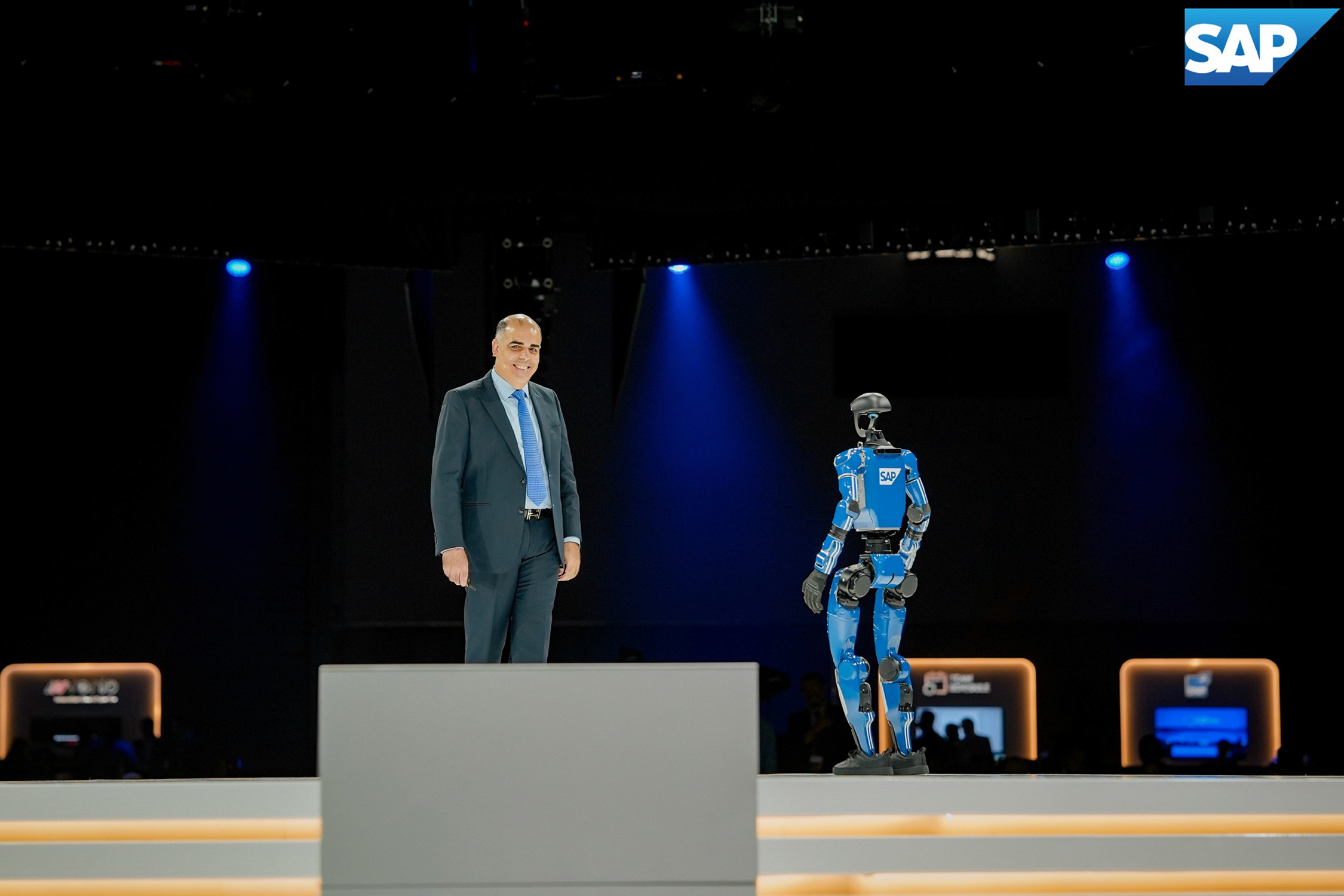
More than half of UAE chief IT decision-makers say their ERP system is already the primary platform for AI-driven decisions. That finding, from new SAP-commissioned research, points to a strategic shift that is reshaping how businesses across the Gulf approach artificial intelligence adoption at scale.
by Kasun Illankoon, Editor in Chief at Tech Revolt
[For more news, click here]
UAE enterprises are not waiting for AI to become simpler. They are doing the harder work first, consolidating operations onto unified cloud platforms, cleaning up fragmented data environments, and turning enterprise resource planning systems into the infrastructure layer that will carry AI across entire organisations rather than isolated departments. The research, conducted by YouGov among senior IT decision-makers in the UAE, landed this week at SAP Connect UAE in Dubai, where companies including RAK Ceramics, EMSTEEL, Grandiose, and Jumbo Group shared how they are executing exactly that strategy. The picture that emerges is of a regional enterprise market further along the AI-readiness curve than the headline hype around chatbots and generative tools would suggest.
The core finding from the YouGov research is significant: 53 percent of chief IT decision-makers in the UAE said their ERP system already serves as the primary platform enabling AI-driven processes and decisions across the business. A further 32 percent said it supports AI across several core functions. That is an overwhelming majority of enterprises already treating ERP not as a back-office accounting system, but as the operational backbone through which intelligence gets delivered at scale.
This matters because AI is only as useful as the data it has access to. Companies with fragmented systems, inconsistent data definitions, and siloed processes discover quickly that deploying AI amplifies those problems rather than solving them. The organisations moving fastest on AI adoption in the UAE appear to have understood this early. They are investing in the foundation before they invest in the capability.
Marwan Zeineddine, Managing Director of SAP UAE, described the direction of travel: "As organizations scale their use of AI, the focus is increasingly on how intelligence is embedded directly into core business systems. With the rise of agentic AI, businesses are beginning to move toward what SAP calls 'Autonomous Enterprise', where AI can support the more autonomous execution of tasks and processes while keeping people firmly in control. By bringing together applications, data, and AI within a unified environment, organizations can improve decision-making, strengthen operational consistency, and respond more effectively to change."
The research is also precise about what enterprise leaders in the UAE want from AI-enabled systems, and the expectations are more grounded than the technology hype cycle typically suggests. Operational efficiency and resilience topped the list at 45 percent. Faster and higher-quality decision-making came in at 44 percent. Improved employee productivity was cited by 41 percent.
These are not abstract aspirations. For a ceramics manufacturer managing global distribution networks, or a steel group navigating volatile raw material markets, or a retailer synchronising production schedules with store-level demand in real time, each of these outcomes translates directly into measurable financial performance. What they share is a common dependency: none of them is achievable without a unified data environment where AI can work across the full picture of a business, not just one slice of it.
The confidence levels in the research reinforce that UAE enterprises see their existing platforms as capable of carrying this weight. Half of respondents said they are very confident their ERP and enterprise platforms can support more advanced AI and automation over the next two years. A further 40 percent expressed some confidence. Ninety percent of senior IT decision-makers backing their current infrastructure is a striking result at a moment when the pressure to adopt entirely new AI tooling is intense.
RAK Ceramics offers one of the most instructive case studies presented at the event. The company, which operates across multiple markets globally, is undertaking an enterprise-wide transformation using RISE with SAP to consolidate its operations onto a modern cloud-based digital core. The sequencing of that effort is deliberate: platform first, AI integration second.
Abdallah Massaad, Group CEO of RAK Ceramics, explained the logic: "Through our adoption of RISE with SAP, we are establishing a strong digital foundation that brings greater visibility and consistency across our global operations. This will enable us to embed AI into our core processes, enhance decision-making, and drive more consistent, data-driven outcomes across the business as we continue to scale."
EMSTEEL, the industrial group, is navigating a parallel transition. Vladimir Arshinov, Group Chief Technology Officer, framed the rationale in terms that extend beyond efficiency into strategic responsiveness: "This transformation is about creating a more connected and responsive business. By moving to a unified cloud-based platform, we are strengthening our ability to make faster, better-informed decisions and building a foundation to embed AI and intelligent automation across our operations as we continue to grow."
In an industrial operating environment, where responsiveness to supply chain disruptions or input price movements can determine whether a company captures margin or loses it, AI embedded inside operational systems represents a fundamentally different capability to AI sitting in a separate dashboard that teams check periodically.
Grandiose, a member of the Ghassan Aboud Group, is tackling a version of this challenge that is structurally more complex than most. The business needs to unify retail, manufacturing, and catering operations onto a single SAP platform before AI integration can realistically begin. These are not just different business units with different KPIs. They operate on different demand rhythms, different supply chain dynamics, and different production lead times.
Mussaab Aboud, CEO of Grandiose, set out the ambition: "Bringing our operations together on a single integrated platform marks an important step in our growth journey. As the business continues to expand, we need greater visibility across our supply chain, stronger coordination between our retail and production operations, and the ability to respond quickly to evolving customer demands. By building this foundation with SAP, we are positioning the business to embed AI more effectively across our operations and continue enhancing both efficiency and customer experience."
Jumbo Group has already completed this stage. Having finished its transition to SAP S/4HANA, the company now operates with a unified view of its core business functions, which positions it ahead of many regional peers in terms of AI readiness. A spokesperson described the outcome: "By moving to SAP S/4HANA, we have unified our core operations on a single platform, enabling more connected, data-driven decision-making and greater agility across the business. This gives us a clearer, real-time view of our operations and positions us to continue improving efficiency and scale innovation across the organization."
The UAE has particular advantages in this shift that are worth naming. Its enterprise technology landscape is relatively young compared to more mature markets in Europe and North America, which means fewer entrenched legacy systems to migrate away from. Its concentration of fast-growing, internationally exposed businesses creates genuine operational demand for the kind of real-time, AI-assisted decision-making that unified platforms enable. And its position as a logistics and trade hub means that supply chain intelligence and cross-border operational visibility deliver returns that are difficult to replicate through any other means.
Taken together, the companies presenting at SAP Connect UAE this week illustrate a regional enterprise market that has moved past the question of whether to adopt AI and is now squarely focused on how to build the infrastructure that makes AI adoption sustainable. The most consequential investments being made are not in standalone AI products. They are in the platforms and data environments that determine whether AI, when deployed, actually works.
Companies moving fastest on this are making a compounding bet: that getting the foundation right now will deliver increasing returns as AI capabilities continue to advance. In a competitive landscape where the gap between operationally intelligent businesses and those still managing by weekly reports is widening quickly, that may prove to be among the more strategically sound investments being made in the region today.
Related Articles