
Big Tech
Sep 4, 2026
Big Tech
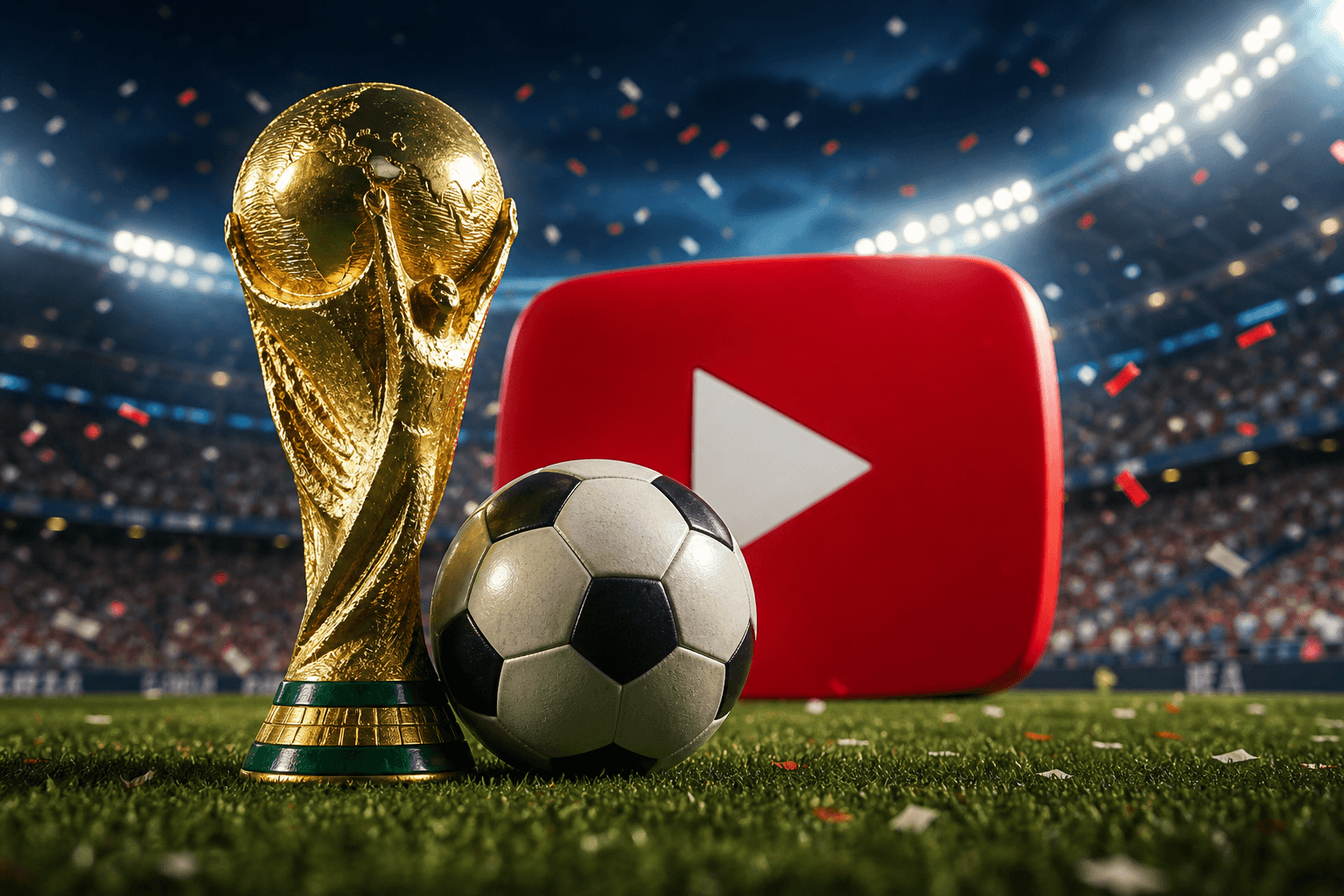
For decades, the FIFA World Cup has been built for television. That era is now beginning to fracture.
by Kasun Illankoon, Editor in Chief at Tech Revolt
[For more news, click here]
From the BBC to Fox, national broadcasters have historically defined how billions of people experience the tournament. They controlled everything, from live match access to commentary, highlights, and post-game narratives. In return, they paid enormous sums for exclusive rights, turning the World Cup into one of the most valuable properties in global media.
The new partnership between YouTube and FIFA ahead of the 2026 World Cup does not immediately dismantle that system. But it does something more subtle, and arguably more disruptive. It introduces a new layer of control over how audiences discover and engage with the tournament.
And that layer may prove more powerful than the broadcast itself.
On paper, the deal looks restrained. YouTube will not exclusively stream the World Cup. Traditional broadcasters still hold the most valuable rights, particularly full live matches. Instead, the agreement introduces a hybrid model where YouTube carries selected match segments, highlights, and a wide range of supplementary content.
That might appear incremental, even cautious. But it reflects a deliberate strategy.
Rather than attempting to replace broadcasters outright, YouTube is embedding itself into the viewing experience. It is becoming the platform where fans engage before, during, and after matches. This includes everything from pre-game build-up and real-time reactions to post-match analysis and behind-the-scenes access.
The significance lies in behavioural change. Once audiences begin to associate the World Cup with a platform like YouTube—not just television—the centre of gravity begins to shift.
For years, media discussions around sport have focused on broadcast rights. Who owns the matches? Who pays the most? Who gets exclusivity?
That conversation is now incomplete.
The more important question in 2026 is: who owns attention?
YouTube operates at a scale that traditional broadcasters cannot match. With billions of users and deep integration into everyday digital behaviour, it has become a primary gateway for content discovery. Younger audiences, in particular, are far more likely to encounter World Cup content through clips, creator videos, or algorithm-driven recommendations than through scheduled television programming.
This shift matters because attention increasingly dictates value. Advertisers, sponsors, and even governing bodies are no longer solely focused on where matches are shown. They care about how audiences interact with content across an entire ecosystem.
FIFA understands this. The partnership with YouTube is not just about distribution, it is about relevance.
The trajectory unfolding in sports mirrors what has already happened in entertainment.
Netflix did not begin as a dominant force in film and television. It started as a distribution platform, licensing content from traditional studios. Over time, it built a direct relationship with audiences, invested in original programming, and gradually reduced its reliance on legacy players.
Today, it competes with—and often surpasses—the very studios it once depended on.
A similar shift is taking place across the media landscape. Amazon has secured exclusive sports rights, including high-profile American football packages. Apple has taken a global, platform-first approach to football through its Major League Soccer deal, offering a unified streaming experience across markets.
Each of these companies followed the same path: start as a complement, evolve into a competitor, and ultimately reshape the market.
YouTube’s partnership with FIFA fits squarely within that pattern.
Scale has always defined the World Cup. But the 2026 edition introduces a new level of complexity.
Expanded to 48 teams and more than 100 matches, the tournament will be the largest in history. It will span multiple countries, time zones, and audience segments. That scale creates a distribution challenge that traditional broadcasting alone cannot fully address.
Digital platforms offer a solution—not just in terms of reach, but flexibility. Content can be segmented, repackaged, and distributed in ways that align with how modern audiences consume media.
For FIFA, this is not just an operational necessity. It is an opportunity to experiment with a new model.
By integrating YouTube into the tournament’s ecosystem, FIFA gains access to real-time data, audience insights, and global engagement patterns that television cannot provide at the same level. That data will be critical in shaping future decisions around rights, distribution, and monetisation.
For networks, the shift presents a paradox.
Partnering with YouTube allows broadcasters to extend their reach. Clips and highlights can attract new viewers, particularly younger audiences who may not engage with traditional TV. In that sense, the platform acts as a powerful promotional tool.
But it also introduces long-term risk.
As audiences spend more time engaging with World Cup content on YouTube, their reliance on television diminishes. The viewing journey becomes decentralised. Instead of tuning in at a fixed time for a full match, fans interact with the tournament continuously throughout the day.
This change in behaviour erodes one of television’s greatest strengths: its ability to command attention at scale in a single moment.
Once that habit breaks, it is difficult to rebuild.
One of the most transformative elements of the YouTube–FIFA partnership is the role of creators.
FIFA is opening the door for YouTubers to access the tournament in ways that were previously reserved for traditional media. This includes behind-the-scenes footage, player interactions, and on-the-ground storytelling that goes beyond standard broadcast coverage.
The result is a more fragmented, but also more personalised, narrative around the World Cup.
Instead of relying solely on studio analysis and professional commentary, audiences can engage with a diverse range of perspectives. Creators bring immediacy, authenticity, and a sense of proximity that traditional formats often lack.
This is not just an evolution in content—it is a redefinition of sports media.
The authority once held exclusively by broadcasters and journalists is being shared, and in some cases challenged, by individuals with direct access to audiences.
What emerges from these changes is a fundamentally different structure.
The World Cup is no longer a single, unified broadcast product. It is becoming a multi-layered content ecosystem. Live matches remain central, but they are now surrounded by a vast network of complementary content—highlights, analysis, creator videos, and on-demand replays.
Each layer operates independently, reaching different audiences and generating distinct revenue streams.
This unbundling reduces the dominance of any single distributor. Instead of relying entirely on broadcasters, FIFA can diversify its partnerships and monetisation strategies.
Platforms like YouTube are central to this model because they connect these layers into a cohesive experience.
The idea of a fully streamed World Cup is no longer far-fetched. But it is not immediate.
Broadcast rights still generate billions in revenue, and FIFA has little incentive to abandon that model overnight. Traditional networks remain critical partners, particularly in markets where television continues to dominate.
However, the direction of travel is clear.
As platforms continue to expand their capabilities and audiences, the balance of power will shift. What begins as supplementary access can evolve into partial live rights, and eventually, full-scale streaming becomes commercially viable.
This is not speculation. It is a pattern that has already played out across multiple industries.
The YouTube–FIFA deal does not mark the end of television. It marks the beginning of a transition.
Broadcasters will remain relevant, particularly in the near term. They still control premium rights and have established infrastructure for large-scale live events. But their dominance is no longer absolute.
Control is moving toward platforms that can capture attention across the entire lifecycle of an event—not just the live broadcast.
That is the critical distinction.
YouTube is not just another distributor. It is an ecosystem. It shapes how content is discovered, consumed, and shared. By embedding itself into the World Cup, it is positioning itself at the centre of that ecosystem.
The partnership between YouTube and FIFA is easy to underestimate. It does not involve exclusive rights or headline-grabbing figures. But its impact lies in what it sets in motion.
The World Cup is evolving from a television event into a platform-driven experience.
And in that transition, the companies that control attention—not just content—will define the future.
Television built the global audience for football’s biggest tournament. But the next phase will be shaped by platforms that understand how that audience behaves in a fragmented, digital-first world.
The shift has already begun. The only question now is how quickly it accelerates.
Related Articles


