
Big Tech
Oct 13, 2026
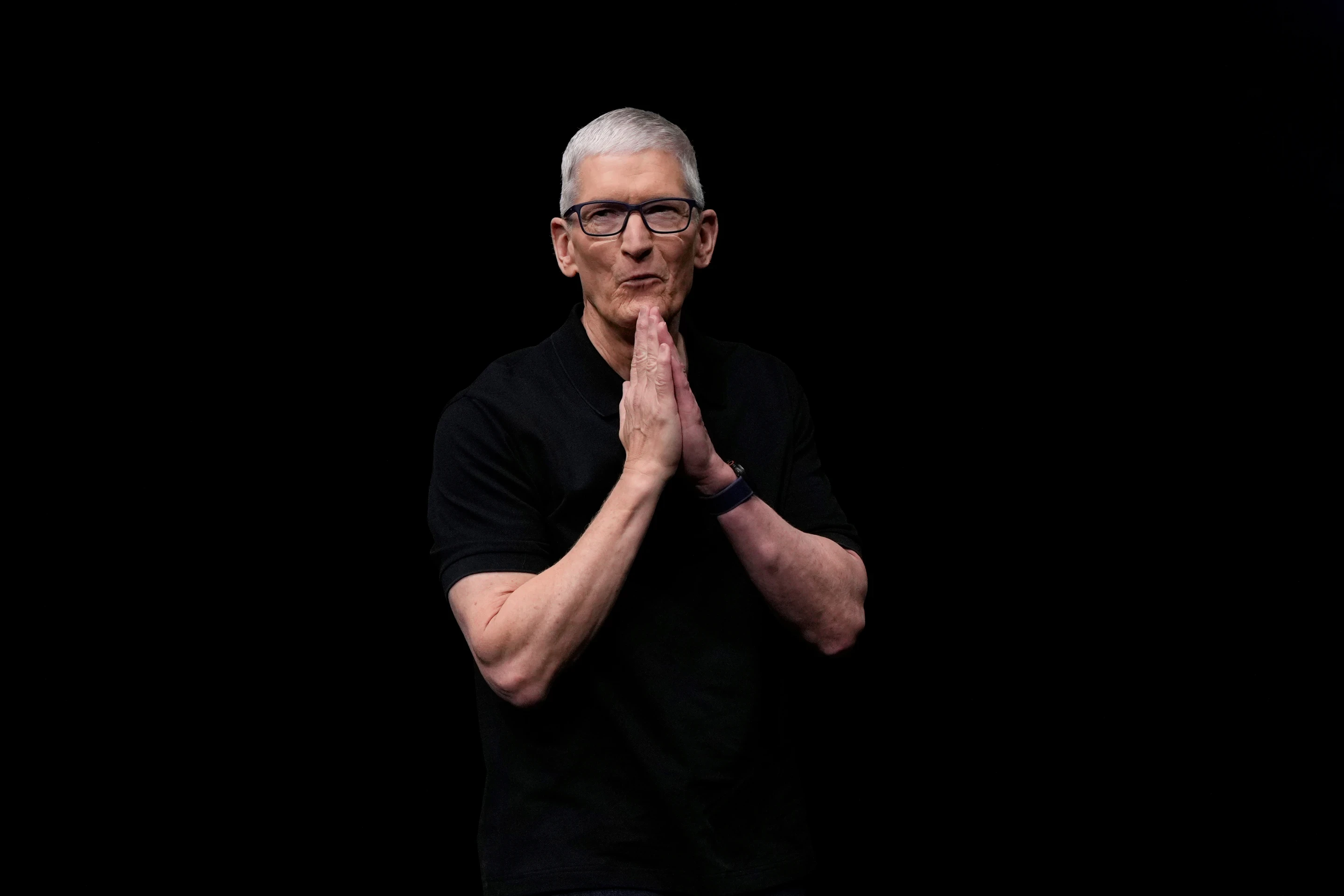
Apple does not do drama quietly. When the company that Steve Jobs built confirms its second-ever CEO transition, the ripple effects reach every product launch, every investor call, and every iPhone in your pocket. Tim Cook, 65, will step down as Apple's chief executive on September 1, handing the role to John Ternus, the company's head of hardware engineering, while staying on as executive chairman.
By Kasun Illankoon, Editor in Chief at Tech Revolt
[For more news, click here]
The news lands at a genuinely complicated moment for the world's most valuable technology company. Artificial intelligence has reshuffled the entire industry hierarchy, and Apple, the company famous for arriving late and winning anyway, is navigating its roughest AI stretch in memory. The question now is whether Ternus, a 25-year Apple veteran who has quietly overseen the engineering of the iPhone, iPad and Mac, is the right architect for the next chapter.
"It has been the greatest privilege of my life to be the CEO of Apple and to have been trusted to lead such an extraordinary company."
Tim Cook, outgoing CEO
Cook inherited a company at the peak of its Steve Jobs mythology and turned mythology into money on a scale no one anticipated. Under his watch, Apple's market capitalisation climbed by more than $3.6 trillion, making it the first company to sustain a valuation above $3 trillion. He did it not by inventing entirely new product categories, but by perfecting supply chains, scaling services revenue, and broadening the iPhone's global reach into markets Jobs had not fully conquered.
The criticism that followed Cook throughout his tenure was real: he was seen as a brilliant operator rather than a visionary. But it is worth pausing on what "brilliant operator" actually delivered. Apple Watch, AirPods, Apple Silicon, and a services business generating over $100 billion annually. Those are not the products of someone coasting on his predecessor's ideas.
Ternus, 50, has spent a quarter century at Apple, the last five of them running the hardware engineering division responsible for every physical device the company sells. He is not a name that registers with casual Apple watchers, which is itself a kind of credential inside a company that prizes discretion. His fingerprints are on Apple Silicon, the M-series chips that restructured the Mac's competitive position, and on the hardware decisions that define how the iPhone actually feels in the hand.
"I am profoundly grateful for this opportunity to carry Apple's mission forward," Ternus said in a statement. The phrasing is careful, corporate, and entirely consistent with Apple's communication style. What it does not tell you is how Ternus plans to steer a $3-trillion ship through an AI transition that, by Apple's own admission, has not gone smoothly.
Here is the uncomfortable context for this handover: Apple has had a difficult two years in artificial intelligence. When competitors were shipping conversational AI features that users could actually touch, Apple was promising them. Siri, the assistant that was supposed to become smarter and more contextual, lagged. The company eventually turned to Google for help making Siri more capable, a partnership that signals how far Apple's own AI ambitions had fallen behind.
That is the territory Ternus walks into. His background is hardware engineering, not machine learning. Apple will still have its AI research teams, and its partnership structures are in place. But the CEO sets the tempo and the priorities. The industry will be watching to see whether a hardware-first leader doubles down on device-level AI, where Apple has genuine advantages in chip performance and privacy architecture, or whether he reaches further into the software and services stack that Cook spent years building.
Cook's move to executive chairman is not unprecedented. Amazon's Jeff Bezos and Netflix's Reed Hastings both made similar moves, stepping back from the day-to-day CEO role while retaining influence over company direction. The structure gives Ternus operational authority while keeping Cook available for the long-horizon thinking and board-level relationships he has cultivated over 15 years.
It is also a structure that has worked. Bezos' transition at Amazon did not derail the company; Hastings' at Netflix was largely uneventful from a business continuity standpoint. The question for Apple is whether this is a handoff, a mentorship, or something more ambiguous, and how that ambiguity plays with investors who bought in on Cook's steady stewardship.
For most Apple customers, the honest answer is: probably very little, immediately. Product cycles are planned years ahead. The iPhone 18 lineup, whatever Apple has prepared for the fall, was designed under Cook's watch. The services strategy is already in motion. The AI partnerships are already signed.
What changes is the voice in the room when the next set of hard decisions gets made. Which AI bets does Apple double down on? Does the company push Vision Pro and spatial computing harder, or treat it as a long-term experiment? How aggressively does Apple expand its services business in markets where regulators are already watching? Those questions belong to Ternus now.
Apple has a way of making leadership transitions look inevitable in hindsight. Cook himself seemed like an unlikely successor to Jobs, a supply chain operator following an iconoclast, and he became one of the most successful corporate leaders of his generation. Whether Ternus follows that arc depends less on his résumé than on the decisions he makes in the next 18 months, when the AI race is still being run and the winner is not yet clear.
The era of Tim Cook is over. The era of what comes next has not yet been named.
Related Articles


