
AI
Oct 2, 2026
Exclusive: An AI Just Passed a Video Turing Test. What Happens When You Cannot Tell Who is on the Call?
AI

The Kingdom has spent years building AI ambition. A new collaboration between HUMAIN, a PIF company, and Accenture signals the shift from pilots to production, and what that means for an entire economy in transformation.
by Kasun Illankoon, Editor in Chief at Tech Revolt
[For more news, click here]
There is a specific kind of frustration that builds up inside large organizations when they have invested heavily in artificial intelligence and yet have very little to show for it. The models have been tested. The pilots have been run. The PowerPoint decks are full of promising results. And still, none of it has made it into the systems that actually run the business.
This is the problem that has quietly defined the first wave of enterprise AI adoption across the Gulf — and across the world. Organizations with genuine ambition and genuine budgets have found themselves stuck in a loop of experimentation, unable to bridge the gap between proof-of-concept and production. Saudi Arabia, which has made AI infrastructure one of the most visible priorities of its economic transformation agenda, is now moving to solve that problem at scale.
The vehicle for that move is a new strategic collaboration between HUMAIN, the full-stack AI company backed by the Public Investment Fund, and Accenture, one of the world's largest technology services firms. The partnership is designed to do something that sounds straightforward but has proven surprisingly difficult: take AI from the pilot environment and deploy it into the critical systems where real work actually happens.
To understand what makes this particular collaboration significant, it helps to understand what HUMAIN actually is. Launched as a PIF company delivering what it describes as a full-stack AI capability, HUMAIN was built from the ground up to address a problem that most countries face when they try to adopt AI at a national level: dependency on infrastructure and platforms that sit outside their borders and outside their regulatory control.
HUMAIN's stack runs from the physical layer — next-generation data centers and high-performance compute infrastructure — through cloud platforms, advanced AI models, and applied AI solutions. It is, in essence, a vertically integrated AI operating system for a country. Saudi Arabia's decision to build that kind of sovereign AI capability before pursuing wide-scale deployment reflects a strategic sequencing that distinguishes the Kingdom's approach from many of its peers.
What HUMAIN has not had, until now, is a partner with the global execution capability to actually deploy that stack across thousands of government entities and private enterprises simultaneously. That is where Accenture enters the picture.

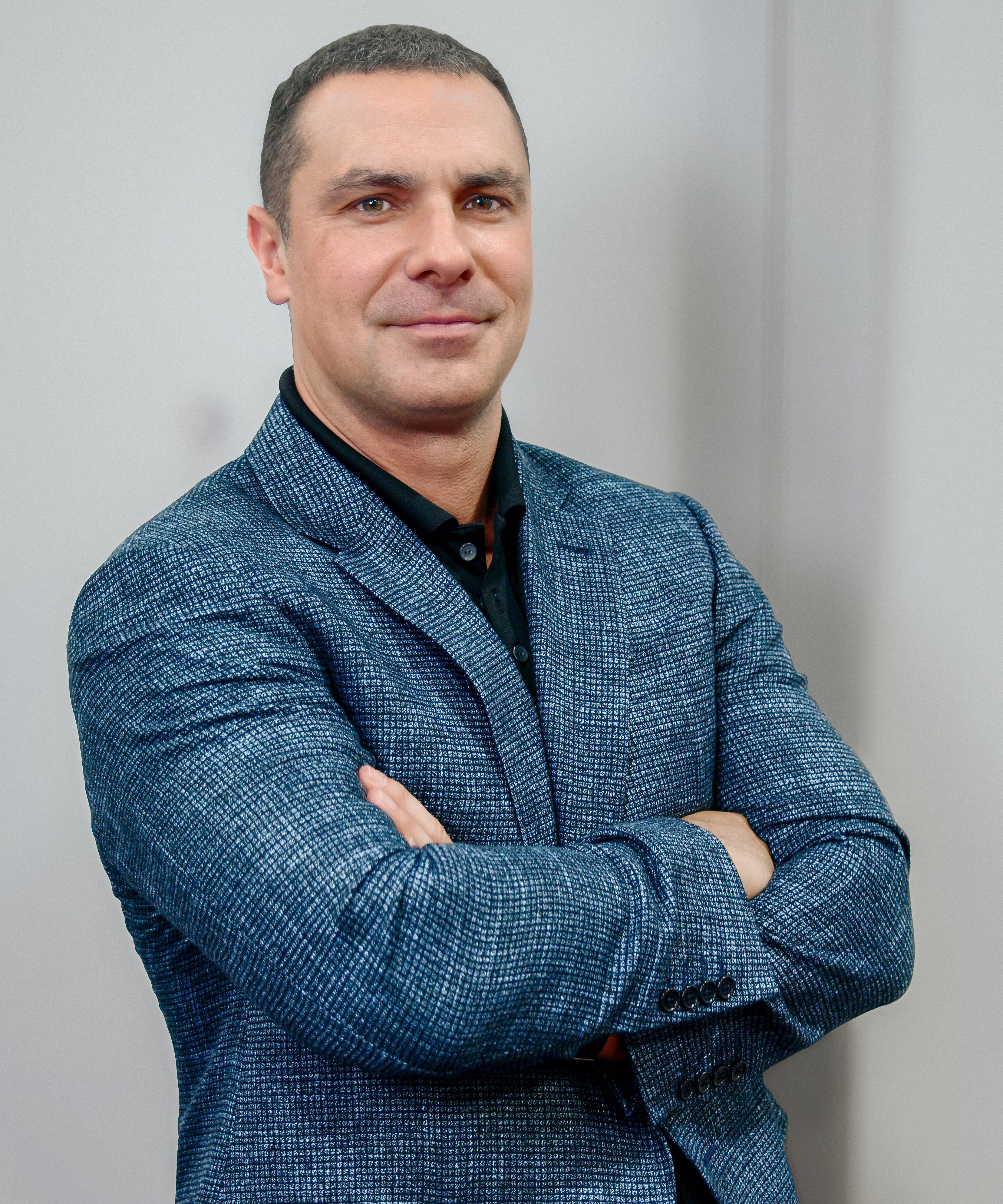
Photo: Tareq Amin, CEO of HUMAIN
"Leadership in AI will be defined by the ability to operationalize the full stack, from infrastructure and compute to models and applications. HUMAIN has built that foundation. Together with Accenture, we will be enabling AI deployment at scale within critical systems, supporting organizations in moving beyond experimentation and building lasting economic and operational impact," said Tareq Amin, CEO of HUMAIN
What distinguishes the HUMAIN–Accenture model from traditional technology advisory arrangements is the explicit commitment to end-to-end execution. Many organizations that have tried to scale AI have encountered a familiar problem: the consultants who design the strategy are not the same people who build the systems, and neither group is responsible for keeping those systems running once they are deployed. The result is a handoff problem that produces technically sound blueprints that never fully translate into operational reality.
The collaboration between HUMAIN and Accenture is designed to eliminate that handoff. The two organizations will work across the entire value chain — from data and model governance through enterprise integration, workforce adoption, and ongoing operations. Accenture is bringing what it describes as forward-deployed reinvention engineers alongside deep industry and functional domain experts, a configuration that is intended to maintain continuity from design through delivery.
"AI is at the heart of reinvention for organizations and economies alike. By combining HUMAIN's platform with Accenture's reinvention capabilities supported by our forward-deployed and reinvention engineers and deep industry and functional domain experts, we are enabling clients to move from pilots to enterprise-wide transformation, delivering real and sustained value," said Omar Boulos, CEO of Accenture Middle East and Africa.
The scope of what the collaboration intends to cover is broad. The two organizations have identified five areas of focus: reimagining core business processes with AI from strategy through execution; building scalable AI platforms and agent-based systems embedded into enterprise workflows; driving large-scale workforce adoption through upskilling and organizational change; mobilizing technology partners to deliver integrated multi-party solutions; and strengthening cybersecurity, governance, and compliance in line with Saudi Arabia's national standards.
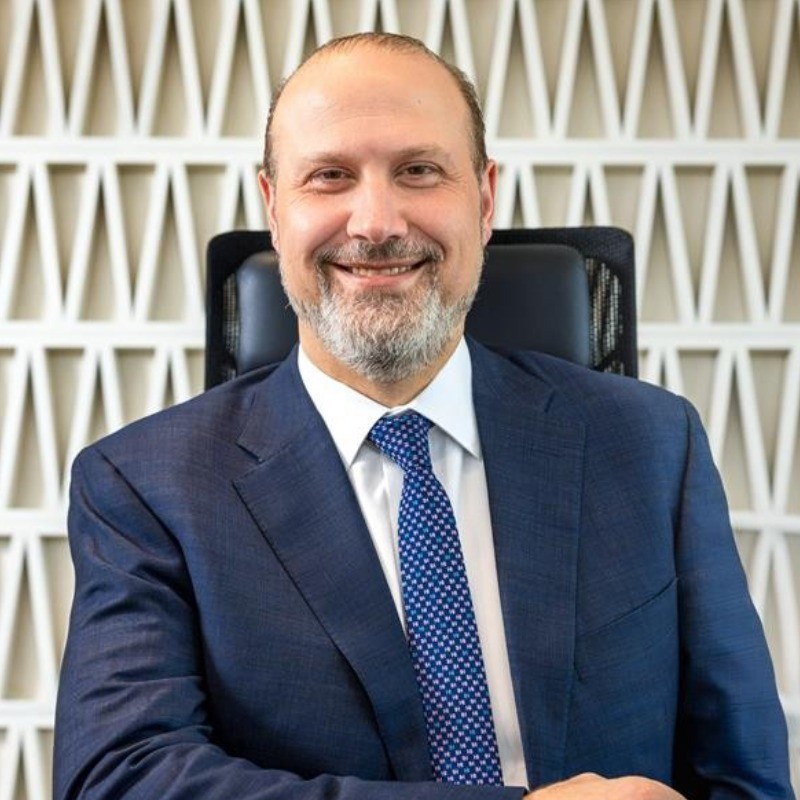
Photo: Omar Boulos, CEO of Accenture Middle East and Africa
One of the more telling details in the collaboration's structure is its explicit focus on workforce transformation. This is not always a priority in AI deployment partnerships, where the tendency is to focus on the technical architecture and treat the human side of adoption as someone else's problem. The inclusion of large-scale upskilling and organizational change as one of the five core focus areas suggests a recognition that technology alone does not create transformation.
For Saudi Arabia, this dimension has particular resonance. The Vision 2030 agenda is not just about building AI infrastructure; it is about creating a knowledge economy capable of sustaining itself. That requires workers who can operate alongside AI systems, and institutions that have genuinely reorganized their workflows around AI capabilities rather than simply adding AI tools to existing processes. The HUMAIN–Accenture collaboration appears to be designed with that longer-term objective in mind.
The significance of this partnership extends beyond Saudi Arabia's borders. The Gulf has emerged as one of the most active testing grounds for sovereign AI infrastructure anywhere in the world, and the models being developed there are drawing close attention from governments and institutions in other regions that are trying to navigate the same fundamental challenge: how to capture the economic value of AI without becoming entirely dependent on platforms and infrastructure controlled by a small number of foreign technology companies.
HUMAIN's full-stack approach, owning the compute, the models, and the application layer, is one answer to that question. Accenture's role in this collaboration is to demonstrate that such an approach can be operationalized at scale and within a timeline that is relevant to the organizations it is meant to serve. If that demonstration is successful, it is likely to attract significant interest from markets across the wider region and beyond that are watching Saudi Arabia's AI build-out as a potential template.
The pilot phase is over. The question now is whether the execution can match the ambition, and the evidence from HUMAIN and Accenture suggests both organizations are betting it can.
1 in 8 Jobs Is on the Edge of Automation, and the Official Data Has Not Caught Up Yet
JetBrains Is Not Competing With Claude or Gemini. It Is Building the Platform That Runs Them
Related Articles