
AI
Oct 2, 2026
Exclusive: An AI Just Passed a Video Turing Test. What Happens When You Cannot Tell Who is on the Call?
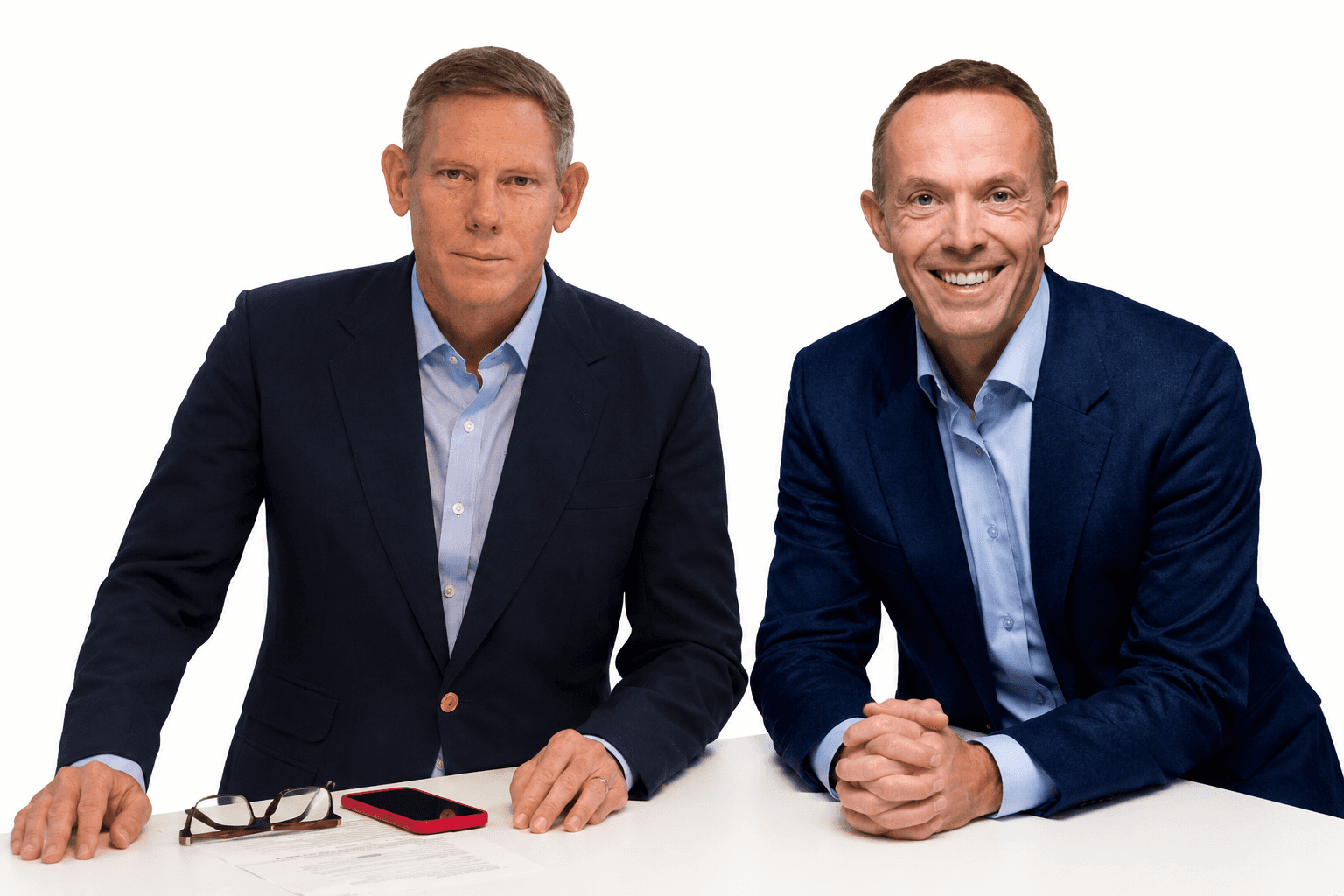
AVEVA and IFS are partnering to solve one of the most persistent frustrations in industrial operations: the distance between a data insight and an actual decision.
[For more news, click here]
Somewhere inside a utility company managing hundreds of substations, a temperature alarm is going off. A reliability engineer sees it. The dissolved gas readings look abnormal. Something is wrong with a transformer.
What happens next is where most industrial AI stories quietly fall apart.
The engineer has the signal. But the maintenance planner sitting in a different system has the work schedule. The asset manager has the capital programme. The procurement team knows whether the right spare parts are available. The crew dispatcher knows who is free and qualified to respond. None of these people are looking at the same screen. None of their systems are talking to each other in real time. And so what should be a fast, evidence-based decision about whether to repair, defer, or replace a critical piece of infrastructure becomes a slow, fragmented conversation across departments, each working from partial information.
This is the problem that AVEVA and IFS have decided to solve together, and the announcement of their technology partnership at AVEVA World in Milan is a significant moment for the industrial software sector. The two companies are calling the joint solution Continuous Asset Decision Intelligence, and the name is doing a lot of honest work. It is not a prediction platform. It is not a monitoring dashboard. It is an architecture designed to close the distance between operational insight and enterprise action, across the full lifecycle of an asset.
AVEVA is one of the world's leading industrial software companies, with deep expertise in operational and engineering intelligence. IFS is a global leader in AI-powered enterprise software for asset-intensive industries, covering maintenance, service, workforce management, and capital planning. They are not natural competitors. They operate in adjacent layers of the industrial software stack. But for most of their shared customers, those layers have never been properly connected.
The result has been a structural inefficiency that the industry has lived with for years. Live operational data sits with operations teams. Maintenance history, outage plans, spare parts inventory, crew capacity, and investment priorities sit somewhere else entirely. Decisions that require all of that information together have to be assembled manually, which takes time that industrial operations frequently do not have.
Jeffrey Hojlo, Research Vice President at IDC, put it plainly: "AVEVA and IFS are addressing one of industrial AI's biggest gaps: the distance between insight and action. By unifying real-time operational intelligence with enterprise execution and capital planning, their partnership promises to deliver Continuous Asset Decision Intelligence across the asset lifecycle."
The AI component here is important but not in the way that most AI announcements frame it. This is not a story about a model that predicts failures with impressive accuracy. It is a story about building the connective tissue that makes prediction useful, by ensuring that when a signal fires, everyone who needs to act on it has the right context at the right time.
The joint solution works across three layers simultaneously. The first is operational and engineering intelligence, where AVEVA's strengths lie, capturing real-time sensor data, asset health signals, and engineering context. The second is enterprise execution, covering the maintenance planning, crew dispatch, spare parts, and work order management that IFS handles. The third is strategic capital planning, where investment priorities, repair-versus-replace decisions, and regulatory commitments live.
The transformer scenario illustrates how these layers work together in practice. Rising temperature alarms and abnormal gas readings are detected at the operational layer. Rather than stopping there and generating a notification that someone has to manually translate into action, the architecture pulls in maintenance history for that asset, checks whether similar failures have occurred elsewhere in the fleet, assesses crew availability and outage plans, and surfaces repair-defer-replace options ranked against capital programme priorities. The decision workflow runs through all of that context automatically, and every step is logged in an auditable evidence chain.
Craig Resnick, Vice President at ARC Advisory Group, identified the governance dimension as particularly significant. "It creates an auditable chain from asset condition to decision to outcome, which is increasingly critical for boards, investors, and regulators." This is not a minor point. As industrial companies face increasing scrutiny around reliability, safety performance, and capital allocation, the ability to demonstrate a documented, evidence-based decision process is becoming a competitive and regulatory requirement, not just a nice-to-have.
Caspar Herzberg, CEO of AVEVA, was direct about what the partnership represents. "Industrial intelligence only becomes real when you have the complete picture. Our partnership with IFS connects data and insights in powerful new ways, from sensor to boardroom. The architecture is right, the customer need is urgent, and the AI opportunity is now practical. This is what radical collaboration looks like in reality."
The phrase "from sensor to boardroom" is a clean summary of the architectural ambition. The gap it describes is one that the industrial sector has been trying to bridge for decades, through custom integrations, data warehouses, and middleware solutions that have generally added complexity without fully solving the underlying problem. A platform-to-platform architecture that replaces those custom point-to-point integrations is a meaningfully different approach.
Mark Moffat, CEO of IFS, framed the customer benefit in operational terms. "Together with AVEVA, we can give customers the operational context and enterprise AI they need to decide what work to do, when to do it, and whether to repair, defer or replace, with evidence from signal to outcome."
That framing matters because it grounds the partnership in a decision that every asset-intensive organization makes constantly. The repair-defer-replace question is not exotic. It is the bread-and-butter judgment call of maintenance planners, asset managers, and capital programme teams across utilities, energy, manufacturing, and infrastructure. Making that decision with better information, faster, and with a documented rationale, is the practical value proposition.
The partnership is targeting measurable improvements across four areas. On reliability, the architecture replaces calendar-based maintenance schedules with dynamic strategies driven by real asset condition, with the aim of compressing detection-to-response lag from days or weeks to hours. On capital efficiency, risk-ranked investment decisions mean capital gets directed toward work that actually advances reliability and safety objectives rather than work that was simply scheduled. On regulatory confidence, the continuous evidence chain provides documentation that is timestamped and ready for boards, investors, and regulators without requiring manual assembly after the fact. And on IT and operational technology integration, the platform-to-platform approach is designed to reduce the integration cost and complexity that has historically made connecting these layers so expensive.
For organizations running hundreds or thousands of assets across multiple sites, those improvements compound. A decision that once took days because it required coordinating across five different systems can potentially be made in hours with the right context already assembled. Multiplied across a portfolio of assets and decisions, the efficiency gain is substantial.
There is a version of the industrial AI story that focuses almost entirely on the sophistication of the models: how accurately they detect anomalies, how far in advance they predict failures, how precisely they recommend interventions. That version tends to assume that if the prediction is good enough, the action will follow.
What AVEVA and IFS are building together is a counterargument to that assumption. Prediction without execution infrastructure is an expensive notification system. The gap between knowing that something needs attention and actually getting the right people, parts, and plans aligned to address it is where industrial AI investments most commonly stall.
The partnership is a bet that closing that gap requires a different kind of architecture, one that connects operational intelligence directly to enterprise execution and capital planning rather than leaving each layer to operate in isolation. It is a less glamorous story than a breakthrough prediction algorithm, but it is probably a more important one for the organizations that have been living with the consequences of disconnected systems for years.
For industrial companies evaluating where their next technology investment should go, the question this partnership raises is a useful one: how much value is currently sitting in your operational data that never reaches the people who need to act on it?
Related Articles