
Technology
Oct 16, 2026
Technology
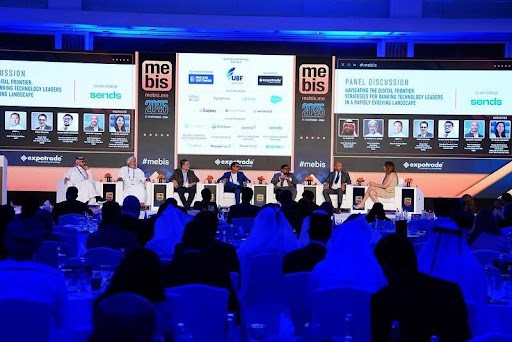
With more than 400 senior executives already confirmed for MEBIS 2026 in Dubai, the annual summit arrives at a moment when artificial intelligence has moved from pilot project to strategic imperative across the region's financial sector.
[For more news, click here]
The numbers tell their own story. More than 400 senior banking executives have already confirmed attendance at the 17th Annual Middle East Banking Innovation Summit (MEBIS) 2026, taking place on 16-17 September at Jumeirah Emirates Towers in Dubai. That level of early commitment, months before the doors open, is a reasonable proxy for the urgency the region's financial leaders are feeling right now.
The reason for that urgency is not hard to locate. Across the UAE, Saudi Arabia, Bahrain, Qatar, Kuwait, Oman, and Egypt, banks are navigating a technological inflection point that is sharper and faster than anything the industry has encountered in recent memory. Artificial intelligence is no longer a research priority or an innovation lab experiment. It is being built into the core of how banks make decisions, manage risk, serve customers, and compete for talent and market share. The question is no longer whether to invest in AI. It is how quickly institutions can move from deployment to measurable business outcome.
The summit has been running for 17 years, which gives it a useful vantage point. Each edition has reflected where the region's banking industry actually is, rather than where the press releases say it should be. In 2026, where it actually is happens to be a genuinely interesting place.
Gulf governments have been unusually direct about their digital economy ambitions, with Saudi Arabia's Vision 2030 and the UAE's national AI strategy creating a policy environment that actively rewards financial institutions willing to modernize. That political context has accelerated decision timelines inside banks considerably. Investment committees that might once have taken 18 months to approve an enterprise AI rollout are now moving in quarters.
The result is a banking sector that is simultaneously excited and under pressure. Excited because the tools available today, from large language models capable of transforming customer service to machine learning pipelines that can process credit risk in near real time, genuinely change what is possible. Under pressure because the gap between institutions that move quickly and those that do not is beginning to translate into observable competitive differences.
The specific priorities that will shape the MEBIS 2026 agenda reveal a sector that has grown more sophisticated about what AI actually requires. Early digital transformation conversations tended to focus on apps and interfaces. The current generation of investment is going deeper, into data infrastructure, model governance, cybersecurity architecture, and the kind of organisational redesign that makes enterprise AI deployable at scale rather than confined to proofs of concept.
Data strategy has become the central variable. Banks that built modern, well-governed data estates during the last decade of cloud migration are finding they can move considerably faster with AI than competitors sitting on fragmented legacy systems. The institutions arriving at MEBIS 2026 with the most compelling case studies to share are largely those that made unglamorous infrastructure investments several years ago and are now reaping the compound returns.
Cybersecurity is the other major theme, and its prominence reflects a genuine shift in the threat landscape. As banks put more intelligence into their systems, the attack surface expands. The sophistication of threats targeting financial institutions in the MENA region has increased in proportion to the value of the data and decision-making capability those institutions now hold.
Shail Bisht, Regional Director at Expotrade Middle East, the organisation behind MEBIS, puts the current moment in direct terms: "MEBIS has always reflected the priorities of the banking industry, and in 2026 those priorities are clearer than ever. Banks across the region are investing heavily in AI, data, cybersecurity and customer experience to remain competitive in an increasingly digital world. The strong response we have seen from both delegates and speakers demonstrates the importance of bringing the industry together at this critical moment. MEBIS 2026 will provide a platform for banking leaders to share practical strategies, real-world experiences and a vision for the future of financial services across the MENA region."
That framing, practical strategies and real-world experiences, is worth paying attention to. The conversation in regional banking has demonstrably shifted away from transformation as an aspiration and toward outcomes as the unit of measurement. Productivity gains, faster credit decisions, lower cost-to-serve ratios, more personalised product recommendations delivered through digital channels: these are the metrics that boards and regulators are increasingly asking about.
Financial inclusion is also part of the agenda in ways it was not a few years ago. Gulf governments have made clear that expanding access to financial services, particularly for underbanked populations and SMEs, is a policy priority. Banks that build AI-powered credit assessment and onboarding infrastructure are increasingly being positioned not just as commercial institutions but as infrastructure for national economic development.
One of the structural challenges for banking AI adoption in MENA is that genuine institutional knowledge is still relatively thinly distributed. A handful of leading institutions have moved fast and accumulated real expertise. The majority are at earlier stages, and the gap between them matters because the region's banking markets are interconnected enough that laggards create systemic as well as competitive risks.
This is where a summit like MEBIS provides something that vendor relationships and consulting engagements cannot quite replicate: peer-to-peer candour from executives who have actually run the implementation programs, hit the obstacles, and figured out what works. Speaker acquisition for the 2026 edition is drawing banking leaders from across the UAE, Saudi Arabia, Bahrain, Qatar, Kuwait, Oman, and Egypt, with additional announcements expected in the weeks ahead.
The format, mixing keynotes with panel discussions, case studies, and structured networking, is built around the recognition that the most valuable knowledge transfer in financial services still happens in rooms where people feel comfortable being honest about what went wrong as well as what went right.
For an industry standing at the edge of one of its most significant technological transitions, that kind of honest conversation may turn out to be the most important infrastructure investment of all.
How Group-IB's AWS Financial Competency Signals a Broader Shift in How Banks Fight Fraud
How AD Ports Group and e& UAE Are Wiring Abu Dhabi's Trade Infrastructure for the AI Age
Related Articles