
AI
Sep 16, 2026
AI
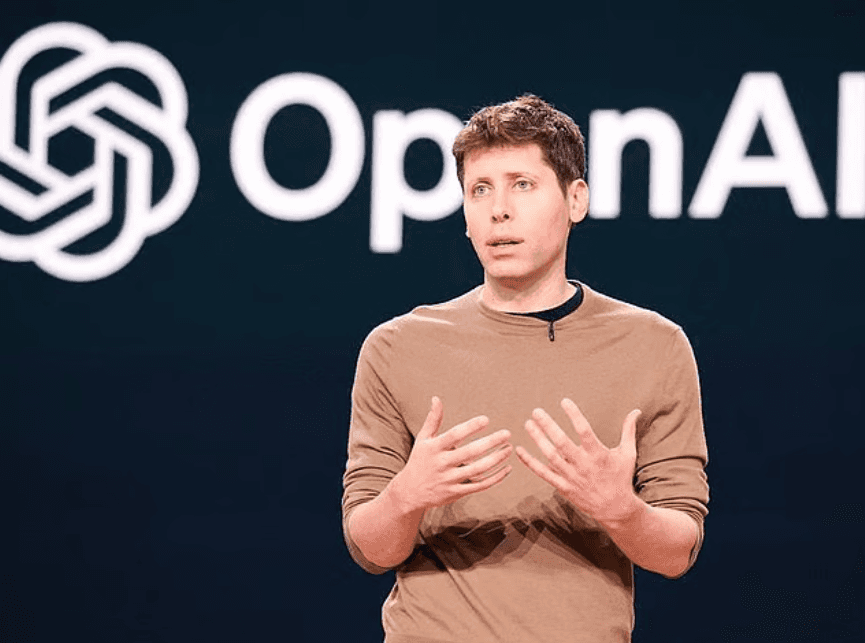
OpenAI’s Chief Executive Officer, Sam Altman, is in the United Arab Emirates (UAE) this month courting some of the world’s deepest-pocketed investors, amid reports the artificial intelligence pioneer is preparing a record-breaking multibillion-dollar funding round. According to multiple reports, Altman is in talks with Middle Eastern sovereign wealth funds and other state-backed investors to raise around $50 billion or more, a move that reflects the scale of capital needed to sustain OpenAI’s leadership in generative AI technology.
These discussions, first confirmed by financial news outlets including Bloomberg and CNBC, have Altman engaging closely with top fund managers in Abu Dhabi and potentially Saudi Arabia’s Public Investment Fund, all in pursuit of commitments that could value OpenAI at between $750 billion and $830 billion.
The effort comes as OpenAI faces rising competitive pressure in the AI sector, notably after recent reports that Apple has chosen Google’s Gemini models as the foundation for the next version of Siri, signaling a shift in how some of the world’s biggest tech players are approaching large language models and AI APIs.
Why Such Aggressive Fundraising?
OpenAI’s ambitions are vast and capital-intensive. The company has committed to spending more than $1.4 trillion on AI infrastructure, including data center construction, chips, and talent acquisition, according to funding sources reporting on these discussions.
Even though OpenAI’s products like ChatGPT have become ubiquitous in workplaces and consumer tech ecosystems, the company is not currently profitable and continues to operate at significant cash burn as it scales next-generation AI models and hardware. This has pushed OpenAI to seek investments on a scale rarely seen outside state-backed or public market financing.
Moreover, competitors such as Anthropic and xAI have also looked to Middle Eastern capital to fuel their growth, underscoring how capital-rich Gulf states are increasingly shaping the competitive dynamics of global AI development.
GCC: From Energy to AI Investment Hub
The Gulf Cooperation Council (GCC) countries, especially the UAE and Saudi Arabia, have dramatically deepened their strategic focus on artificial intelligence. A McKinsey report found that AI adoption has the potential to contribute an estimated $150 billion to the GCC economies, roughly the equivalent of 9 % of combined GDP, and analysts believe this number could grow rapidly as countries pursue AI as a core economic driver.
The region’s sovereign wealth funds are central to this transformation. For example, MGX Fund Management Limited, an Abu Dhabi-based AI investment vehicle formed in 2024, aims to manage up to $100 billion in assets dedicated to artificial intelligence technologies, and it has already participated in previous OpenAI fundraising efforts and partnerships.
Likewise, G42, a major AI firm headquartered in Abu Dhabi, has worked with OpenAI and global partners on infrastructure projects like the “Stargate UAE” data center initiative, which aims to bring advanced compute capacity to the region.
These investments fit a broader strategy by Gulf governments to diversify beyond hydrocarbons and anchor future economic growth in technology, advanced manufacturing, and AI-powered services. A PwC analysis points out that AI could generate $9.9 in economic growth for every $1 invested, highlighting the region’s calculated bets on AI.
OpenAI’s Strategic Crossroads: GCC or Global Tech Hubs?
So why is Altman turning to the GCC rather than exclusively courting Silicon Valley or Asia? One part of the answer lies in capital density and sovereign backing. Private venture capital, even at its largest, typically cannot write checks on the scale that OpenAI now requires. Sovereign wealth funds, backed by decades of oil and gas revenues, are uniquely positioned to make large, long-term bets on transformative technologies.
Another factor is geopolitics and infrastructure. The Middle East offers both the capital and the physical infrastructure, from land to energy, needed to power massive data centers that cut the enormous costs of compute. Partnerships with local players like MGX and G42 also enable smoother market entry and operational scaling across the MENA region.
However, this pivot is not without challenges. Some critics caution that over-reliance on sovereign capital could expose OpenAI to geopolitical risk and regulatory complexity, especially as governments around the world tighten AI governance frameworks and data sovereignty rules. Others argue that balancing shareholder expectations, mission-driven AI safety goals, and corporate growth could become harder with large state-linked investors involved.
What This Means for OpenAI’s Future
In the shadow of competitors gaining ground, such as Apple’s reported choice of Google’s Gemini as a strategic AI partner for Siri, OpenAI’s fundraising push highlights both the scale of its ambitions and the tough environment it faces. Successfully securing major backing from the UAE and broader GCC investors would not only provide the capital to sustain infrastructure expansion but potentially strengthen OpenAI’s global footprint at a time when AI leadership narratives are still being written.
The outcome of these discussions, anticipated to continue into early 2026, will be a significant barometer for whether the GCC region is more than a funding source and indeed a central pillar in the future of generative AI.
Related Articles