Startups
Jul 29, 2026
Startups

A London- and Gulf-based startup just convinced one of Silicon Valley's most selective venture firms, a Saudi sovereign-backed investor, and a circle of operators from Ramp, Clay and Cognition that the next decade of artificial intelligence will be decided not in chatbots, but in control rooms.
[For more news, click here]
For the better part of three years, the loudest argument in artificial intelligence has been about which company builds the smartest model. 1001, a startup founded in 2025 with a foothold in both London and the Gulf Cooperation Council, is making a quieter and arguably more consequential argument: that the real prize is which company gets entrusted to run the world's most important physical operations on AI it does not have to import.
That argument has now been underwritten with $30 million. The Series A round was led by Lux Capital, with participation from PIF-owned Sanabil Investments, 9Yards and Hanabi. Existing investors, including General Catalyst, CIV and Stanford AI researcher Chris Ré, increased their stakes rather than simply renewing them, a detail that tends to say more about conviction than the headline number does.
The angel roster reads like a cross-section of operators who have spent the last several years building the infrastructure layer of other industries. Karim Atiyeh, co-founder and chief technology officer of Ramp, and Kareem Amin, co-founder and chief executive of Clay, both backed the round, alongside Russell Kaplan, president of Cognition, and angel investors Shayan Shafii, Daniel Garber and Junaid Hussain.
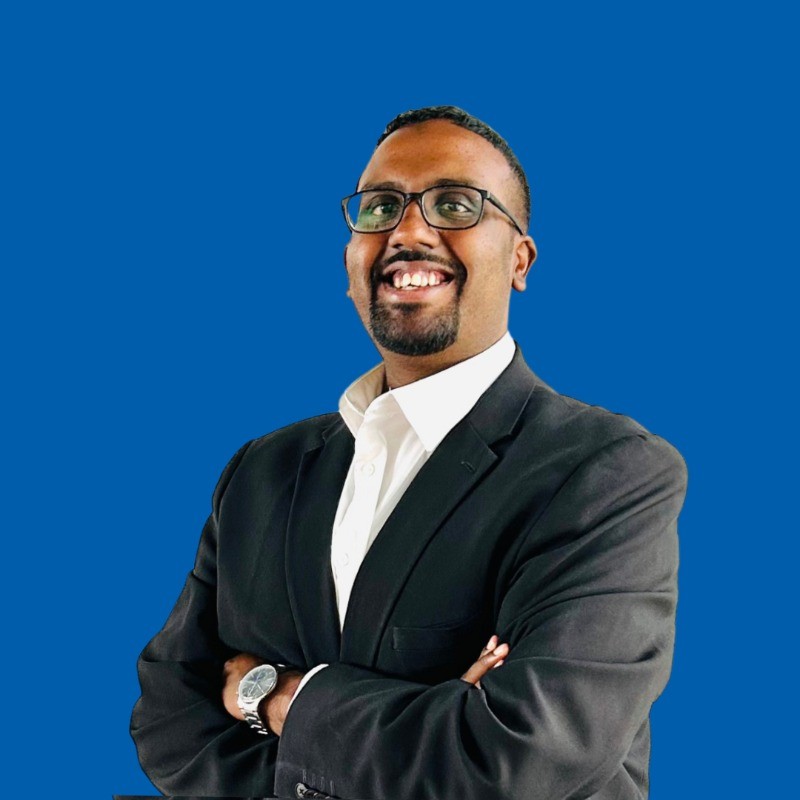
The premise behind 1001 is unusually specific for an AI company. Its founder and chief executive, Bilal Abu-Ghazaleh, built the company around a category of asset that rarely makes headlines until something goes wrong with it: ports, airports, energy grids, manufacturing lines and the logistics networks that move oil, cargo and people through some of the busiest corridors on earth.
"The GCC runs some of the world's most important infrastructure, managing a significant share of global oil flows, container traffic and international aviation," Abu-Ghazaleh said. "Business leaders here don't just want pilots. They want sovereign systems that deliver measurable results and make thousands of real-time decisions they can trust. This is the work we've set out to do, and this round lets us go deeper and bring the best local and global talent to it."
What 1001 has built sits above the systems an operator already runs, constructing a live working model of the entire operation, including every asset, process, dependency and constraint. Where infrastructure operators today make thousands of high-stakes calls under pressure, often without a unified system to make those calls consistently, 1001's software is designed to flag what is about to go wrong before it does, and to recommend or execute the most effective response faster than a human team working alone ever could. Crucially, the systems themselves are built, owned and governed locally, which means clients retain full control over infrastructure they cannot risk having switched off by a foreign vendor's decision.
The thesis behind the round extends well beyond one company's product. Sovereignty, in the way investors are now using the word, is no longer primarily about who controls a chip supply chain. It is about whether a nation can build, operate and audit its own AI in the sectors where failure carries national consequences, rather than licensing that capability from abroad and hoping the terms never change.
McKinsey estimates that wider AI adoption could add as much as 150 billion dollars to GCC economies, roughly nine percent of the region's combined gross domestic product, with critical infrastructure ranked among the highest-value opportunities available. That is the macro case Lux Capital is underwriting.
"Bilal and the 1001 team are exactly the kind of founders we take pride in backing: mission-driven, technically world-class, and building in one of the most consequential environments anywhere," said Deena Shakir, partner at Lux Capital. "They are proving that frontier AI for critical infrastructure can be built, owned and governed locally, rather than imported from abroad. We are especially proud to lead this round and to partner with 1001 as it helps the GCC build not just AI, but the capability to run its most important systems."
A spokesperson for Sanabil Investments framed the round in similar terms. "GCC economies are investing at unprecedented scale in data, compute and infrastructure, and the focus now is on building local capability to operate these assets with trusted AI," the spokesperson said. "We believe 1001 is well positioned to become a key sovereign AI partner for institutions across all critical infrastructure."
The new capital will go primarily toward scaling 1001's engineering team and expanding its commercial and go-to-market presence across key GCC markets, the company said. That expansion is being built on a talent pipeline the company has already established with leading global institutions, including Yale, Stanford and Carnegie Mellon, an unusual recruiting pitch for a company whose primary customers sit in ports, refineries and airports rather than software offices.
1001's investor base also reflects how regional and global capital have started to move in tandem rather than in separate lanes. The company's earlier angel backers include Amjad Masad of Replit, Amira Sajwani of DAMAC, Khalid Bin Bader Al Saud of RAED Ventures and Hisham Al-Falih of Lean Technologies.
What the round ultimately signals is a shift in where global venture capital believes the most defensible AI companies will be built. For years, the assumption was that frontier AI would be designed in Silicon Valley and exported everywhere else, including to the Gulf, as a finished product. 1001's raise is a bet that the more durable version of that story runs in the other direction: that the operators managing the world's busiest ports, biggest oil flows and most complex logistics networks are themselves becoming the proving ground for AI built to be owned, not rented.
Stitch Wants to Be the Operating System Every Bank Wishes It Had Built 20 Years Ago
Exclusive: How UAE Founders Can Build Resilient Teams During Crisis
Meet Sophia: The AI "Employee" Who Just Got Hired to Run HR for an Entire Corporate Empire
Related Articles


