

MENA News
Sep 10, 2026
MENA News
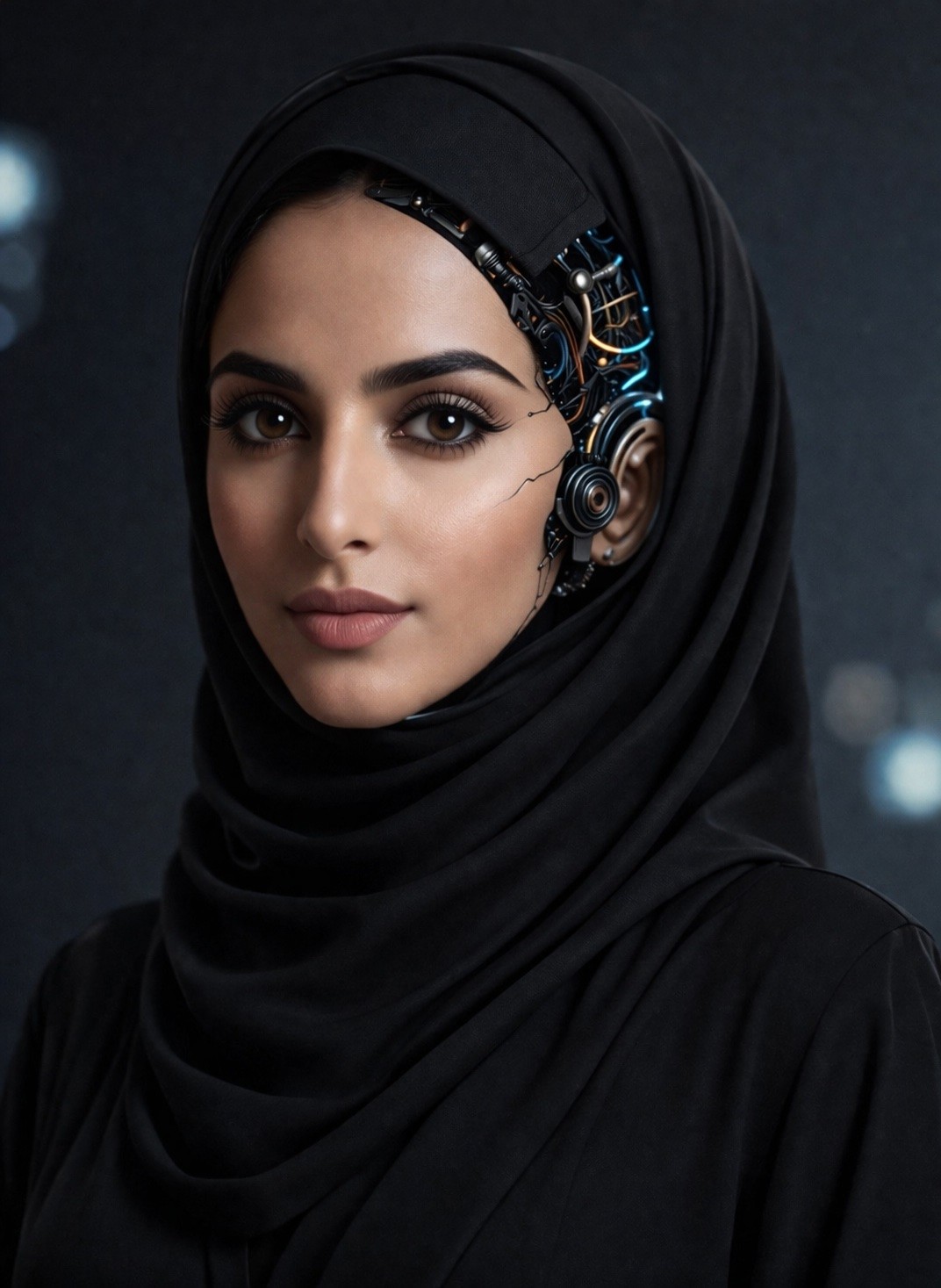
A UAE holding group has deployed what it calls the region's first agentic AI HR officer. It's not a chatbot. It's not a dashboard. It's something altogether stranger, and it might be a preview of where every large organization is headed.
by Kasun Illankoon, Editor in Chief at Tech Revolt
[For more news click here]
There is a new hire at MOBH Holding Group, one of the UAE's diversified conglomerates with fingers in everything from energy and healthcare to entertainment and marine services. She has no commute. She never sleeps. She processed her first candidate screening on day one without needing an orientation session. And when she introduced herself to the world, she did it in the calm, measured cadence of someone who has already read your entire HR manual.
Her name is Sophia. She is an AI.
MOBH has just announced the launch of Sophia AI, which the group is positioning as the region's first Agentic AI HR Intelligence Officer. The title itself repays some scrutiny. "Agentic" is the word AI researchers use when they want to distinguish a system that takes autonomous, goal-directed actions from one that merely responds to prompts.
This is not a glorified chatbot that answers policy questions or auto-fills spreadsheets. According to MOBH, Sophia is fully embedded in the group's HR ecosystem, carrying real operational responsibilities across workforce planning, onboarding, employee lifecycle management, training support, documentation governance, performance tracking, and internal communications. She is also, the company says, actively screening CVs and sourcing candidates.
That last part is worth slowing down on. Candidate screening has historically been one of the most fraught frontiers in AI hiring technology, precisely because it sits at the intersection of consequential decisions and algorithmic bias risk. MOBH frames Sophia as working "alongside HR professionals" rather than replacing them, a formulation that will be familiar to anyone who has watched the last decade of AI deployment rhetoric.
The assurance is not meaningless, but it is also not specific enough to be fully reassuring, and it is the kind of detail that will matter enormously as the technology matures.
What makes Sophia's launch particularly interesting is not just what she does today but what MOBH has signaled she will eventually become.
Deputy Chairman Rashed Mohammed Omar Bin Haider said, "This is not about replacing people, but about reshaping how work is delivered," he said. "We are accelerating AI integration across multiple departments and respective sectors within the Group, with a vision for up to 30% of selected operational processes to be supported by generative AI across key functions such as finance, public relations, security, digital and social media, and customer relations, as well as across sectors including education, energy, healthcare, hospitality, smart booking platform, marine services, non-profit organizations, entertainment, real-estate and engineering."
The scope of that statement is striking. Thirty percent of selected operational processes across a dozen-plus sectors is not a pilot program or a proof-of-concept. It is an organizational transformation strategy, and one being telegraphed publicly with a level of specificity that suggests MOBH is betting heavily on AI not just as an efficiency tool but as a genuine restructuring of how the business operates at a structural level.
Bin Haider went further: "We will also be introducing additional AI entities and AI-supported operational functions across these departments and sectors in the near future. Alongside this, we are developing a clear succession roadmap in which Sophia AI will evolve into broader responsibilities, supported by additional automated systems operating under her supervision."
Read that again. Additional automated systems operating under her supervision. MOBH is not just deploying AI. It is building an AI organizational chart.
This is precisely the kind of development that futurists have spent years speculating about and that actual enterprise deployments have been slow to demonstrate. Most corporate AI projects, for all their fanfare, have remained narrowly scoped: a model that summarizes contracts here, a tool that routes support tickets there.
What MOBH is describing is something more architecturally ambitious: a hierarchy of AI systems, with Sophia at the apex of the HR stack, managing not just human workflows but eventually other automated systems beneath her.
Whether that vision plays out as described is a genuinely open question. Corporate technology announcements have a long history of outrunning their actual implementations, and "agentic AI" remains one of the more contested terms in the field, encompassing everything from sophisticated automation to genuinely novel AI behavior depending on who is doing the defining. But the direction of travel is clear, and MOBH is putting a face, a name, and a job title on it in a way that most organizations have been unwilling to do.
Sophia herself, if we can call it that, offered an introduction when she was formally announced: "I am Sophia, an Agentic AI HR Intelligence Officer, and I am here to support and enhance the way teams work." She elaborated on her objectives as well: "I am ready to contribute from day one. My objective is to streamline processes, support colleagues, and enhance workplace efficiency through intelligent coordination. I aim to strengthen engagement, foster collaboration, and help create a more positive, connected, and productive work environment."
The language is polished to a high organizational-communication sheen, which is either reassuring or slightly eerie depending on your priors.
But it is also worth noting that the framing is collaborative rather than hierarchical, which tracks with how MOBH is positioning the deployment. Sophia is not being introduced as a cost-cutting measure or a headcount reduction tool. She is being introduced as a colleague. Whether that framing holds up under the practical pressures of large-scale operations remains to be seen.
What is already visible is how the broader corporate world is being reshaped, quietly and quickly, by exactly this kind of deployment. HR has long been a proving ground for enterprise AI because it combines high administrative volume with high human stakes: hiring, performance management, and workforce planning decisions that affect people's livelihoods. Getting those decisions right, or even consistently, at scale is genuinely hard. The argument for AI assistance in that domain is not frivolous.
The argument against it, or at least the case for vigilance, is equally real. AI systems trained on historical data can encode historical biases. Automated screening can disadvantage unconventional candidates. And when something goes wrong in an AI-managed process, accountability can become slippery in ways it never is when a human manager makes a bad call.
MOBH has not yet offered the technical architecture details or oversight mechanisms that would allow outside observers to evaluate Sophia's deployment against those concerns. That information matters, and its absence is worth flagging, even if its omission from a launch announcement is not unusual.
For now, what MOBH has offered is a signal: that the age of AI as a named, titled, and organizationally integrated entity within large enterprises is not coming. It is here, at least in the Gulf, and it is being rolled out with the kind of executive conviction that typically precedes genuine institutional change. Whether Sophia AI represents a breakthrough in how organizations can scale intelligent operations or a cautionary tale about moving too fast with consequential technology is a story that is still very much being written.
The first chapter, at any rate, has a job title. And a name
Related Articles


