MENA News
Oct 9, 2026
The global artificial intelligence narrative is no longer confined to Silicon Valley. As the initial boom of consumer-facing chatbots settles, a profound structural shift is underway. Driven by massive sovereign investments, the Middle East, led primarily by the UAE and Saudi Arabia, has transitioned from consuming Western AI to architecting its own digital frontier.
[For more news, click here]
This next wave of innovation moves beyond basic generative wrappers. It is defined by three powerful emerging trends: culturally nuanced Arabic-first foundation models, autonomous Agentic AI, and the decentralised deployment of Edge AI.
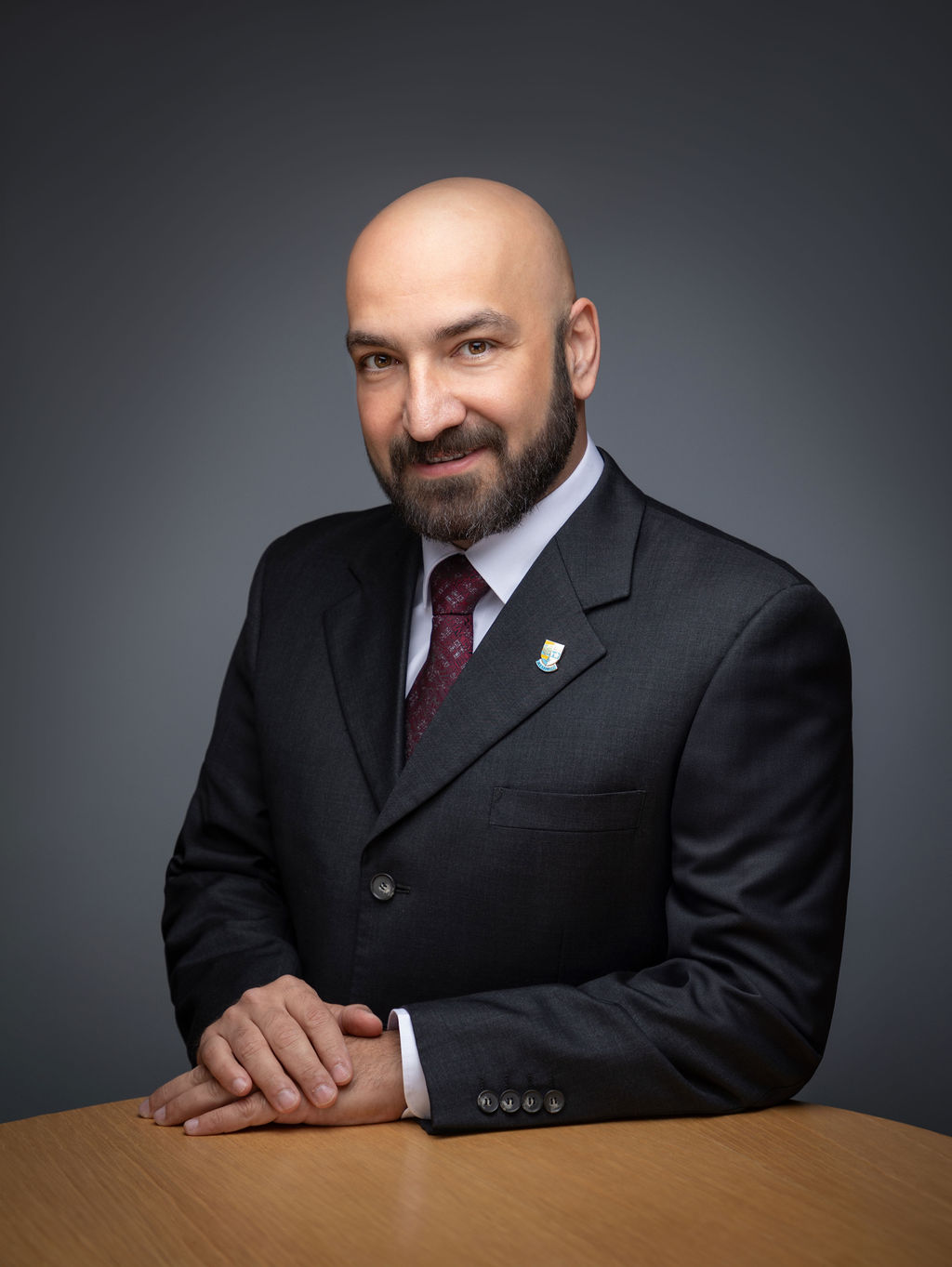
by Kayvan Karim, Assistant Professor at the School of Mathematical and Computer Sciences, Heriot-Watt University Dubai
Early global large language models (LLMs) suffered from an inherent Anglocentric bias. While over 400 million people speak Arabic globally, it makes up less than 1% of the internet's training data. Early attempts to build Arabic models relied on translating English data, which severely degraded complex reasoning capabilities natively in Arabic.
The turning point arrived in January 2026 with the release of the Falcon-H1 Arabic model family by Abu Dhabi’s Technology Innovation Institute (TII). Breaking away from standard architectures, Falcon-H1 utilises a hybrid Mamba-Transformer design. This allows the model to process vastly longer context windows with significantly lower memory consumption. Trained on native, non-translated Arabic datasets spanning Modern Standard Arabic and regional dialects, Falcon-H1’s flagship 34B model now outperforms comparable models from Meta and Alibaba on global benchmarks. Even more critically, its ultra-compact 500M and 1.5B variants bring frontier-level Arabic AI directly to resource-constrained edge devices.
Simultaneously, the UAE has pioneered "reasoning-first" architecture. MBZUAI and G42 recently launched K2 Think V2, a fully open-source, 70-billion-parameter system. Rather than layering reasoning on top of a finished model, K2 Think weaves complex logic, agentic planning, and verifiable rewards directly into its foundation, rivalling proprietary models twenty times its size. To ensure these models reflect regional values, the Open Arabic LLM Leaderboard (OALL) now standardises evaluation, pushing developers to prioritise cultural intelligence alongside raw performance.
While standard LLMs wait for human prompts, the Middle East is rapidly adopting Agentic AI digital agents capable of autonomous perception, reasoning, and multi-step execution. According to the World Economic Forum, by 2026, 19% of Gulf organisations had already implemented full-scale agentic workflows.
In the public sector, this manifests as "sentient governance." Under directives from Dubai’s leadership, the emirate is moving past simple digitisation. Instead of filling out separate forms for a commercial license, a citizen states their intent to an AI agent. The agent natively comprehends the request, securely cross-references shared government databases, and orchestrates the necessary approvals across departments without human intervention. This drastically reduces bureaucratic backlogs and frees up public-sector staff for high-level policy work.
The industrial impact is equally staggering. In the energy sector, the Abu Dhabi National Oil Company (ADNOC) partnered with AIQ, Microsoft, and SLB to deploy ENERGYai. This 70-billion-parameter platform operates with advanced multi-agent orchestration and is trained natively on over 80 years of geological data. During trials, a specialised seismic AI agent accelerated seismic interpretation by 10x while increasing
analytical precision by 70%. Engineers can now query the system in natural language, prompting agents to extract telemetry data and forecast production anomalies in real time.
Saudi Arabia is accelerating this transition through "Project Transcendence," a monumental $100 billion AI initiative. This includes partnerships such as Deloitte's newly established Global Agentic AI Centre in the region, aimed at deploying agentic swarms to handle everything from autonomous insurance claims to retail supply chain optimisation.
As AI integrates into physical infrastructure, from traffic grids to oil rigs, relying on centralised cloud computing introduces latency and data security vulnerabilities. The solution is Edge AI: processing data directly on the device where it is generated.
Saudi Arabia’s flagship smart city, NEOM, is serving as the ultimate proving ground for this technology. Designed to function as a highly responsive digital ecosystem, NEOM requires continuous, real-time decision-making for its autonomous mobility networks and energy grids. To achieve this, the NEOM Investment Fund recently partnered with US-based MemryX to integrate energy-efficient, low-latency AI accelerators directly into the city's infrastructure. This ensures operational resilience even if cloud connectivity is disrupted.
In the UAE, the shift toward Edge AI is tightly linked to robotics and "Physical AI." TII recently launched the Middle East's first Joint Lab for AI and Robotics in collaboration with NVIDIA. By integrating NVIDIA’s advanced edge GPUs (such as the Thor chip) and Qualcomm’s Dragonwing edge platforms into autonomous drones and robotic arms, Abu Dhabi is empowering machines to reason and adapt independently to unpredictable physical environments. This is critical for hazardous sectors like mining and offshore drilling.
None of these software breakthroughs would be possible without a massive, sovereign hardware foundation. Recognising that AI infrastructure is the new national security frontier, regional powers are building exa-scale supercomputing clusters.
The UAE’s Condor Galaxy network, built by G42 and Cerebras Systems, is expanding to an unprecedented 36 exaFLOPs of AI compute capacity. Meanwhile, Saudi Arabia’s Project Transcendence includes a "Sovereign AI Factory" powered by 5,000 advanced NVIDIA Blackwell GPUs. To insulate themselves against geopolitical supply-chain shocks and ensure data privacy, entities like TII are even pioneering open-source hardware design using the RISC-V architecture, laying the groundwork for homegrown AI chips.
The Middle East has decisively moved past the era of simply importing technology. By mastering the nuances of the Arabic language, deploying autonomous digital agents across its economy, and embedding decentralised intelligence into its physical infrastructure, the region is rapidly cementing its status as a primary architect of the global AI future.
Related Articles