
Startups
Oct 12, 2026
Startups
Inside FounderLink, the founder community quietly betting that human connection is the competitive advantage the startup world forgot to build.
by Kasun Illankoon, Editor in Chief at Tech Revolt
Two founders cried at the dinner table. Not because anything had gone wrong that night. Because nothing had. They were simply sitting in a room full of people who already understood, without explanation, what it feels like to do payroll math at 2am.
That moment is what Graeme Barlow says changed everything.
"By the third dinner we'd hosted, two founders had cried at the table," Barlow recalls. "Not from anything that went wrong that night, but from sheer relief. Relief at being in a room of people who had also done the mental math at 2am on whether they could borrow from their personal accounts to make payroll in two weeks."
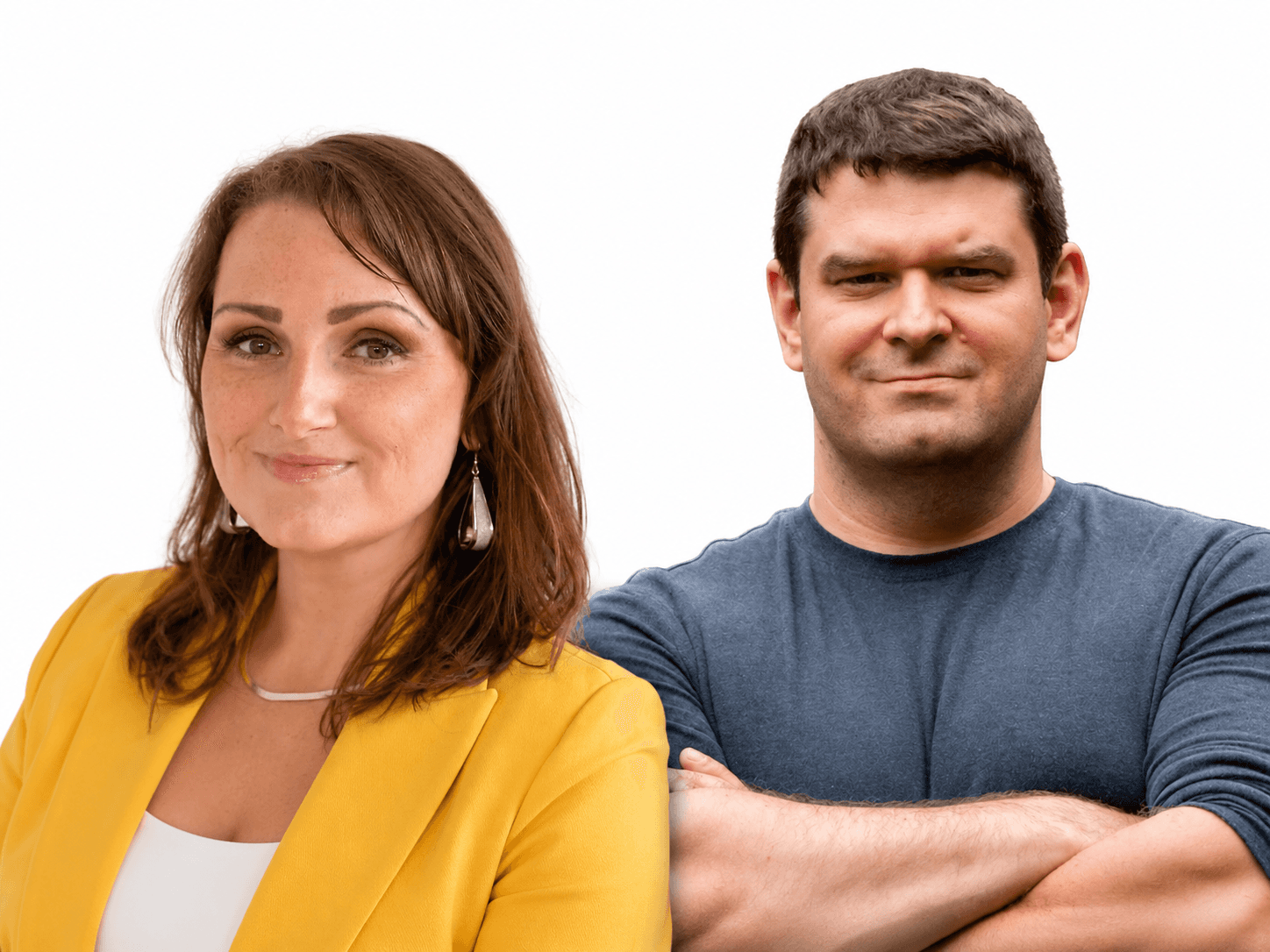
It sounds like a therapy session. In many ways, it was. But it was also the origin story of FounderLink, the founder community that Barlow and co-founder Shawna Tregunna have spent the better part of two years building quietly, carefully, and almost entirely by invitation.
The startup world has an infrastructure problem. Not the kind that makes headlines in TechCrunch, not a funding crisis or a regulatory bottleneck or an AI displacement story. The kind that builds slowly, invisibly, in the lives of the people building companies: a structural loneliness baked into the act of entrepreneurship itself.
Founders carry a unique and largely unshared weight. They manage payroll, clients, teams, strategy, and personal financial risk simultaneously. They are expected to project confidence outward while often navigating serious uncertainty inward. And unlike most professionals, they rarely have peers who can meet them inside that specific reality without an agenda.
The trope that entrepreneurship is lonely has been repeated so often it has started to feel like wallpaper. But Barlow and Tregunna argue it is not a cliche. It is a clinical reality with measurable consequences.
"People hear 'community' and think fun, social, and a little fluffy," says Tregunna, a multi-exited founder and former leader of Founder Institute Ottawa and Startup Ottawa. "But for founders, there are two sides of community that move it from 'nice to have' to genuinely critical."
The first, she explains, is knowledge. No book, course, or podcast can replicate the advice of someone two years ahead of you on the same road. The second is harder to talk about.
"The stats on founders aren't great," Tregunna says plainly. "Founders carry a tremendous amount of stress, suffer higher rates of depression and anxiety, and far too often, worse. When things get hard we tend to drop our own health first. Sleep, food, movement, friendships, partners, our own check-ins with ourselves. It always catches up."
The irony is that founder communities are everywhere. Incubators, Slack groups, local entrepreneur meetups, expensive membership clubs, sponsored networking events. The ecosystem is saturated with places founders can theoretically go to connect. Most of them, Barlow argues, are not actually built for founders.
"It comes down to who's paying for the room," he says.
The high-trust communities, the ones with genuine peer relationships and honest conversation, typically come with five-figure annual fees. They filter on price. Everyone else has to monetize on the backs of their members, through sponsors, lead-gen partners, paid placements, and branded events. The structural pressure turns almost every accessible community into what Barlow calls a sales-pitch engine aimed at early-stage founders.
"The 'free' community is rarely free," he says. "Someone is buying access to you, the founder."
FounderLink was built explicitly around removing that structural pressure. The community charges for what costs real money to operate. Beyond that, Barlow says, the platform does not have to pay for itself by selling its members to third parties, which means the general community stays clean. Two rules govern every general channel: no politics, no sales. Violations are not warned first. They are removed.
"You have to be willing to lose members to protect the room," says Tregunna. "Most communities aren't. We are."
One early example proved that commitment was not rhetoric. A founder made it through the application process, received their invite link, and then forwarded it to their marketing team with instructions to join. When FounderLink identified what had happened, every marketer was removed and placed on a permanent blacklist.
The core of FounderLink's offline experience is its Founders Dinner model, a format that has now run 21 times across Ottawa, Toronto, Vancouver, Calgary, Edmonton, Tampa, and Lisbon. The dinners are deliberately small and deliberately mixed: exited founders and first-year operators share the same table, with no pitch decks, no sponsors, and no agenda beyond conversation.
That cross-stage mix was the element Barlow and Tregunna expected to defend. It turned out to be one of the most powerful things about the model.
"We've watched founders sit at a table across from someone who built a unicorn and go almost speechless," Barlow says. "The next morning, the message we get from those founders is some variation of: 'I didn't think it was possible until I met those people and realized they're people. They have fears and insecurities, just like I do. All of a sudden the things I'm going for feel so much more attainable, so much more real, so much more human than I ever thought they would be.'"
What surprised them more was the feedback from the exited side of the table.
"Our exited members consistently tell us they leave these dinners feeling refreshed and re-inspired," Barlow says. "They get to hear what the next generation is building, share lessons from the parts of their journey that don't show up on stage, and feel like that knowledge is being received seriously and genuinely."
The dinners have also produced something less expected: real business. Advisory relationships, hires, introductions to capital, and at least one acquisition have been teed up across the dinner table. Not because anyone was selling. Because trust had formed first.
In 2026, the loneliness problem is not staying the same. It is accelerating.
Artificial intelligence is compressing the labour requirements of building a company at a speed the industry is still processing. A founder who once needed a small team to run a business can now approximate that output with a handful of software subscriptions and a well-configured agent stack. Operational efficiency has never been higher. Human contact has never been lower.
Barlow describes this as a structural shift with no safety valve built in yet.
"The fact that you can do it all alone now, and the pressure, hype, and glorification around doing it alone or doing it with as few people as you possibly can, is actively isolating founders and insulating them from community," he says. "Even when the only community a founder had was the few employees on the team around them, that was still company. As team sizes shrink and agent counts grow, even that thin layer of human contact is disappearing."
At the extreme edge, the pattern is already visible. The most sophisticated AI operators are running dozens of agents simultaneously, treating every sleeping hour as lost productivity. Barlow is careful to note that this represents a small fraction of founders today. He is more concerned about what happens when the mindset diffuses outward, which is what every prior Silicon Valley norm has done.
"The demand for isolated push, hyper-efficiency, and hyper-growth is going to move through the rest of entrepreneurship the same way every other Silicon Valley norm has," he says. "And it's going to leave a lot of good founders with no one to call at 11pm on a Tuesday."
Tregunna connects this directly to why the fitness channel in FounderLink's Slack is one of its most active rooms.
"It might seem odd in a founder community," she says, "but we work hard to keep it one of the most active rooms we have. Because founders need the reminder, sometimes daily, that health matters as much as revenue does, and arguably more, because without you, there is no revenue."
Most founder networks have a built-in expiry date. Incubators age you out after a cohort. Peer groups plateau once members have outgrown the same problems. Executive networks filter by revenue thresholds you eventually exceed. The lifecycle of founder community has always been fragmented by design.
FounderLink is building against that assumption deliberately. Its stated goal is to be the community a founder joins on their first dollar and stays in through their last exit.
That ambition requires programming at every stage of a company's life, not just the beginning. The early-stage resources are already in place: how to raise capital, how to land first customers, how to make early hires. The mid-stage layer is under development: what an operational stack looks like at 10 million dollars in revenue, how to build a functional organizational chart, how to recruit senior leadership outside the salary ranges that public tech companies can offer.
Further out, Barlow says, the community will go deep on the subject almost nobody talks about inside founder spaces: mergers and acquisitions, from valuations and broker relationships to the mechanics of deals and what it actually costs to sell a company.
"I had a great conversation recently with one of our members about the role of investment bankers in acquisitions," Barlow says. "Three acquisitions in, he's done two with bankers and one without. I've never used one. So we had a really specific, useful conversation about what they bring and don't bring at different points in a deal. That kind of conversation is essentially impossible to find inside most founder communities, because the people who've lived it have already aged out. We're building so that those people stay."
By May 2026, FounderLink had grown to 834 vetted members through its closed beta period. Applications are now open globally.
The pitch the community is making to founders is not a new one. Connection matters. Community helps. Isolation costs. What Barlow and Tregunna are arguing, backed now by two years of rooms full of people who cried with relief just to be in them, is that the startup ecosystem has known this for years and consistently failed to build for it.
The room they are building is meant to hold the whole arc. For the long haul.
Why Google Is Betting Up to $40 Billion on the AI Company Trying to Beat It
Related Articles