
Startups
Oct 12, 2026
Startups
For years, the uncomfortable truth about Gulf tech ecosystems was that they were exceptional at two things: hosting founders and losing them. Governments poured resources into accelerator programmes, innovation districts and startup summits. Founders flew in, took the meetings, accepted the incentives, and quietly kept their real operations anchored in London, Singapore or San Francisco. The region built impressive infrastructure for a population that was only passing through.
[For more news, click here]
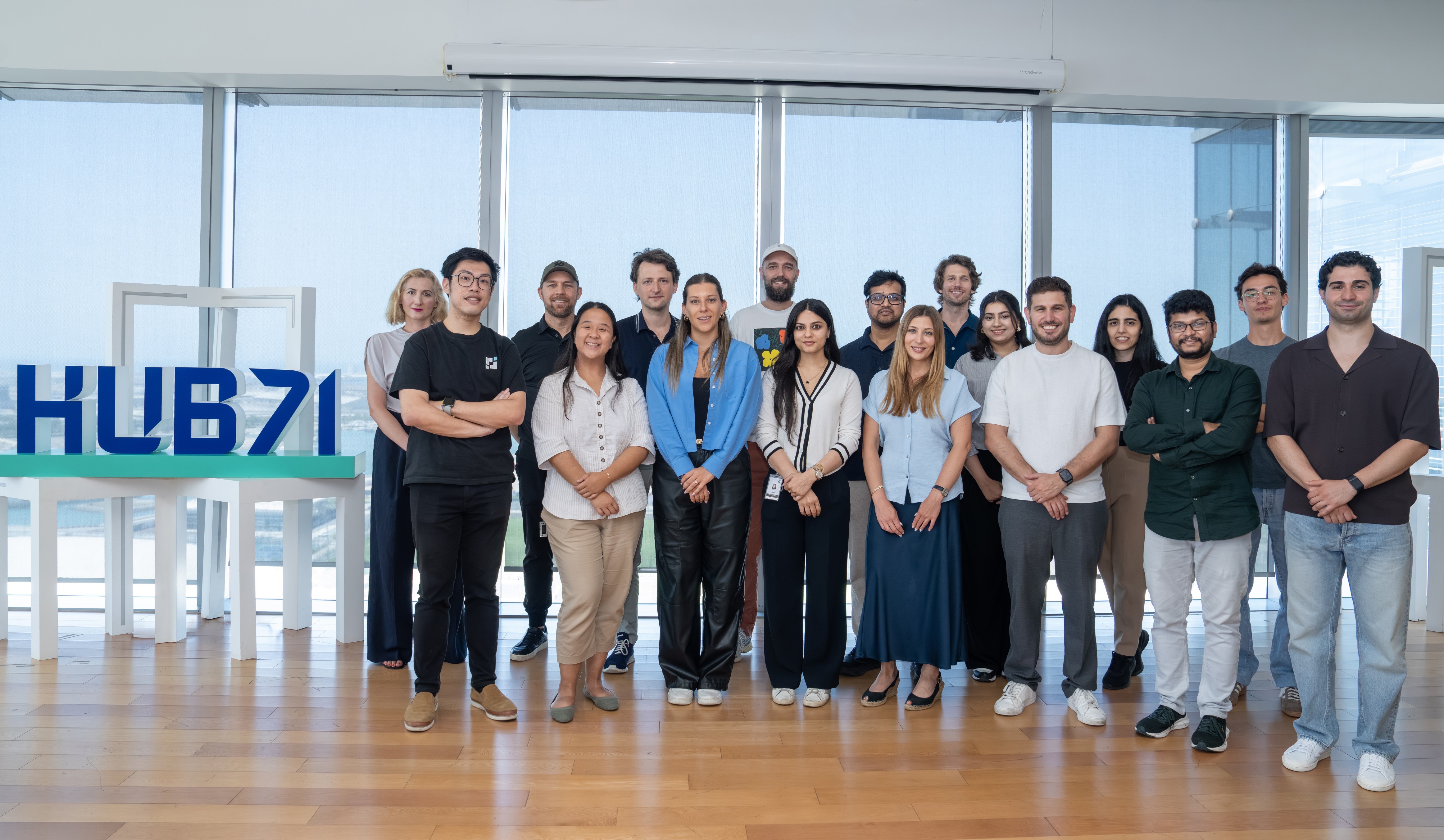
Hub71's Cohort 18 is, in several measurable ways, evidence that this pattern is breaking.
The headline figure from Abu Dhabi's latest intake is a 1.1 percent acceptance rate across 2,453 applications from 112 countries. That is competitive enough to demand attention on its own. But the number that actually reframes the conversation is this: for the first time in Hub71's history, every single one of the 27 selected startups was headquartered outside the UAE before joining. All 27 are now in the process of establishing operations in Abu Dhabi. Not exploring. Not considering. Licensing and operating.
That distinction matters enormously. There is a fundamental difference between a programme that attracts interest and one that changes where companies actually register, hire and build their teams. Cohort 18 represents the latter, and it is worth asking what has shifted to make that possible.
Start with the sourcing data, because it is the most structurally significant detail that most coverage of this cohort will miss. Of the 2,453 applications Hub71 received, 31 percent arrived through its partner and founder networks rather than through outbound marketing or open discovery channels. Nearly one in three applicants heard about this programme from someone already inside it.
In ecosystem terms, that referral rate is a maturity signal. Early-stage innovation hubs grow through broadcast: government promotion, media coverage, international roadshows. Mature ones grow through word of mouth from people who have experienced them and chosen to recommend them. When a founder who has scaled inside Hub71 is actively referring the next generation of founders to the same programme, the ecosystem has crossed a threshold that capital alone cannot manufacture.
Ahmad Ali Alwan, CEO of Hub71, frames the cohort in direct terms: "Cohort 18 reflects the continued flow of startups choosing to build from Abu Dhabi. The companies joining us are developing technologies with clear market application and the ability to scale. At Hub71, we enable founders to secure commercial traction and capital, and to grow from Abu Dhabi into global markets."
Commercial traction and capital. Those are the two variables that actually govern whether a founder builds a life in a city or treats it as a tax-efficient mailing address. Everything else, the co-working space, the mentorship dinners, the government meet-and-greets, is decoration. If those two variables are genuinely functioning in Abu Dhabi, the relocation numbers make sense. If they are not, no amount of incentive cash sustains momentum at this scale.
The geographic and sectoral range of Cohort 18 does not read like a regional talent pool. It reads like a global funnel with serious filters applied.
From the United States, EchoTwin AI arrives with USD 8 million raised and a technology that converts municipal fleets into mobile sensing networks, generating real-time digital twins to help city governments identify, predict and resolve infrastructure and compliance failures before they become crises. A company operating at that funding level and targeting government infrastructure clients had options. It chose Abu Dhabi.
From Kenya, Duck is building the retail data infrastructure that consumer brands in fast-growth markets have been missing: a unified platform that connects sales and inventory systems so brands can restock faster and stop losing revenue to stockouts. From Sweden, Wingbits has raised USD 9.4 million to run a global network of tracking stations that delivers real-time air traffic visibility through streaming flight data. From Hong Kong, KPay lands with USD 65 million raised and a fintech platform built to help businesses manage payments and financial operations at scale.
These are not companies looking for a soft landing. They are companies with existing capital, existing products and existing options. The fact that they are all in Abu Dhabi now is a harder signal than any government programme can generate through promotion alone.
The cohort distributes across Hub71's core Access Programme and three specialist ecosystems, each of which reflects a deliberate regulatory and commercial calculation rather than opportunistic sector-chasing.
Hub71+ Life Sciences takes seven startups, including UK-based Amilis, which has raised USD 1.6 million to build an AI-powered clinical decision support platform for complex reproductive health conditions. The platform integrates patient data to improve diagnosis and management in a clinical domain that has historically been underserved by digital health infrastructure. Life sciences is a sector where proximity to regulatory bodies and government health systems is not a nice-to-have. It is the product.
Hub71+ ClimateTech onboards five startups, among them UK-based Persium, which has secured USD 1.7 million to develop miniaturised air quality sensors and AI-powered digital twins for pollution measurement. India's Uravu Labs, focused on atmospheric water solutions, joins the same track, part of a growing bilateral innovation corridor that the UAE-India Comprehensive Economic Partnership Agreement has actively strengthened. Endimension Technology, an AI-first radiology platform also from India, reflects the same dynamic.
Hub71+ Digital Assets adds six startups into Abu Dhabi's regulated digital finance environment, where ADGM's established framework offers something most jurisdictions still cannot: regulatory clarity that allows compliant operators to build without the legal ambiguity that has derailed digital asset companies in less structured markets.
Among the most practically instructive details of Cohort 18 is the Hong Kong story. Three startups, Pubrio, Craftt and KPay, joined Cohort 18 after participating in Hub71's Hong Kong Immersion Programme, which launched in 2024. All three converted from programme visitors to founding ecosystem members.
That conversion rate should be read as a proof of concept for a specific programme design philosophy. Instead of asking international founders to make a blind commitment to relocating, the Immersion Programme lets them experience the ecosystem before they decide. The conversion from visit to residency is the output you want, and the Hong Kong results suggest the model is working.
KPay's inclusion is the sharpest data point in this group. A company with USD 65 million raised is not looking for government validation. It is looking for market access, regulatory certainty and a credible base for regional expansion. Its decision to anchor in Abu Dhabi from the Hong Kong programme is a commercial calculation, not a promotional one.
With Cohort 18 now onboarding, Hub71's total ecosystem has reached 525 companies. That number is large enough to generate the network effects that distinguish a genuine ecosystem from a curated list of startups. At 525, there is critical mass for one company's enterprise relationship to become another company's commercial introduction. There is enough deal flow for investors to build a regional thesis rather than a one-off bet. There is enough shared experience for the referral rate to keep compounding.
The 12-month Access Programme provides each cohort company with up to AED 250,000 in in-kind incentives and AED 250,000 in cash via SAFE note, alongside investor introductions, regulatory navigation and access to Hub71's corporate and government partner network. Top performers qualify for follow-on support. The structure is designed less as a grant and more as a commercialisation runway, which is the correct framing if the goal is companies that stay rather than companies that visit.
The harder question, the one that the relocation data in Cohort 18 starts to answer but does not fully resolve, is whether these companies are still in Abu Dhabi in three years, whether they are hiring locally, raising follow-on capital regionally and generating the kind of ecosystem density that sustains itself without continuous government input. That is the test. Cohort 18 sets it up. The results come later.
Stitch Wants to Be the Operating System Every Bank Wishes It Had Built 20 Years Ago
Exclusive: How UAE Founders Can Build Resilient Teams During Crisis
Meet Sophia: The AI "Employee" Who Just Got Hired to Run HR for an Entire Corporate Empire
Related Articles