

AI
Oct 23, 2026
AI
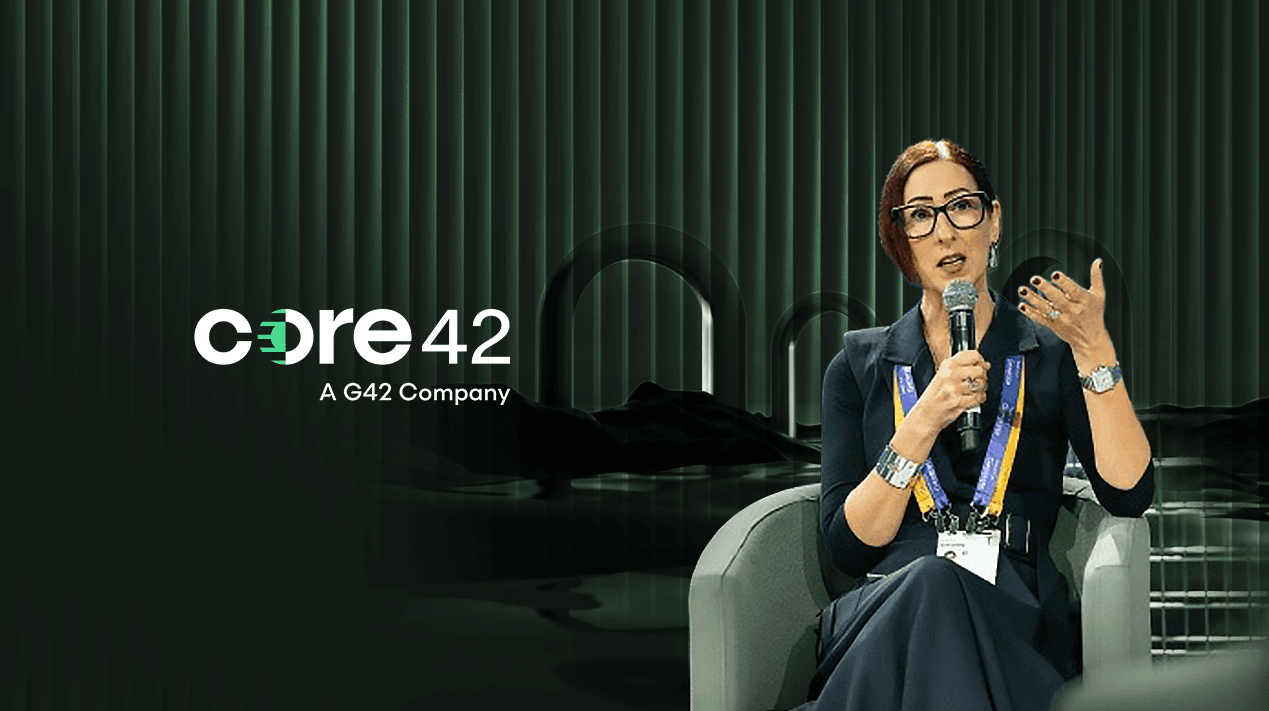
On April 28, 2026, Core42 named Emma Cloney as its Senior Vice President of International Sales and Strategy and General Manager for Ireland. The appointment is, on its face, a fairly standard executive hire. A decorated technology leader with 30 years at Google Cloud and Microsoft joins a fast-growing cloud company to run its global commercial push. You could write that story in a paragraph.
[For more news, click here]
But the context around it is anything but standard. It signals something larger about where the AI infrastructure market is heading, who is positioned to win, and why European sovereignty has moved from policy talking point to boardroom imperative.
Core42, a G42 company headquartered in Abu Dhabi, has spent the past several years quietly assembling one of the most ambitious sovereign AI infrastructure plays outside the United States. Cloney is now the person tasked with turning that ambition into a European market reality, operating from the company's regional headquarters in Dublin.
To understand why this appointment matters, you first need to understand what is happening to the European AI market right now, and it is moving faster than most policy conversations can keep up with.
More than 60 percent of European organizations are now actively seeking sovereign AI solutions, according to data cited by Core42. That figure represents something of a tipping point. Sovereign cloud, once a niche concern of government ministries and defense contractors, has become a mainstream procurement priority for financial institutions, healthcare providers, and critical infrastructure operators across the continent.
The numbers behind that demand are staggering. Spending on AI-optimized servers is projected to hit $46.8 billion globally in 2026. A significant and growing portion of that spend is explicitly tied to sovereignty requirements: data residency guarantees, regulatory compliance with frameworks like the EU AI Act and GDPR, and the ability to run sensitive workloads without routing them through infrastructure controlled by foreign entities.
Core42 has built its entire business model around being the answer to exactly that problem. The company operates GPU-accelerated compute infrastructure and sovereign cloud platforms designed for organizations that need high-performance AI capabilities but cannot or will not compromise on where their data lives and who has access to it.
In December 2025, Core42 planted its flag in Dublin, establishing its European headquarters in a city that has become one of the continent's most important technology hubs. The choice was deliberate. Ireland sits at the intersection of US technology investment, European regulatory jurisdiction, and Atlantic connectivity, making it an ideal staging ground for a company trying to serve both European enterprise clients and the growing number of US-headquartered multinationals that need to manage AI workloads in compliance with EU law.
The Dublin hub is designed to function as more than a sales office. It is intended to serve as a center for customer delivery, technical leadership, and partner engagement, the kind of deep operational presence that companies building long-term infrastructure relationships require.
Cloney's appointment as General Manager for Ireland places her at the center of that strategy. But her remit extends far beyond Dublin. As SVP of International Sales and Strategy, she will oversee Core42's go-to-market approach across key global markets, working to scale the company's sovereign cloud and AI cloud offerings as international demand accelerates.
If Core42 needed someone who has watched the cloud industry grow from experimental concept to critical infrastructure, Cloney fits the brief with unusual precision.
Her most recent role was Managing Director of Global Business Programmes at Google Cloud, where she led initiatives targeting global sales and technical talent pipelines while improving operational efficiencies that accelerated the company's time to market.
Before that, she was embedded in Google Cloud's EMEA expansion during its formative growth phase, a period when the business scaled from a nascent challenger into a multi-billion-dollar operation competing credibly with AWS and Microsoft Azure.
Her career prior to Google was no less consequential. At Microsoft, she led a global team managing strategic technology partnerships across the financial services sector, overseeing revenue, go-to-market strategy, and joint solution development at international scale.
She later served as Chief Operating Officer for Advertising and Online in Europe, managing a team of 120 people across 15 countries. She also held board-level responsibilities at SAP UK and Ireland, where cloud revenue growth was her primary mandate.
The pattern across those roles is consistent: Cloney has spent her career building and scaling technology businesses in markets that were either emerging or rapidly transforming. Sovereign AI infrastructure in Europe in 2026 fits squarely in that mold.
"Across Europe and other international markets, the focus is shifting to what it takes to run AI reliably at scale. Sovereignty, resilience, and infrastructure are becoming the deciding factors," said Sherif Tawfik, Chief Business Officer, Core42
It is worth stepping back to understand what Core42 actually offers, because the company's proposition is more specific than the broad category of "cloud" suggests.
At its core, Core42 operates GPU-accelerated compute infrastructure: the kind of raw processing power that training and running large AI models requires. The company's sovereign cloud layer wraps that compute in data governance, residency controls, and compliance frameworks designed for regulated industries and government clients.
That combination, high-performance AI compute with sovereignty guarantees, is precisely what European enterprises are struggling to find from existing providers. The US hyperscalers offer scale and capability but cannot always satisfy the sovereignty requirements that European regulators and enterprise risk teams are increasingly enforcing. European-native cloud providers often struggle to match the GPU infrastructure depth that cutting-edge AI workloads demand.
Core42's pitch is that it can do both. Whether that pitch lands with European enterprise buyers at the scale the company is targeting will be the defining test of Cloney's tenure.
Senior executives at Cloney's level do not take new roles lightly, and the reasoning she articulates for joining Core42 is revealing about where she sees the market heading.
"This is a pivotal moment for the company, with strong momentum, a differentiated position in the market, and a clear ambition for growth," Cloney said. "What drew me to the opportunity is the scale of that ambition and the focus behind it. I look forward to working with the team to strengthen our presence in Europe and support the next phase of expansion."
The phrase "differentiated position" is doing real work in that quote. The sovereign AI infrastructure market is crowded with ambition but thin on companies that have actually built the infrastructure at scale. Core42's backing from G42, which has significant investment relationships across the Middle East, Europe, and the United States, including a major partnership with Microsoft, gives it a capitalization depth that most competitors cannot match.
Tawfik, Core42's Chief Business Officer, framed the appointment in terms of the broader market shift: "Core42 is investing in building a strong regional presence to support that shift, and Emma's appointment reflects our commitment to delivering on that vision. Her experience in scaling cloud businesses within leading global technology companies, combined with her deep understanding of the European market, will be instrumental as we expand our footprint and partnerships across the region."
Cloney's profile extends beyond her commercial track record. She is actively involved in mentoring emerging female leaders across Irish and international business networks, and she contributes to governance conversations as a member of WB Directors UK and the Institute of Directors. She has also supported charitable organizations on questions of strategy and long-term sustainability.
She holds degrees from University College Dublin and INSEAD in Fontainebleau, an academic pedigree that speaks to both her Irish roots and her comfort operating at the highest levels of international business.
Cloney's appointment is significant, but it is ultimately one data point in a much larger story about whether sovereign AI infrastructure can emerge as a genuine alternative to hyperscaler dominance in Europe.
The structural conditions are clearly favorable. European regulators are tightening AI governance requirements. Enterprise risk functions are scrutinizing data residency with greater rigor than ever before. And the sheer computational demands of modern AI, particularly for inference workloads at scale, are making purpose-built AI infrastructure more attractive than general-purpose cloud.
The challenge is execution. Building enterprise cloud relationships in Europe is a long game. It requires technical credibility, regulatory expertise, and the kind of sustained customer support that earns trust across multi-year contracts. That is exactly the kind of work that Cloney has spent her career doing.
For organizations watching the sovereign AI infrastructure market take shape in real time, Core42's European push is one of the more consequential stories to track in 2026. The demand is real, the technology is ready, and the hire signals genuine intent. Now comes the harder part: delivering at scale.
Related Articles


