

Big Tech
Oct 13, 2026
Big Tech
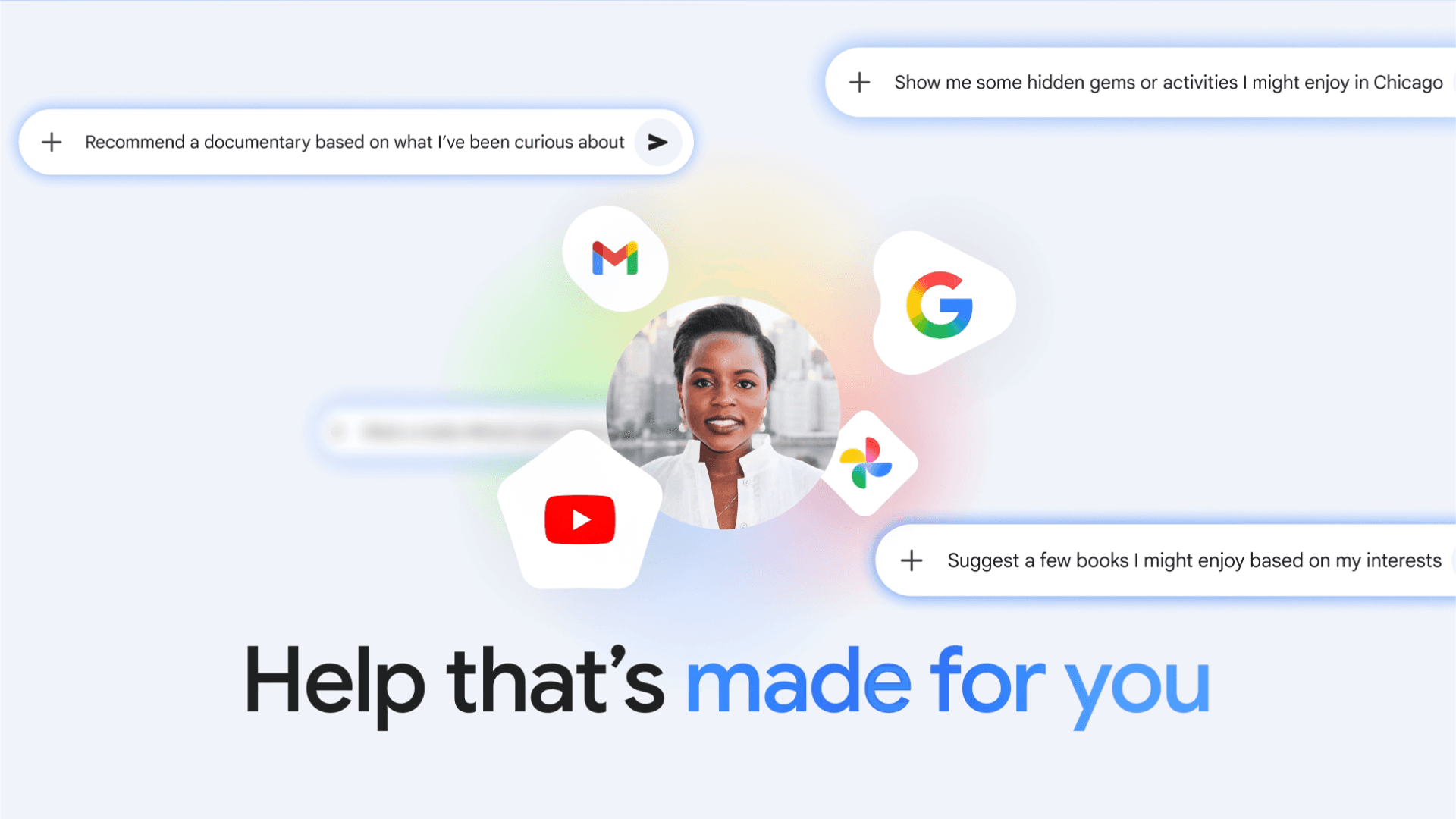
Personal Intelligence, Gemini's context-aware memory system, is now live across the Arab world. It is a genuine shift in how AI assistants work, and the privacy questions it raises are just as significant as the convenience it promises.
by Kasun Illankoon, Editor in Chief at Tech Revolt
[For more news, click here]
There is a version of AI that knows you. Not in the creepy, data-brokering sense that has haunted the tech industry for two decades, but in the way a genuinely attentive assistant might: one that remembers you once stayed at a riad in Marrakech, noticed you have been asking about historical fiction lately, and can pull those two threads together when you ask it to plan your next trip or suggest your next read.
That version of AI just arrived for millions of users across the Arab world. On Friday, Google officially launched Personal Intelligence, a feature within its Gemini AI assistant, to users in the region. The rollout follows an earlier U.S. debut and represents one of the most substantive expansions of AI personalization Google has ever offered outside its home market.
The core idea is deceptively simple: Gemini can now securely connect to a user's existing Google apps, like Gmail and Google Photos, and draw on that information to generate answers that feel less like a search engine result and more like advice from someone who actually knows your life.
Google describes Personal Intelligence as having two core strengths: reasoning across complex sources, and retrieving specific details from an email or a photo to answer a precise question. In practice, it often combines both, working across text, photos, and video simultaneously to produce answers that are tailored to you specifically.
Ask Gemini to suggest a new book and it might cross-reference your Gmail history, your past searches, and the genres visible in photos you have saved. Ask it to build a travel itinerary and it can factor in destinations you have visited, dietary preferences it has inferred from your messages, and travel windows it sees in your calendar. These are not hypothetical party tricks. They are the kinds of tasks that currently require users to either do all the cognitive work themselves or surrender their data to a patchwork of third-party apps, many of which are far less transparent about how they store and use that information.
Yes, with caveats. For users already inside the Google ecosystem, Personal Intelligence offers a genuinely useful upgrade. The privacy architecture is more transparent than most alternatives. But users should read what they are consenting to, connect only the apps they are comfortable with, and treat the feature as a tool they control rather than a background process they forget about.
Google says the capability helps craft responses tailored specifically to a user's previous experiences and interests. That framing matters. It positions Gemini not as a search engine that retrieves generic answers, but as an assistant that understands individual context, the same competitive ground that OpenAI, Apple, and Samsung are all fighting over right now.
The most important thing to understand about Personal Intelligence is that it was designed with an opt-in model. Connecting apps is off by default, a choice that stands in contrast to how many tech products handle personalization, which is to say quietly and with fine print.
When a user enables the feature, Gemini accesses their data specifically to answer requests, not to train models or inform advertising. Because that data already lives on Google's servers securely, users do not have to send sensitive information to a third-party service. Google also says Gemini will try to reference or explain the information it used from connected sources, so users can verify how an answer was reached.
These are meaningful commitments. But they exist within a company whose entire business model is built on understanding user behavior. That tension does not disappear because a feature is opt-in. Users in the Arab world, many of whom are operating in regulatory environments that are still developing frameworks for AI data governance, should approach Personal Intelligence with the same informed curiosity they would bring to any powerful new tool: understand what it does, understand what you are consenting to, and make an active decision rather than a passive one.
The timing of this launch is worth pausing on. AI adoption across the Arab world has accelerated sharply in recent years, driven by young, tech-fluent populations in markets like Saudi Arabia, the UAE, Egypt, and Jordan. Governments in the Gulf have made AI a centerpiece of their national transformation strategies, and consumers have responded with genuine enthusiasm for new tools.
What has lagged is access to the most advanced features of frontier AI products, which have historically been released in English-speaking Western markets first, sometimes by months, sometimes by years. The Personal Intelligence rollout signals that Google is treating the Arab world as a first-class market for its most ambitious AI capabilities, not an afterthought.
That is a significant development for regional users who want parity with what their counterparts in the U.S. are experiencing. It is also a signal to competitors that the Arab world is a battleground worth showing up to with your best product, not a second-tier release.
Personal Intelligence is currently available to all users in the Arab world subscribed to Google AI Plus, Pro, and Ultra plans. Google says it intends to bring the experience to free users in the coming weeks. The feature requires manual activation, which is consistent with its opt-in privacy philosophy.
Users control exactly which apps are linked. Each connected app expands what Gemini can do, but the experience remains meaningful even with only one or two sources connected. You do not have to hand over everything to get value from the feature.
For years, the promise of a truly personal AI assistant felt just out of reach. Systems were either too generic to be genuinely useful or too invasive to be genuinely trusted. Personal Intelligence does not fully solve that tension, but it moves the needle in a direction that takes user agency seriously.
Google, on transparency in Personal Intelligence: "Users also won't have to guess where an answer comes from: Gemini will try to reference or explain the information it used from their connected sources so they can verify it."
The transparency commitment, that Gemini will show its work when drawing on personal data, is the detail that most distinguishes this from how AI personalization has typically been handled. Most recommendation systems are black boxes. You get a suggestion; you have no idea why. If Google actually delivers on the promise of explainable personalization at scale, that is a meaningful step toward AI that earns trust rather than simply demanding it.
The Arab world now has access to that experiment. How users engage with it, how they push back on it, and what they demand from it going forward will shape how products like this evolve in the region. The technology has arrived. The more interesting question is what users decide to do with it
Related Articles


