

AI
Sep 18, 2026
AI
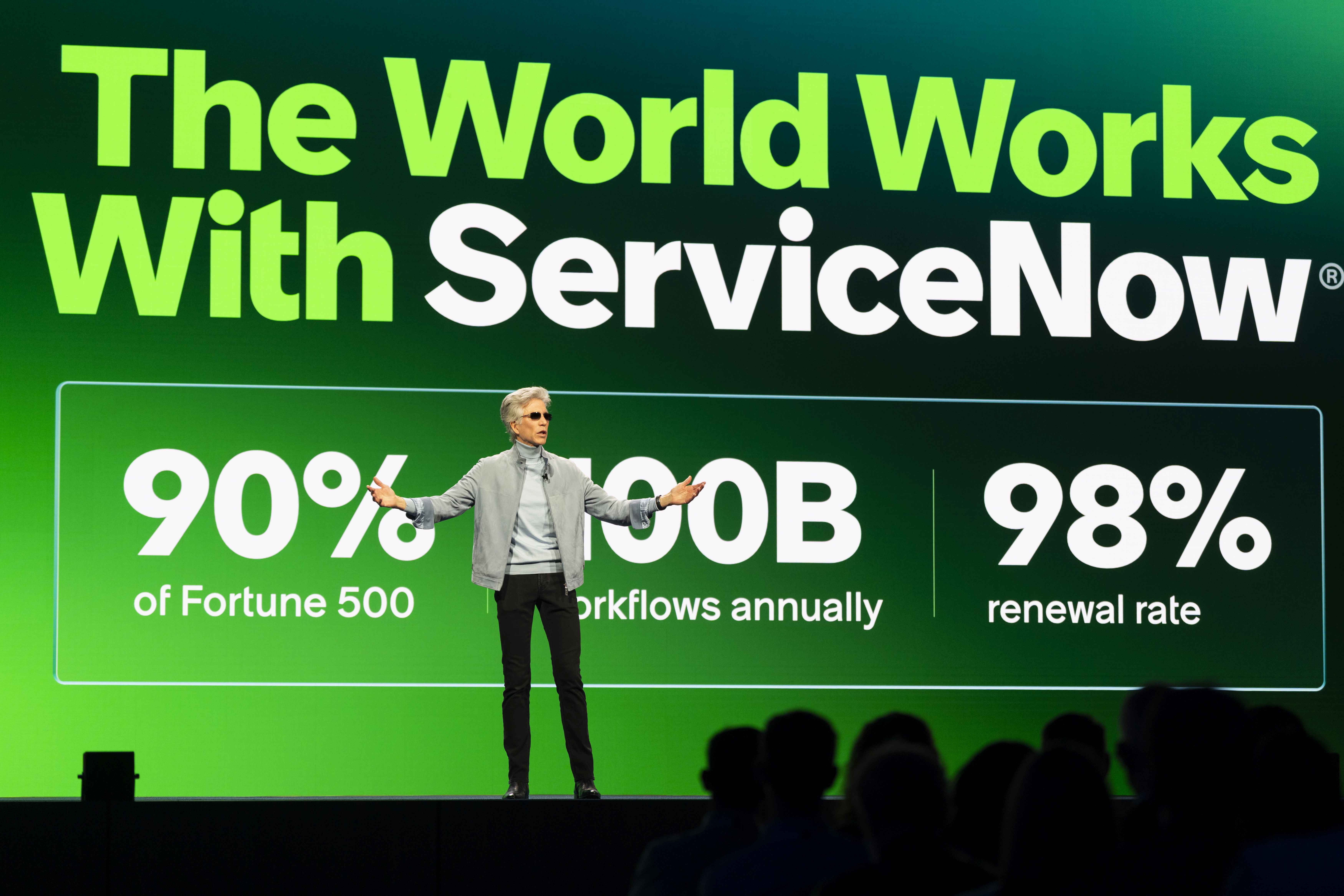
At its annual Knowledge conference, ServiceNow unveiled a sweeping vision for AI that goes far beyond chatbots and automation tools. The company is betting that enterprises don't just need more AI — they need one platform to govern all of it.
by Kasun Illankoon, Editor in Chief at Tech Revolt
[For more news, click here]
There is a problem quietly bankrupting the ambitions of nearly every large company in the world right now, and it has nothing to do with a lack of artificial intelligence. It has to do with too much of it, deployed badly.
Over the past three years, enterprises have spent billions of dollars buying AI tools, licensing large language models, building agents, and bolting intelligence onto existing software stacks. The result, in most cases, is a fragmented mess: hundreds of applications, each running its own AI layer, none of them talking to each other, none of them connected to actual business outcomes. Agents make decisions without governance. Data feeds models without quality controls. And executives are left staring at dashboards that cannot tell them whether any of this is actually working.
ServiceNow, the enterprise software giant best known for IT service management, made a very public argument this week that it has the solution to that exact problem, and that it is further along in building it than anyone else.
At Knowledge 2026, the company's annual customer and partner conference, ServiceNow laid out a vision it is calling the "AI control tower for business reinvention." The announcement package was broad, technically dense, and clearly designed to reframe the company not as a workflow tool but as the operating system of the AI-powered enterprise. That is an enormous claim. But the details behind it are worth examining carefully.
Before getting into what ServiceNow announced, it is worth pausing on why the problem it is describing actually resonates with enterprise buyers right now.
The average large company does not run one AI system. It runs dozens, scattered across HR, finance, IT, customer service, and security. Each vendor has added its own AI layer to its own software. There is no shared context between these systems, no common governance framework, and no way to audit what any individual agent did or why. This is sometimes called "AI chaos," and while the phrase has a marketing ring to it, the underlying reality is something CIOs and CTOs have been complaining about for the better part of two years.
ServiceNow's pitch is that it already sits at the center of enterprise workflows by virtue of its existing platform, and that this position uniquely qualifies it to provide the connective tissue that AI chaos is missing. The company processes more than 100 billion workflows and 7 trillion transactions annually across its customer base, a scale that, in theory, gives it the data depth to train and ground AI models in ways that generic foundation models simply cannot match.
The headline product is something called ServiceNow Otto, a new enterprise AI experience that unifies conversational AI, autonomous workflows, and enterprise search into a single interface. The ambition is significant: rather than an employee toggling between a chatbot, a search bar, and a ticketing system, Otto is meant to complete work end to end across every system, desktop, and workflow in one place.
Alongside Otto, the company announced a substantial expansion of what it calls its Autonomous Workforce — a suite of AI specialists designed to handle complete job functions rather than isolated tasks. These are not simple bots that route tickets. They are, according to ServiceNow, agents that can take a request from intake all the way through resolution, with defined roles, enterprise authority, and governance built into the process.
The company offered some striking usage figures to back this up. At ServiceNow itself, it said the Autonomous Workforce already handles over 90 percent of employee IT requests, with its Level 1 Service Desk AI Specialist resolving assigned cases 99 percent faster than human agents. ServiceNow's Autonomous CRM, meanwhile, resolves more than 100 million customer cases per month, orchestrates over 16 million orders, and configures more than seven million quotes. Those numbers, if accurate, represent a meaningful demonstration of what enterprise-scale AI execution can look like when it is grounded in real workflow data.
"Knowledge 2026 is where the world comes to witness the next frontier of innovation: the Autonomous Platform where AI thinks and workflows act," said Bill McDermott, chairman and CEO of ServiceNow. "This is the moment ServiceNow moves beyond the platform of platforms to become the AI agent of agents, connecting any model, any cloud, and any data source. We've built the only platform that can sense across the enterprise, decide the right action, act across any workflow or application, and secure every step. We are the rules and rails of business."
While the Otto announcement will attract the most attention, the most consequential part of what ServiceNow unveiled at Knowledge 2026 may be its expanded AI Control Tower.
The original AI Control Tower gave enterprises visibility into their AI deployments. The new version goes considerably further, offering discovery across more than 30 enterprise integrations, real-time observability into agent behavior, automated risk and compliance controls, identity governance extended to hyperscaler environments and AI models, and financial dashboards that track AI spend.
Critically, it also extends identity governance to AI agents themselves, not just human employees, mapping permissions across human, machine, and AI agent identities simultaneously. This matters because one of the most significant unaddressed risks in enterprise AI today is the question of what agents are actually authorized to do, and whether anyone can audit that after the fact. ServiceNow is arguing that it can provide that audit trail, and that no one else currently can.
"A year ago, AI Control Tower gave enterprises visibility into their AI. Today it governs the entire AI lifecycle across every agent, model, dataset, asset, and identity, across every cloud and enterprise system," said Amit Zavery, president, chief operating officer, and chief product officer at ServiceNow. "This is the infrastructure enterprises need to scale AI with confidence, and only ServiceNow has the workflows, context, and enterprise depth to deliver it."
Knowledge 2026 came just days after ServiceNow held its annual Financial Analyst Day, where the company outlined a target of more than $30 billion in subscription revenues by 2030. Of that, ServiceNow said AI is expected to represent more than 30 percent of annual contract value by the end of the decade.
That is an aggressive trajectory, and it reflects just how central the AI platform play is to ServiceNow's long-term business model. The company is not treating AI as a feature add-on. It is structuring its entire revenue thesis around it.
ServiceNow's framing as the "AI agent of agents" is compelling, but it is worth noting that it is not operating in a vacuum. Salesforce has been investing heavily in its own agentic AI platform, Agentforce. Microsoft is weaving Copilot into every corner of its enterprise stack. SAP, Oracle, and a growing roster of vertical AI players are all making similar arguments about centrality and context.
What ServiceNow has that most of those competitors do not is a platform that was designed from the ground up for workflow orchestration across the entire enterprise, not just one functional domain. Its native position in IT service management, HR, and security operations means it has workflow data that cuts across organizational silos in ways that a CRM-first or productivity-suite-first competitor cannot easily replicate.
Whether that advantage is durable enough to justify the $30 billion revenue target is a question that will take years to answer. But the early evidence from customers suggests the thesis is at least coherent.
"As a company that moves more than a trillion of dollars in payment volume annually, the ServiceNow AI Platform must be as fast and resilient as the business itself," said Matthew Kritzer, principal platform architect at PayPal. "Today, we're running Case Management, Cloud Discovery, SecOps, and Now Assist at a scale we once only imagined. Database tasks are twice as fast, and our longest-running operations are five times faster. ServiceNow has become a key part of our enterprise AI and Automation strategy."
The broader significance of what ServiceNow announced at Knowledge 2026 is not any single product. It is the argument embedded in the entire announcement package: that the next phase of enterprise AI is not about getting better models. It is about building the infrastructure to govern, ground, and execute AI at scale inside the workflows where actual business happens.
That is a fundamentally different framing than the one that dominated AI conversations two years ago, when the discussion was almost entirely about which foundation model was most capable. Capability is now broadly available. The bottleneck is trust, governance, and execution. And that is precisely where ServiceNow is placing its bets.
Whether this vision fully materializes is another matter. Enterprise software is littered with grand platform promises that took longer than expected to deliver, or never quite arrived. But the problem ServiceNow is describing is real, the market for solving it is enormous, and the company's architectural position gives it a plausible path to owning it.
The era of AI chaos may have a cure. It just might come packaged in an enterprise service management platform.
Related Articles


