Startups
Jun 22, 2026

Popcorn promises a finished advertisement from a single product link in ten minutes. Its founder says the harder problem was making Arabic sound like it came from the audience, not at it.
By Kasun Illankoon, Editor in Chief at Tech Revolt
[For more news, click here]
In a region where most artificial intelligence products are built in English and translated into Arabic afterward, Shady Essam built his company in the reverse order. His new venture, Popcorn, makes advertisements: a user drops in a product link from Shopify, TikTok Shop, or almost anywhere else, and within about ten minutes the platform returns a finished video, cast, scripted, voiced, and set, without a camera, an editor, or a prompt typed by the customer. But the detail Essam returns to most often is not the speed. It is the dialect.
Popcorn's voice and lip-sync engine does not produce one flavor of Arabic. It distinguishes a Saudi Najdi accent from an Egyptian Cairene one, a Khaleeji inflection from a Levantine one.
“We didn’t see Arabic localization as a feature,” said Shady Essam in an exclusive interview with Tech Revolt's Editor in Chief, Kasun Illankoon. “We saw it as the market itself. Most AI products are built in English and later translated into Arabic. The result is often technically correct but culturally disconnected.”
Essam did not arrive at Popcorn from a machine learning lab. He spent more than a decade working with brands and advertisers across the Middle East as the founder of Dmenta, an influencer marketing company he started in 2012 and later sold to ArabyAds Group. It was there, watching brands try to move at the speed of culture, that the idea for Popcorn took shape.
“A brand could spot a trend in the morning and want to react immediately, but producing a high-quality commercial still required weeks of coordination, filming, editing, approvals, and distribution,” Essam said. “At some point, I realized brands weren’t actually buying film crews. They were buying outcomes. They wanted attention, engagement, storytelling, and business results.”
Once generative AI became capable of producing usable visual content, he said, the question stopped being whether the technology could make a video at all.
“The question changed from ‘Can AI generate videos?’ to ‘Why should great ideas wait weeks to become reality?’ That became the foundation of Popcorn. Our goal was never to replace creativity. It was to remove friction between an idea and its execution.”
Essam argues that most generative AI products quietly assume their users are willing to become prompt engineers. Popcorn was built on the opposite assumption.
“The average brand manager doesn’t wake up wanting to write prompts,” he said. “They want to launch a campaign.”
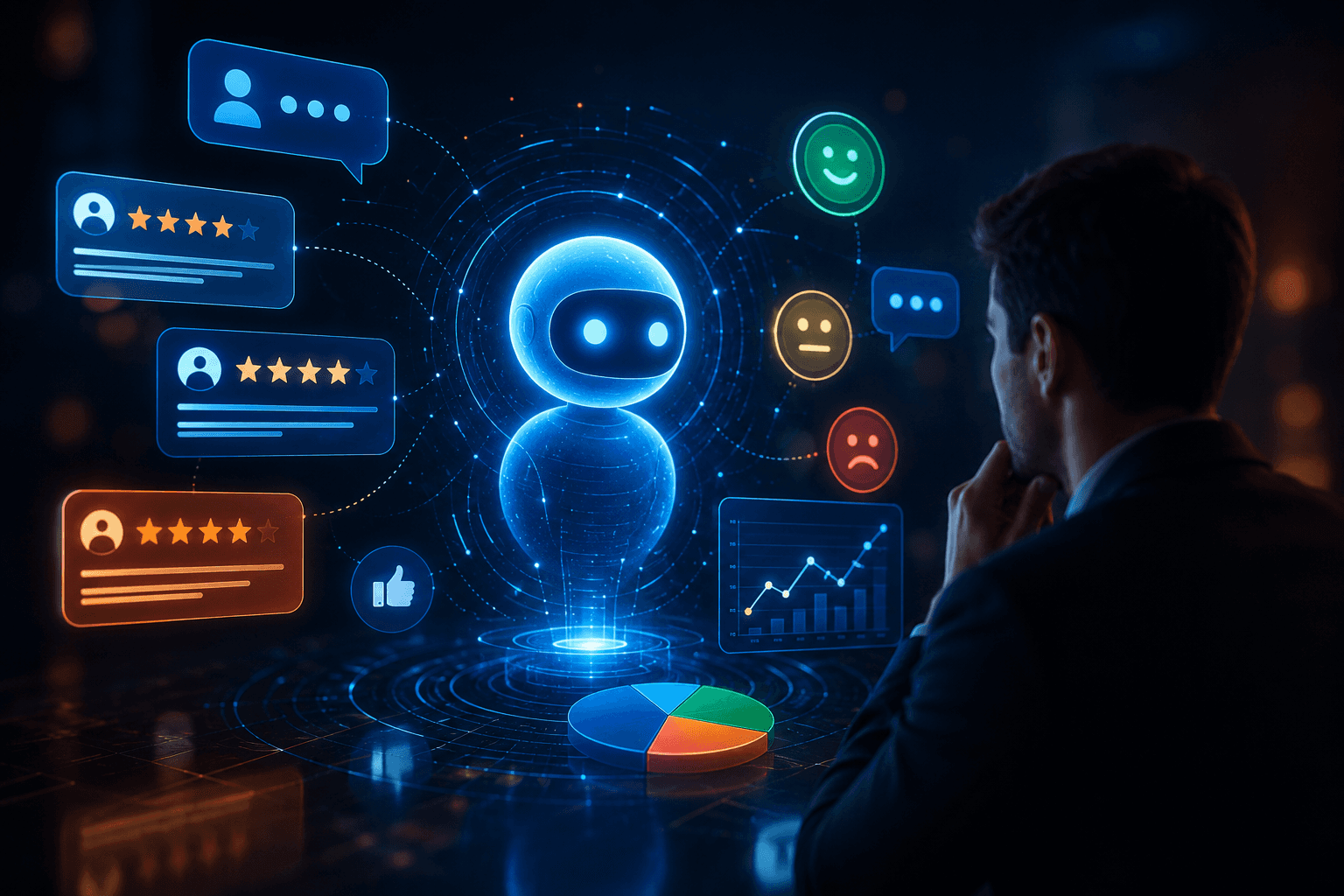
A single product link triggers a chain of automated decisions: understanding the product, identifying its audience, generating creative angles, choosing visuals, writing a script, casting a voice, and synchronizing lip movement, before assembling the result into a finished ad.
“The challenge was orchestrating dozens of AI decisions behind the scenes while making the experience feel as simple as pressing a button,” he said. “We often say that the real innovation isn’t AI generation itself. It’s eliminating the need for users to think about AI at all. Our goal was to make the technology disappear and let creativity take center stage.”
Before any video is generated, the platform analyzes the product itself, pulling category, pricing, positioning, and customer reviews to determine which marketing angle is likely to resonate.
“A skincare product requires a completely different narrative than a restaurant, a real estate project, or a fashion brand,” Essam said. “We think of Popcorn less as a video generator and more as an AI creative strategist connected to an AI production studio. The video is simply the final output. The real work happens in understanding what makes a customer care in the first place.”
Most AI products, Essam argued, are designed for an English-language default and adapted regionally afterward.
“A Saudi audience doesn’t speak like an Egyptian audience,” he said. “A Khaleeji brand doesn’t communicate the same way a Levantine brand does. Language is more than words; it’s identity, trust, and cultural context. From day one, we believed that AI adoption in the Arab world would only happen if the experience felt native rather than translated.”
That conviction is why dialect support became, in his words, “a foundational design principle inside Popcorn,” with early investment in Arabic lip-sync and dialect-specific voices rather than a later expansion.
“We wanted the content to sound like it was created by the audience, not for the audience,” he said. “The future of AI in MENA won’t be won by the company with the biggest model. It will be won by the company that understands the region most deeply. For us, Arabic wasn’t an expansion strategy. It was the starting point.”
Essam draws a deliberate line between his company and other AI video tools. “Most AI startups are competing to build better tools,” he said. “We’re focused on building a better outcome. Traditional production houses sell creativity, execution, and production capacity. AI startups often sell technology. We believe the market ultimately cares about neither. It cares about results.”
That framing extends to how he talks about advertising agencies, which he treats as future partners rather than competitors.
“We don’t see agencies as competitors. The best agencies will become some of our biggest partners,” he said. “Just as digital transformed agencies twenty years ago, AI will transform them again.”
Asked whether AI will eventually replace agencies outright, Essam was unambiguous.
“No, I don’t believe AI will replace agencies,” he said. “Digital didn’t replace agencies. Social media didn’t replace agencies. Mobile didn’t replace agencies. Instead, each wave created a new generation of agencies that adapted faster than everyone else. AI will be no different. What AI will replace are repetitive workflows, production bottlenecks, and unnecessary complexity.”
His closing line on the subject doubled as a warning to the slow movers: “The agencies that adapt will become more powerful than ever. The ones that don’t may find themselves competing against organizations that can create, test, and distribute content at a completely different speed.”
Popcorn currently operates four studios at launch pricing discounted by half: a Product Studio aimed at small businesses, where a 720p video starts at five dollars; a Creator Studio for higher-volume full HD output; an Agency Studio built around client-delivery workflows; and a Cinema Studio aimed at filmmakers working on short films and episodic content rather than social ads.
“Content creators, affiliate marketers, agencies, filmmakers, and enterprises don’t all need the same workflow,” Essam said. “That’s why we built Popcorn as a family of specialized studios rather than a single AI product.” The company says it is finalizing custom agreements with several regional groups and preparing to announce a collaboration on what would be among the first Arabic AI-generated series for a major video-on-demand platform. “Our strategy has never been to sell a single AI tool,” he said. “Our strategy is to build purpose-built creative infrastructure for every segment of the content economy.”
Lip-sync and synthetic likeness sit close to one of the more unresolved questions in AI: who controls a face or a voice once it can be reproduced. Essam frames it as a business wager as much as an ethical one.
“We believe the future of AI content creation will be defined by trust, not technology,” he said. “A person’s face, voice, and likeness are valuable assets. They should be managed, licensed, and protected just like any other form of intellectual property.”
Popcorn lets users upload reference photos to build their own likeness inside the platform, with rights remaining with the user.
“Our goal is not to create AI versions of people without permission,” Essam said. “Our goal is to help people securely own, manage, protect, and monetize their digital presence. The companies that win in the long run won’t be those with the most advanced models. They’ll be the ones that earn the most trust.”
Popcorn's beta went live less than two weeks before this interview, without a launch campaign or paid acquisition spend. The company has reported registering more than 2,800 users in its first fifteen days. What struck Essam was not any single campaign result but the speed of adoption.
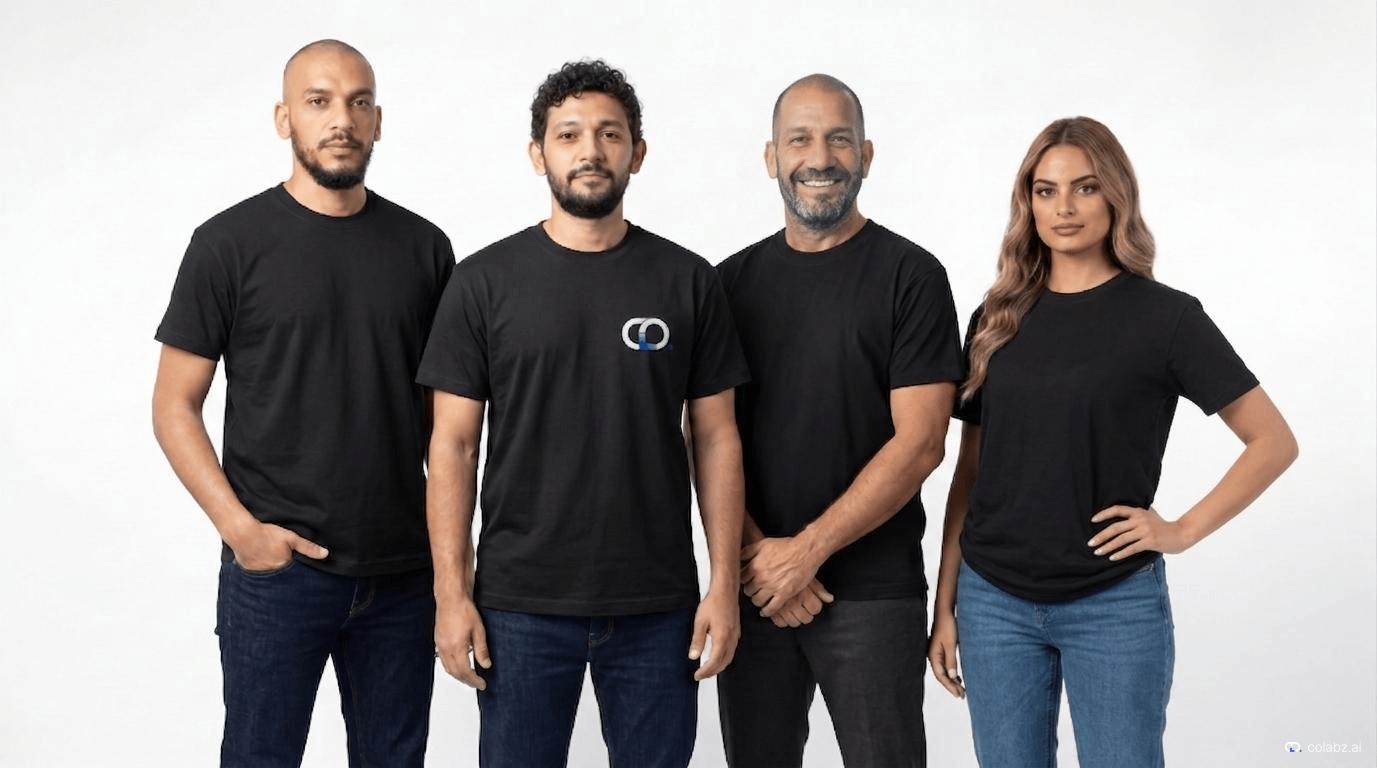
“In a very short period of time, users generated more than seven hours of video content through the platform,” he said. “That was a strong signal that the market wasn’t simply curious about AI. It was actively looking for a better way to create content. For us, that validation was more important than any individual campaign result.” He and co-founder Mohamed Haidar expect to announce partnerships with regional media groups in the coming months. “In many ways, we believe the real launch of Popcorn is still ahead of us.”
His ambition for the next two years reaches beyond advertising into entertainment and other industries.
“We want to help build a future where anyone in the region can turn an idea into world-class content, regardless of their technical skills, production budget, or geographic location,” he said. “And I believe we’re only getting started.”
How the UAE is Reimagining Statecraft With an AI Spokesperson
Why E-Commerce Brands Can't Keep Up With Content Demand, and What's Replacing the Photo Shoot
The Case for Fewer Dashboards: Censys and the Push to Embed Intelligence Into Security Workflows
Related Articles