
Startups
Sep 29, 2026
Startups
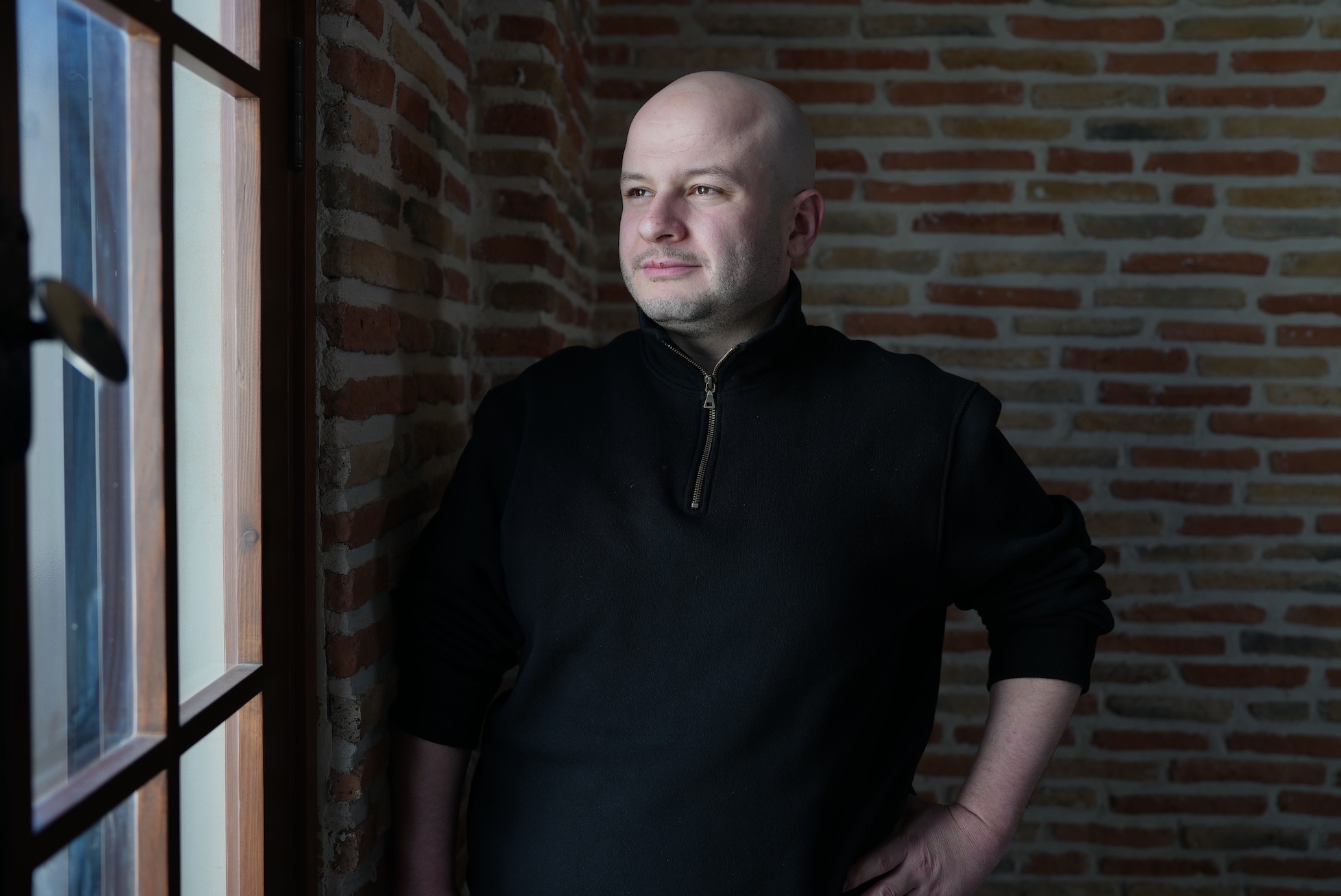
The appointment of a data governance entrepreneur to lead La French Tech Riyadh says something important about where international startup ecosystems are placing their bets.
[For more news, click here]
When France's government-backed startup network decided to plant a flag in Riyadh, it needed someone who understood both sides of the equation: the ambitions of the Kingdom's technology transformation and the practical realities of building enterprise technology in a market where trust, sovereignty, and local credibility are not optional features but fundamental requirements.
It landed on Djamel Mohand, Co-Founder of Governata, Saudi Arabia's first enterprise data governance and data management platform. His appointment as President of the newly established La French Tech Riyadh is the kind of decision that tells you a lot about what the initiative is actually trying to accomplish, and why Saudi Arabia has moved from a peripheral market in global technology conversations to a central one.
The appointment is more than a ceremonial title. La French Tech is a global network supported by the French government that operates in cities where startup ecosystems are either emerging or scaling rapidly. Its presence signals institutional confidence in a market. Its choice of leadership signals what it believes the market needs. Choosing someone whose company is built around data sovereignty, AI readiness, and trusted digital infrastructure is a deliberate statement about where the real opportunities in the Saudi technology sector lie.
The backdrop to this appointment is a Kingdom that has been investing heavily and deliberately in its technology future. Vision 2030 has created structural demand for AI, cloud, and enterprise digital infrastructure across the public and private sectors. International hyperscalers have established regional data centers. Global technology companies have opened offices. And a generation of local startups has emerged to address challenges that imported solutions were not designed to solve.
The cumulative effect is that Riyadh is now genuinely competing with more established technology hubs for talent, investment, and the kind of international networks that help startups reach beyond their home markets. La French Tech's decision to launch in the city reflects that shift rather than predicting it. The network does not typically arrive before a market is ready. It arrives when the infrastructure, the ambition, and the cross-border opportunity are already visible.
For French technology companies and startups looking at the Gulf, having an established network presence in Riyadh changes the calculation considerably. It provides a community, a credibility signal, and a set of relationships that are difficult to build from scratch. For Saudi companies looking outward, it offers access to a global network with a track record of helping startups scale internationally.
Djamel Mohand's background is worth understanding in context. Governata operates at the intersection of two things that Saudi Arabia's technology sector is deeply focused on: AI readiness and data sovereignty. The platform helps enterprises structure, govern, and manage their data in ways that comply with national priorities around localization and privacy, while simultaneously making that data useful as an input to AI systems.
This is not a niche problem. Across the Gulf, enterprises that want to adopt AI are discovering that the quality and governance of their underlying data is the binding constraint. Models are increasingly accessible. Clean, well-governed, sovereignty-compliant data pipelines are considerably harder to build. Companies that solve this problem at the enterprise level are solving one of the most consequential infrastructure challenges in the regional technology stack.
Building Governata in that environment has given Mohand a particular vantage point on what international technology companies get right and wrong when they approach the Saudi market. The governance and trust dimensions that a platform like Governata addresses are often underestimated by companies entering from outside the region, for whom data sovereignty may feel like a compliance checkbox rather than a strategic priority.
Leading La French Tech Riyadh puts him in a position to help French startups avoid that mistake, and to help Saudi startups understand how their local strengths can translate into competitive advantages on a global stage.
Beyond the networking and community-building functions that any city chapter of La French Tech provides, the Riyadh chapter carries a specific mandate that reflects the moment the Saudi ecosystem is in. One of its central roles is strengthening institutional trust in regional technology companies, helping locally developed solutions gain visibility and credibility with enterprise customers who have historically defaulted to established international vendors.
This is a meaningful problem for Saudi startups at scale. Even when a local solution is technically competitive, the procurement processes of large enterprises often favor vendors with global brand recognition, established reference customers, and long track records. An initiative that helps regional companies build credibility within that framework, and that connects them to the reputational infrastructure of a globally recognized network, addresses a real gap.
Mohand articulated the goal clearly. "Saudi Arabia is undergoing one of the most exciting technology transformations globally, and it is becoming increasingly important for international innovation networks to contribute to this momentum," he said. "Through La French Tech Riyadh, we aim to strengthen collaboration, support entrepreneurs, and help create an environment where regional technology companies can scale with greater trust, credibility, and global ambition."
Julie Huguet, Global Director of La French Tech, reinforced the opportunity from the network's side. "Saudi Arabia is a key hub for innovation. Djamel's leadership of La French Tech Riyadh will strengthen ties between our startup ecosystems and create real opportunities for entrepreneurs in both regions."
The phrase "both regions" is worth noting. This is framed explicitly as a reciprocal relationship, not a one-directional expansion of French technology influence into a new market. The expectation is that Saudi startups and French startups both benefit from closer ties, and that the innovation flows in both directions.
Individual appointments rarely change the direction of an industry, but they sometimes clarify it. Mohand's selection to lead La French Tech Riyadh clarifies something about the current state of Saudi Arabia's technology ecosystem: it has reached a point where serious international networks are not just looking at it opportunistically, but committing to it institutionally.
For startups in both markets, that kind of commitment changes the texture of what is possible. It means that the relationship infrastructure needed to build cross-border partnerships, close enterprise deals, and attract international investment is being deliberately constructed rather than left to chance.
Saudi Arabia's investment in AI, sovereign technologies, and digital infrastructure is well documented. What is less often discussed is the ecosystem layer that sits around that investment, the networks, the community institutions, the credibility frameworks that determine whether ambitious startups can translate national momentum into durable companies. La French Tech Riyadh, under Mohand's leadership, is a meaningful addition to that layer.
Whether it fulfills that potential will depend on execution. But the intent, and the choice of who should lead it, suggests that both the French government network and the people building it in Riyadh understand what the market actually needs.
Related Articles