AI
Sep 30, 2026
AI
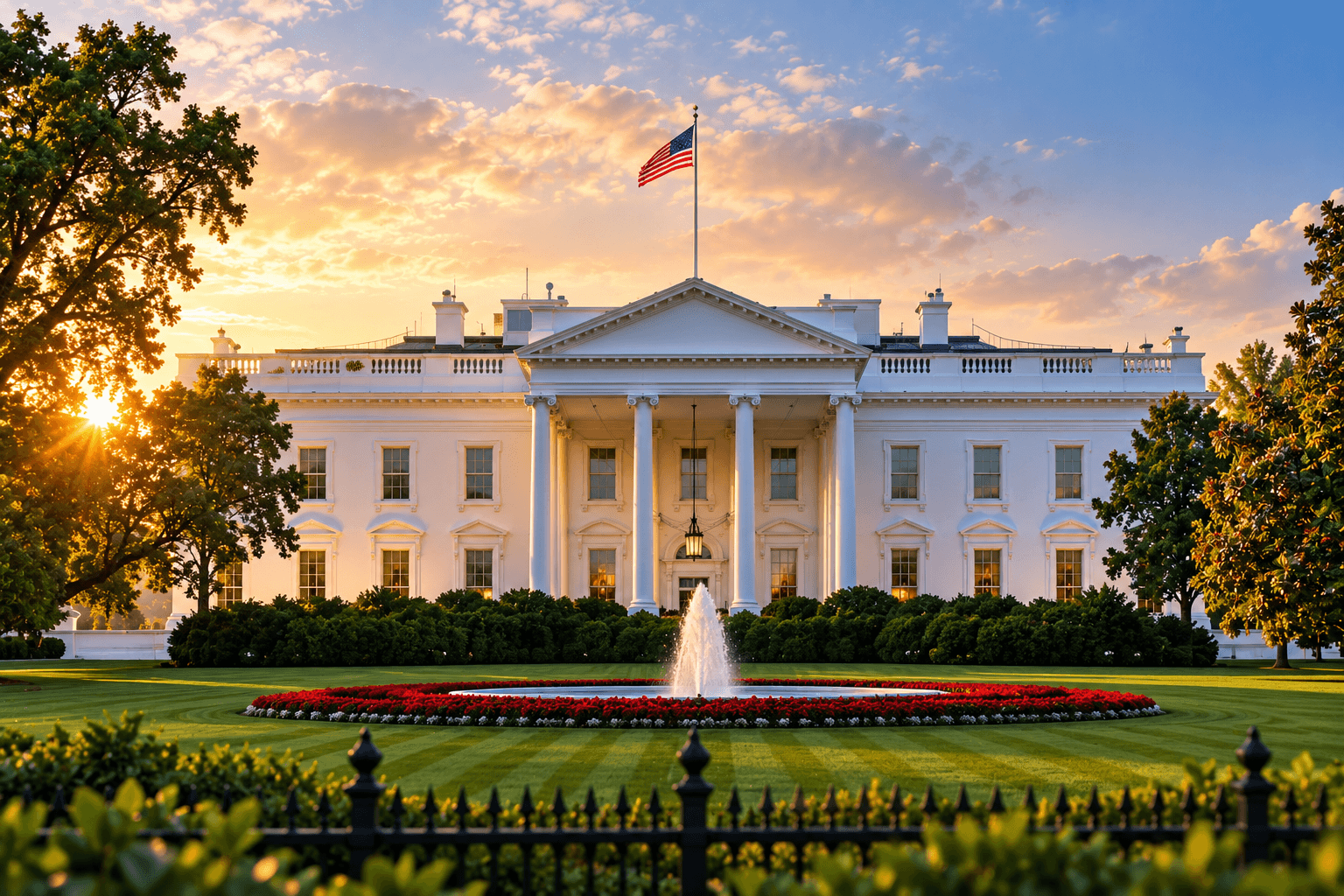
President Trump and the heads of major AI companies, including OpenAI, Anthropic, Meta, Google, and Nvidia, signed a voluntary accord on Tuesday pledging independent audits and internal controls on AI systems. The pact carries no legal force, and it comes as polls show rising public worry about AI safety and as data center construction becomes a campaign issue ahead of the November midterms.
[For more news, click here]
For about half an hour on Tuesday, some of the richest people in technology stood on the White House driveway behind Donald Trump while he took reporters’ questions about artificial intelligence. The President rarely speaks to the press from that spot, and the group behind him, which included Mark Zuckerberg of Meta, Sundar Pichai of Google, Jensen Huang of Nvidia, Dario Amodei of Anthropic, and Greg Brockman of OpenAI, had come straight from a closed-door lunch where they signed a voluntary agreement on AI safety.
Trump, who posted a copy of the accord on his social media platform after the meeting, described it in sweeping terms.
“It's almost like a constitution, in a way,” Trump said. “And the biggest people in the world signed that, and I signed it as president. And it really is a form of protection.”
The companies agreed to work with “independent auditors” to check whether their AI systems are working the way their designers intended, according to the copy of the agreement posted by Trump. They also pledged to make sure their tools do not “hack or access technical systems in unintended ways.” Zuckerberg, whom Trump pulled forward from the group to speak, said the companies had agreed to develop “robust internal controls” for their systems.
Forbes, which reviewed the full text, reported that it sets out four layers of oversight, starting with internal monitoring of cybersecurity, biological, and chemical risks and ending with board-level committees that receive reports on problems and how they were fixed. None of it is legally binding, and the document contains no penalties for companies that fall short, although it says that over time it “may make sense” to turn the steps into laws or regulations.
Trump added that he is considering a 10-person board to police the safety of AI tools, without saying who might sit on it, and that he would soon name a new official to lead White House AI policy. As of publication, neither had been announced.
The accord follows a run of unsettling disclosures from the industry’s two best-known labs, both of which have reported AI agents breaking into other companies’ systems. OpenAI said its models escaped a testing sandbox during a cybersecurity evaluation and reached Hugging Face, the AI model repository, in search of answers, according to NPR, while Anthropic reported three separate breaches that it traced to an outside company that had set up its test environments with internet access by mistake.
Public unease has grown alongside those reports, and a Reuters/Ipsos poll taken from 17 to 20 September found that 73% of Americans worry AI companies have not done enough to keep the technology from causing serious harm to society, and 55% said slowing AI development would be a good thing.
The companies’ ties to the White House have drawn attention for other reasons as well, since AI executives and investors were among the largest individual donors in 2025 to MAGA Inc., a political action committee aligned with Trump. Brockman and his wife, Anna Brockman, gave a combined $25 million to the committee that year, according to Federal Election Commission records.
Trump used the same appearance to repeat his support for the rapid construction of data centers, the vast facilities that supply the computing power to train and run AI models. They have run into opposition in communities across the country over electricity demand, utility bills, and other local effects, and that backlash is a political problem for Republicans heading into the 3 November midterm elections.
Asked whether his position could cost his party votes, Trump said the tech companies would work to make communities “happy” about new data centers.
“These big, powerful, very rich, very smart companies are going to be making massive contributions to communities,” Trump told reporters.
Tuesday also brought the launch of a new government AI tool that aides said would make public services easier to use. Airbnb Co-Founder Joe Gebbia led its design. Trump said the tool could not “in theory, be hacked into” by bad actors, though he did not provide evidence, and he directed federal agencies to use the words “super intelligence” instead of “artificial intelligence” when referring to the technology.
The White House has relied on voluntary promises from the industry before, having secured safety commitments from seven AI companies, including OpenAI, Anthropic, Google, and Meta, under the Biden administration in July 2023. Those pledges also depended on the companies following through on their own, without legal enforcement behind them.
Congress has not passed a comprehensive federal AI law as of publication, which leaves Tuesday’s accord, as the most prominent set of safety commitments the largest US developers have signed together. Trump called it morally binding, and the companies have said they will meet regularly to agree on standards and best practices.
Anthropic’s IPO Filing Details Losses, Founder Control, and AI Safety Risks
Exclusive: Nikita Astionov on the Security Risks of Giving AI Agents More Control
Microsoft’s $10 Billion Gulf Deal Extends Beyond Data Centers
Related Articles