
Technology
Sep 15, 2026
As businesses search for new growth corridors beyond traditional markets, a gathering of 22,000 industry leaders in Türkiye highlighted how artificial intelligence, logistics innovation and digital commerce are reshaping international retail.
[For more news, click here]
For years, conversations about the future of e-commerce have largely revolved around familiar centres of gravity: Silicon Valley, New York, London and increasingly Singapore. Yet a growing number of technology companies, retailers, logistics providers and investors are beginning to look elsewhere for the next chapter of digital commerce growth.
This month, that shift was on full display in Istanbul.
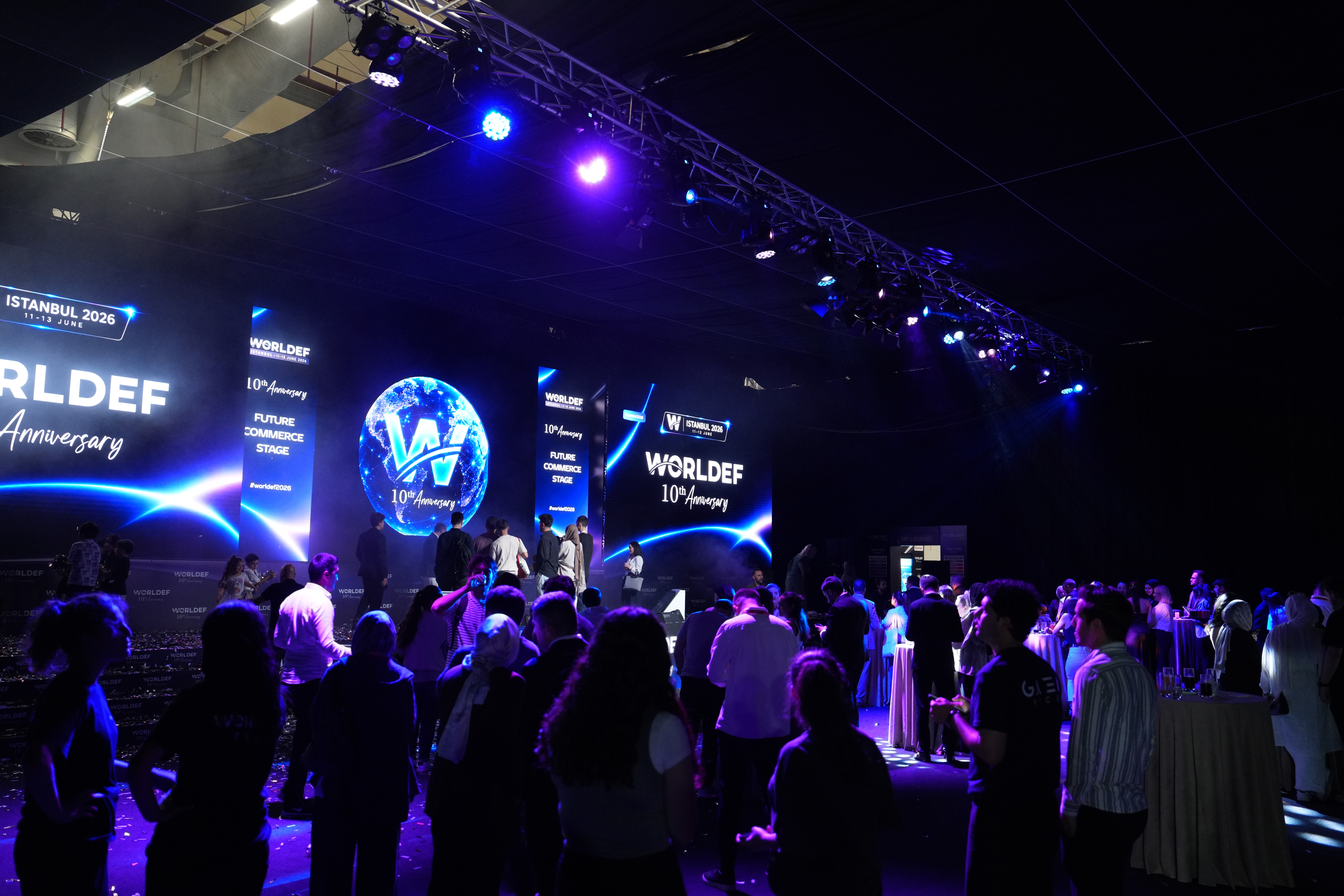
Over three days, thousands of executives, entrepreneurs and technology leaders gathered in Türkiye's largest city for WORLDEF ISTANBUL 2026, an event that reflected a broader transformation taking place across global commerce. What once may have been viewed as a regional industry gathering has evolved into something more significant: a meeting point for businesses seeking to navigate an increasingly interconnected world where artificial intelligence, logistics technology and cross-border commerce are becoming inseparable.
The numbers tell part of the story. More than 22,000 visitors from 82 countries attended the event between June 11 and 13. Nearly 200 brands exhibited while 250 speakers discussed the trends shaping retail, technology and e-commerce. Foreign visitors accounted for 35 percent of attendees, underscoring the event's growing international reach.
But the real significance extends beyond attendance figures.
As geopolitical uncertainty, changing consumer habits and rapid advances in artificial intelligence force businesses to rethink their strategies, companies are increasingly seeking new markets, alternative supply chains and fresh opportunities for expansion. Istanbul's geographical position between Europe, Asia, the Middle East and Africa places it at the centre of many of those conversations.
For global brands, the city represents more than a gateway to Türkiye's domestic market. It serves as a bridge connecting multiple high-growth regions that are attracting increasing attention from retailers and technology providers alike.
The conversations taking place throughout WORLDEF reflected that reality.
Artificial intelligence was no longer treated as a standalone technology category. Instead, discussions focused on how AI is becoming embedded across every layer of digital commerce, from customer engagement and marketplace optimisation to inventory management, logistics planning and international expansion strategies.
This marks a notable evolution in how businesses approach technology investment.
Just a few years ago, AI discussions often centred on experimentation. Today, many organisations are moving beyond pilot projects and looking at practical implementation. The emphasis has shifted from what artificial intelligence could potentially achieve to how it can help businesses operate more efficiently, enter new markets faster and deliver better customer experiences.
Those themes were evident throughout the event's stage sessions and industry panels, where speakers explored topics ranging from next-generation retail models to logistics innovation and global growth strategies.
The increasing overlap between AI and commerce is particularly significant for companies pursuing international expansion. Cross-border selling remains one of the most attractive growth opportunities for retailers, but it also introduces considerable complexity. Businesses must navigate different regulations, customer expectations, fulfilment requirements and payment ecosystems across multiple markets.
Technology is increasingly becoming the mechanism that makes such expansion possible.
Artificial intelligence can help companies identify demand patterns, optimise pricing strategies and improve operational efficiency across borders. Logistics technologies are streamlining fulfilment processes. Marketplace platforms are reducing barriers to entry for businesses that once lacked the resources to compete internationally.
Together, these developments are creating a more accessible pathway to global growth.
That dynamic has become especially important as competition intensifies in mature e-commerce markets such as the United States and Western Europe. Many businesses are now looking toward emerging regions for their next wave of customers, making international connectivity more valuable than ever.
It is within this context that events such as WORLDEF are gaining influence.
Beyond keynote presentations and exhibition booths, these gatherings increasingly function as business infrastructure. They create opportunities for partnerships, investment discussions and strategic relationships that can shape expansion plans for years to come.
WORLDEF CEO Omar Nart believes the event's growing role reflects broader changes taking place across the industry.
“WORLDEF ISTANBUL 2026 was not merely a trade fair or a conference; it became a powerful platform that enabled the e-commerce, retail, artificial intelligence and digital commerce ecosystems to grow together. Welcoming 22,000 visitors from 82 countries in Istanbul once again demonstrated Türkiye’s potential to become a regional trade hub. The collaborations and connections established throughout the event generated highly valuable and productive results for brands seeking to expand into global markets,” he said.
Nart's comments point to a larger ambition that extends beyond hosting industry events.
As global commerce becomes increasingly digital, competition between cities is no longer limited to attracting manufacturers or corporate headquarters. Cities are also competing to become centres for innovation, entrepreneurship and international business collaboration.
Istanbul appears determined to strengthen its position within that landscape.
The city's advantages are considerable. It offers proximity to European markets while maintaining deep commercial ties with the Middle East, North Africa and Central Asia. Its growing technology sector, expanding logistics capabilities and increasingly international business community have further enhanced its appeal.
These strengths are helping position Türkiye as a strategic partner for companies seeking access to multiple regions simultaneously.
According to Nart, that vision remains central to WORLDEF's long-term mission.
“Digital commerce has now become an ecosystem that transcends borders, is strengthened by technology and grows through collaboration. As WORLDEF, our goal is to carry brands emerging from the MENA region and Türkiye to the world, bring global brands together with the region’s strong players, and build a sustainable business network that shapes the future of e-commerce and retail. The strong interest we witnessed at WORLDEF ISTANBUL 2026 shows that this vision has been strongly embraced by the industry.”
The growing international participation suggests that businesses increasingly recognise the value of such networks.
For U.S. companies, the implications are particularly noteworthy. While much attention remains focused on domestic AI development and retail innovation, future growth opportunities may increasingly depend on understanding emerging commerce ecosystems beyond traditional Western markets.
The next decade of digital commerce is unlikely to be shaped by a single geography.
Instead, it will be defined by interconnected networks of retailers, technology providers, logistics specialists and entrepreneurs operating across multiple regions. Events that facilitate those connections are becoming increasingly important components of the global business landscape.
As businesses continue searching for growth, efficiency and resilience, the conversations taking place in Istanbul may offer a glimpse into where the future of commerce is heading.
Not toward a single dominant market, but toward a more connected ecosystem where technology, artificial intelligence and cross-border collaboration work together to unlock new opportunities around the world.
Related Articles