Technology
Oct 21, 2026
Technology
Indonesia is co-locating six of its largest industrial exhibitions, covering water, waste and recycling, renewable energy and electric, security, fire protection, and smart city technology, at JIExpo Kemayoran from 11 to 13 August 2026. The consolidation tracks a wider shift in which infrastructure sectors that used to be procured separately are now being planned and delivered together.
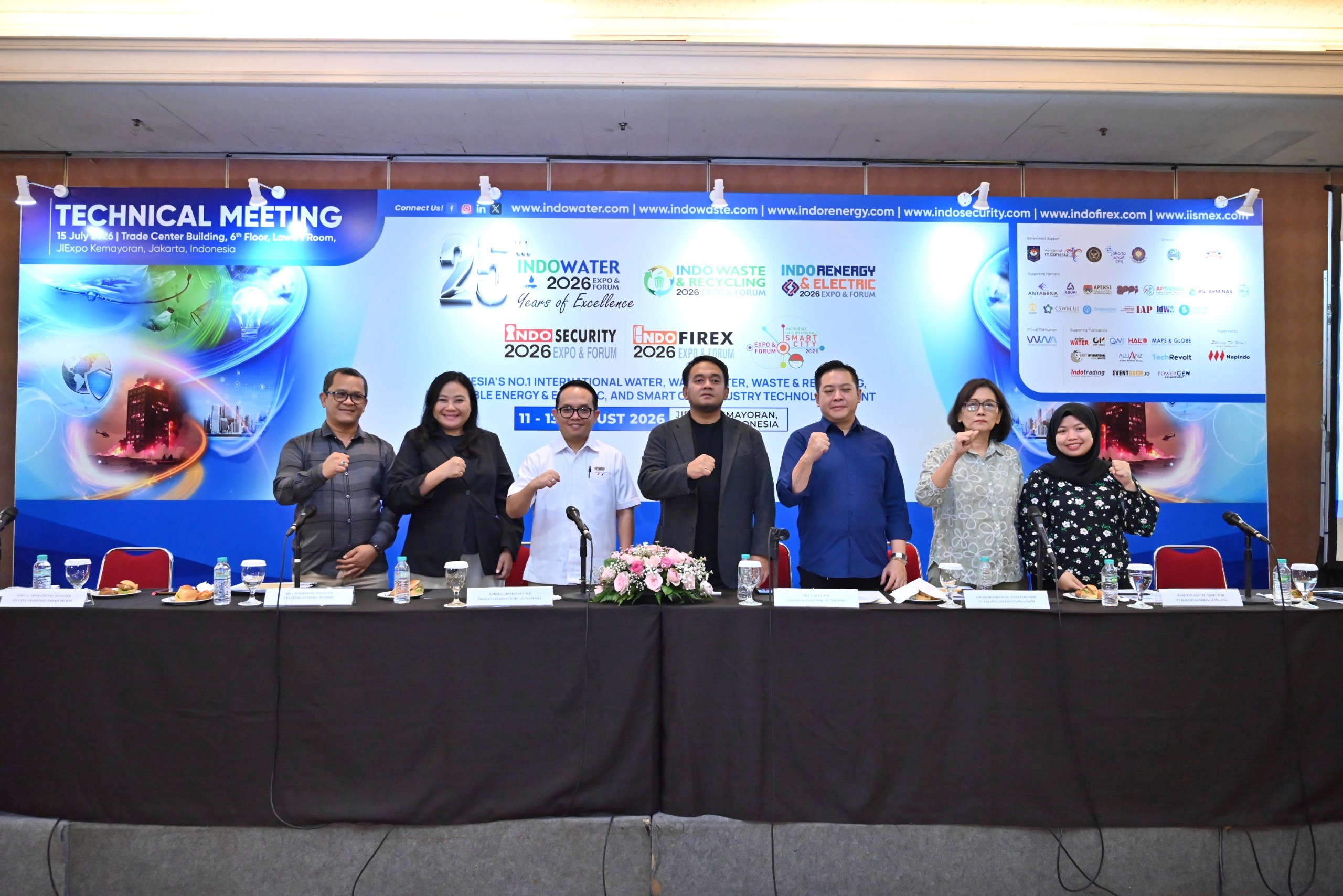
PT Napindo Media Ashatama held its Technical Meeting on 15 July in Jakarta to walk exhibitors, partners and venue representatives through logistics ahead of the show. The meeting is one of a series of preparation events for the 20th edition of Indo Water and its five co-located exhibitions: Indo Waste & Recycling, Indo Renergy & Electric, Indo Security, Indo Firex, and Indonesia International Smart City 2026 Expo & Forum. The event runs 11 to 13 August 2026 and marks 25 years of Napindo’s work in the sector.
Organizers are projecting 700 exhibitors from 30 countries, 12 country pavilions and 17,000 professional visitors over three days. Confirmed country participants include Indonesia, Australia, China, Germany, Italy, Japan, Malaysia, Singapore, South Korea, Türkiye and the United States.
Indo Water started as a specialist show for wastewater treatment, potable-water technology and utility instrumentation. Co-locating five adjacent exhibitions with it reflects a change in how Indonesian infrastructure is being procured.
Water utility contracts now include renewable energy supply to power treatment plants. Waste-to-energy facilities are procured against waste, energy and emissions objectives at the same time. Smart-city projects tie sensors and analytics into water, traffic, power and public safety systems that used to be sourced in isolation. Bringing the six exhibitions under one roof lets a single buyer, whether a municipal authority, a state-owned enterprise or a private developer, evaluate a full infrastructure stack in one visit.
The scale of Indonesia’s infrastructure demand makes that structure relevant. Indonesia is the largest economy in Southeast Asia and among the fastest-urbanising countries in the region. Jakarta is dealing with subsidence, groundwater depletion and flooding at the same time the government is developing Nusantara, the new capital in East Kalimantan, from a greenfield site. Each of those files touches at least three of the sectors represented at the expo.
The Managing Director of Napindo opened the Technical Meeting with the following remarks:
“For more than two decades, Indo Water has grown into one of Southeast Asia’s premier industry events, consistently contributing to Indonesia’s economic growth. With the strong support and collaboration of our exhibitors, government institutions, associations, and partners, we are confident this year’s exhibition will deliver greater opportunities for collaboration, innovation, and sustainable growth across the water, wastewater, waste & recycling, renewable energy & electric, security, fire protection, and smart city sectors.”
Adhika Arthapaty, Operation Director of Napindo, delivered the technical briefing covering the administrative and operational requirements exhibitors must meet before and during the show. Napindo also used the meeting to reiterate its service standards for exhibitors, partners and visitors.
The country pavilion list maps onto Indonesia’s active supplier categories. German and Italian firms lead in specialised water-treatment engineering. Japanese and South Korean suppliers are dominant in metering, sensors and control systems. Chinese participation reflects the country’s position in solar, battery storage and grid equipment. American and Australian firms are heavily represented in environmental services, industrial water and safety technology.
For US suppliers, Indonesia has moved up the priority list. The country is a founding member of the Indo-Pacific Economic Framework, a target market for climate finance and export-credit-backed deals, and one of the few large emerging economies pairing infrastructure demand with a functioning private-sector procurement environment.
Trade shows are lagging indicators of industrial activity. When exhibitions consolidate, expand country pavilions and draw senior international delegations, the underlying deal pipelines are usually thickening. The 20th edition of Indo Water lands at a point where Indonesia’s infrastructure spending is being actively courted by foreign suppliers and increasingly tied to the country’s energy transition and urbanisation targets. Staging six sector exhibitions together is a bet that buyers will want to see those problems solved in the same room.
Napindo has organized more than 100 national and international exhibitions across water and wastewater, waste and recycling, renewable energy and electricity, fire protection and rescue, smart city development, agriculture, aquaculture, defense, aerospace and maritime sectors.
Related Articles