
Technology
Sep 11, 2026
Technology
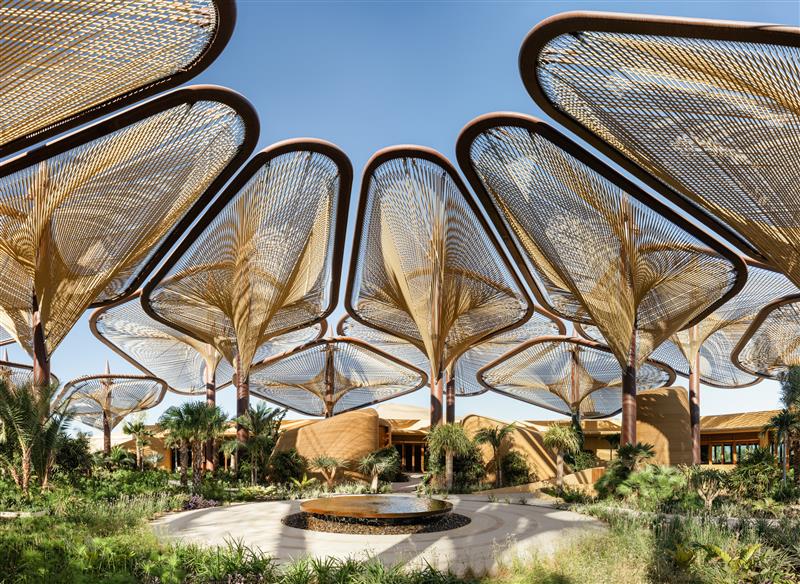
Red Sea Global is building one of the most connected resort destinations on Earth. The infrastructure making it possible is smarter than you think.
[For more news, click here]
There is a moment, somewhere between the coral reefs of the Red Sea and the curated silence of a luxury villa, when a guest pulls out their phone and expects the world to respond instantly. No lag. No dead zones. No friction. That expectation, increasingly universal and unforgiving, is not incidental to the vision behind Red Sea Global. It is foundational to it.
Red Sea Global, the Saudi developer behind two of the kingdom's most ambitious regenerative tourism destinations, The Red Sea and AMAALA, has quietly been building one of the most sophisticated hospitality networks on the planet. It is not the kind of infrastructure guests will ever see. But they will feel it in every interaction.
The company has partnered with HPE, deploying what is described as a self-driving, AI-native network built on HPE Aruba Networking. The scale is staggering: approximately 17,000 wireless access points, 10,000 switching and routing devices, and a system engineered to handle 20,000 simultaneous users without breaking a sweat. To put that in perspective, the network carries enough bandwidth to support HD video streaming while a guest cycles through resort grounds.
It would be easy to frame this as a story about Wi-Fi. It is not. It is a story about what happens when a nation-scale economic transformation requires digital infrastructure to match its physical ambition.
Saudi Arabia's Vision 2030 is one of the most consequential economic diversification programmes in modern history, designed to reduce the kingdom's dependence on oil by turning the country into a global tourism and entertainment hub. Red Sea Global sits at the sharp end of that strategy. When its destinations are fully operational, they are projected to add $8.79 billion annually to the Saudi economy and create 120,000 jobs. That is not a niche project. That is national infrastructure dressed in resort wear.
Delivering on that promise, however, requires more than beautiful beaches and architectural ambition. It requires the ability to scale rapidly, operate sustainably, and provide the kind of hyper-personalised digital experience that premium travellers now treat as table stakes. For Red Sea Global's technology leadership, the network question was never peripheral. It was existential.
"Choosing an AI-native self-driving network solution that meets our need for seamless connectivity while supporting our expansion plans was a critical priority for us," said Sultan Moraished, Group Head of Technology and Corporate Excellence at Red Sea Global. "By selecting HPE, we are not only addressing day-to-day connectivity needs for our guests but also enabling a foundational digital platform that supports our broader strategic vision of delivering exceptional guest experiences."
The phrase "self-driving network" risks sounding like marketing language dressed up as engineering. In practice, it refers to something specific and increasingly important: a network that uses artificial intelligence to monitor itself, diagnose problems before guests notice them, and reconfigure automatically in response to demand. At the scale Red Sea Global is operating, manual network management is simply not viable.
The architecture runs on HPE Aruba Networking Wi-Fi 6E, the latest generation of wireless standard, which operates across three frequency bands and delivers the kind of low-latency, high-throughput performance that modern applications demand. Supporting that wireless layer is an end-to-end enterprise network stretching from the data centre core out to the resort edge.
Central to the intelligence layer is HPE Aruba Central, an AIOps platform that provides continuous insight, automation, and assurance across the entire estate. Think of it as a nervous system for the network, constantly reading signals and adjusting. Alongside it, HPE Aruba Networking CX switching delivers consistent high-performance connectivity across multiple locations, built to handle Saudi Arabia's demanding and varied physical landscape.
The deployment also includes HPE Aruba Networking EdgeConnect Enterprise appliances, an SD-WAN solution that simplifies network architecture at the edges, improves orchestration, and enhances application performance for guests. The result is a network that does not merely connect people to the internet. It actively manages the quality of that experience at every point.
Red Sea Global has made regenerative tourism its central brand promise, a commitment to leaving the natural environment better than it was found. That ambition creates a specific kind of pressure on technology decisions. Every system deployed must support, not undermine, the broader sustainability mission.
The AI-native network plays a direct role here. Real-time environmental monitoring, enabled by the network's always-on connectivity, allows resort operators to track resource consumption, manage energy use intelligently, and respond to ecological data as it emerges. The network is not passive infrastructure. It is an active tool for delivering on environmental commitments at scale.
This integration of operational technology with sustainability goals represents a broader shift in how premium hospitality operators are thinking about infrastructure investment. The network is no longer simply a utility. It is a strategic asset.
Premium travellers arriving at The Red Sea or AMAALA will expect something that mass-market hospitality has long promised but rarely delivered: genuine personalisation. Not just a welcome card with their name on it, but an environment that adapts to their preferences, anticipates their needs, and delivers frictionless service at every touchpoint.
That kind of experience is only possible with a network capable of handling vast quantities of data in real time. Guest applications, smart room controls, F&B ordering, activity booking, environmental sensors, security systems: all of these generate data that must flow seamlessly across the resort estate. The HPE Aruba infrastructure is designed to carry that load without compromise.
"We are proud to support Red Sea Global in delivering one of the most ambitious hospitality projects in the region," said Jacob Chacko, Regional Director for Middle East and Africa Networking at HPE. "This collaboration demonstrates how secure, AI-native networking can act as a catalyst for innovation, helping organisations create highly personalised, digitally enabled environments while maintaining the scalability and resilience required for long-term growth."
What Red Sea Global is building is not simply a resort destination. It is an argument about what hospitality infrastructure looks like when ambition, technology, and sustainability converge at scale. The decision to build on an AI-native, self-driving network from the outset, rather than retrofitting legacy systems, reflects a maturity of thinking about long-term operational resilience that many established hospitality operators are still struggling to achieve.
For the wider Middle East hospitality sector, the implications are significant. As the region accelerates its investment in tourism infrastructure, the network architecture decisions being made today at projects like The Red Sea and AMAALA will shape expectations and standards for years to come. The bar has been raised, quietly and comprehensively, in the desert by the sea.
Related Articles