
MENA News
Oct 9, 2026
MENA News
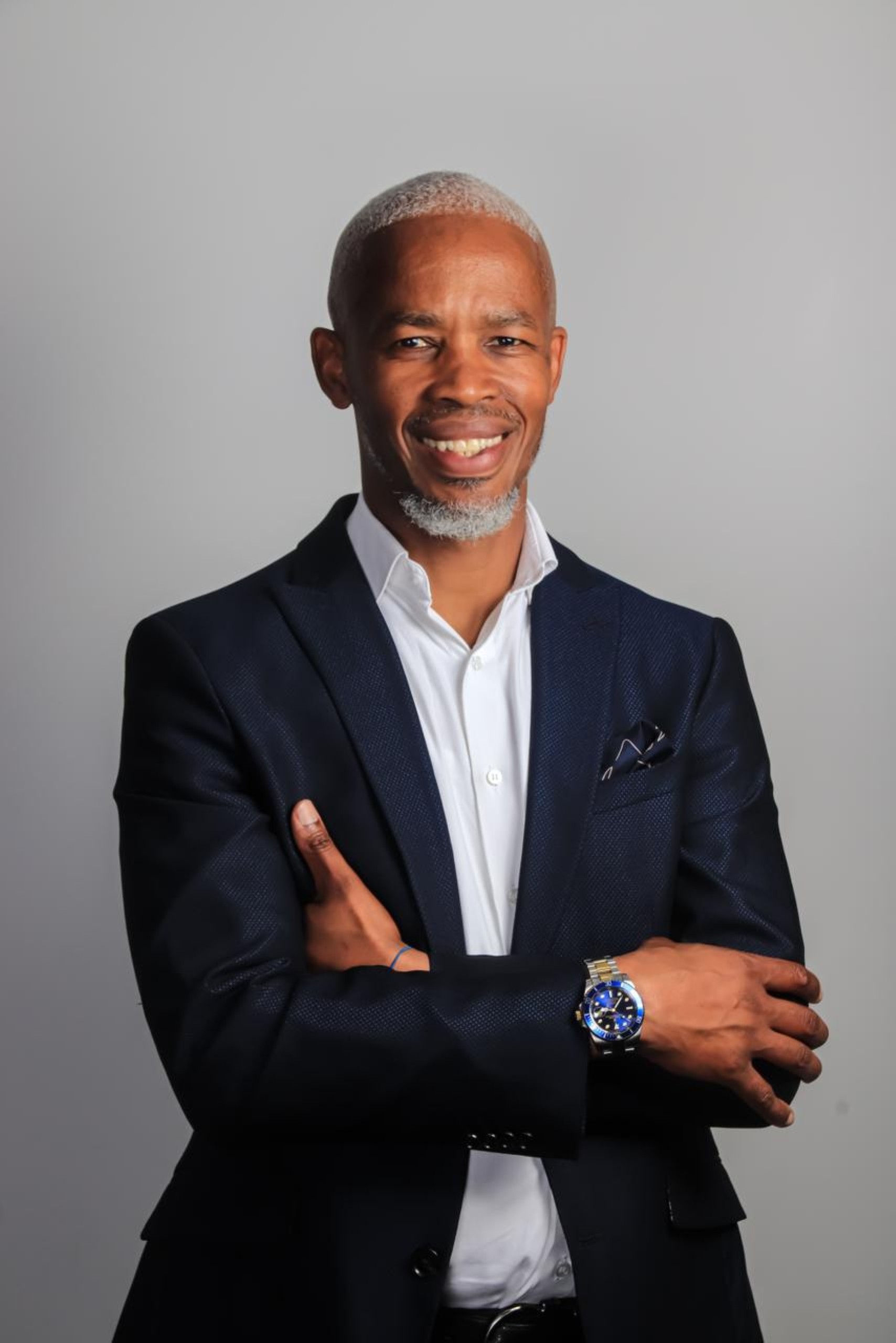
With the appointment of Michael Langeveld as Country Director, Hewlett Packard Enterprise is restructuring not just its headcount but how it goes to market in one of the Gulf's fastest-moving technology economies.
[For more news, click here]
There is a particular kind of organizational move that says less about personnel and more about strategy. Hewlett Packard Enterprise appointing Michael Langeveld as UAE Country Director is that kind of move. The title is new. The mandate behind it is a restructured go-to-market organization designed to operate as a single unit, a response to a market where enterprises and government entities are accelerating spend on AI, sovereign cloud, and next-generation infrastructure at a pace that fragmented teams cannot efficiently serve.
Langeveld steps into the role with nearly two decades in technology strategy and business development behind him. Since joining HPE in 2022, he has cycled through progressive positions across South Africa, the UAE, and Africa, building regional capability at each stop. That regional breadth is not incidental. The UAE's technology ambitions do not exist in isolation; they are part of a wider Gulf push toward digital sovereignty that draws heavily on infrastructure expertise developed across emerging markets.
The organizational logic at the center of this appointment is worth unpacking. HPE has restructured its UAE business around an integrated go-to-market model, bringing customer-facing and partner-focused teams under unified leadership rather than running them as parallel tracks. Two additional appointments reinforce the intention: Ques Eden as Head of Commercial Sales UAE and Santosh Lasrado as Head of Technology UAE. Together, the three-person leadership tier covers enterprise, commercial, pre-sales, partnerships, and channel under a single command structure.
This kind of consolidation tends to happen when a company identifies a gap between market opportunity and execution speed. The UAE is currently that gap for several major technology vendors. Government digital transformation initiatives, private sector AI adoption, and sovereign infrastructure investment are moving simultaneously, and the organizations that can bring a coordinated response, rather than a sequence of siloed pitches, are better positioned to capture the resulting contracts.
"The UAE is a highly dynamic technology market, and I'm honoured to lead HPE in the country as HPE is strengthening its commitment to playing a central role in driving its next phase of growth."
—Michael Langeveld, UAE Country Director, HPE
Langeveld's stated focus aligns with that read of the landscape. Closing the distance between HPE's teams and the customers they serve, then using that proximity to accelerate outcomes, is a straightforward execution thesis. What makes it credible is the structural change behind it. A reorganized team with defined remit areas is more actionable than a leadership appointment made in isolation.
The Gulf has seen waves of technology investment before, and not all of them produced lasting infrastructure. What distinguishes the current cycle is the specificity of ambition. The UAE is not simply modernizing government services or digitizing paperwork. It is building the underlying compute, connectivity, and cloud architecture needed to support artificial intelligence at a national scale, including sovereign AI infrastructure that keeps sensitive data and decision-making capability within the country's borders.
For a company like HPE, which operates across hybrid cloud, high-performance computing, and intelligent networking, that ambition maps cleanly onto its portfolio. The challenge has always been translating product capability into the kind of trusted, long-term partnerships that national-scale projects require. That is where leadership and organizational structure become strategic variables rather than administrative ones.
"We have reinforced our UAE leadership framework with a clear purpose: to accelerate growth and deliver meaningful outcomes for our customers in the region. With a more integrated structure and a stronger team, we are positioned to move faster, deliver measurable results, and support the Emirates' long-term plans for the transformation of the emirate's economy."
—Ahmad Alkhallafi, VP & Managing Director, UAE & Africa, HPE
Ahmad Alkhallafi, who oversees HPE's UAE and Africa operations as VP and Managing Director, framed the appointments as part of a deliberate effort to build execution capacity that matches the scale of regional ambition. The language of "measurable results" and "meaningful outcomes" is pointed. It signals that HPE's performance expectations in the UAE are tied to demonstrable progress on customer digital strategies, not just market presence.
One thread that runs through HPE's announcement, and deserves more attention than it typically receives in corporate restructuring coverage, is the emphasis on developing local talent. This is not decorative language in the UAE context. Emiratization targets in the technology sector are a policy priority, and technology companies that build genuine local capability, rather than cycling in international expertise for project-specific engagements, are better positioned for the long-term partnerships that government and quasi-government entities tend to favour.
Langeveld's own trajectory, built across South Africa, the UAE, and Africa rather than through a single headquarters-centric career path, reflects a version of that philosophy at the individual level. The expectation is that the UAE team he now leads will invest similarly in regional depth, developing practitioners and leaders who understand the local market from the inside rather than managing it from a distance.
The technology sectors Langeveld and his team will focus on, hybrid cloud, AI, networking, security, and sovereign infrastructure, are not isolated verticals. They converge in the kind of large-scale architecture projects that define a country's digital decade. HPE's reorganization positions it to pursue those projects with a unified front, which is ultimately what the appointment is designed to enable.
How Group-IB's AWS Financial Competency Signals a Broader Shift in How Banks Fight Fraud
How IFS Is Turning Industrial Emissions Data Into a Real-Time Operating Decision
Related Articles