

AI
Oct 9, 2026
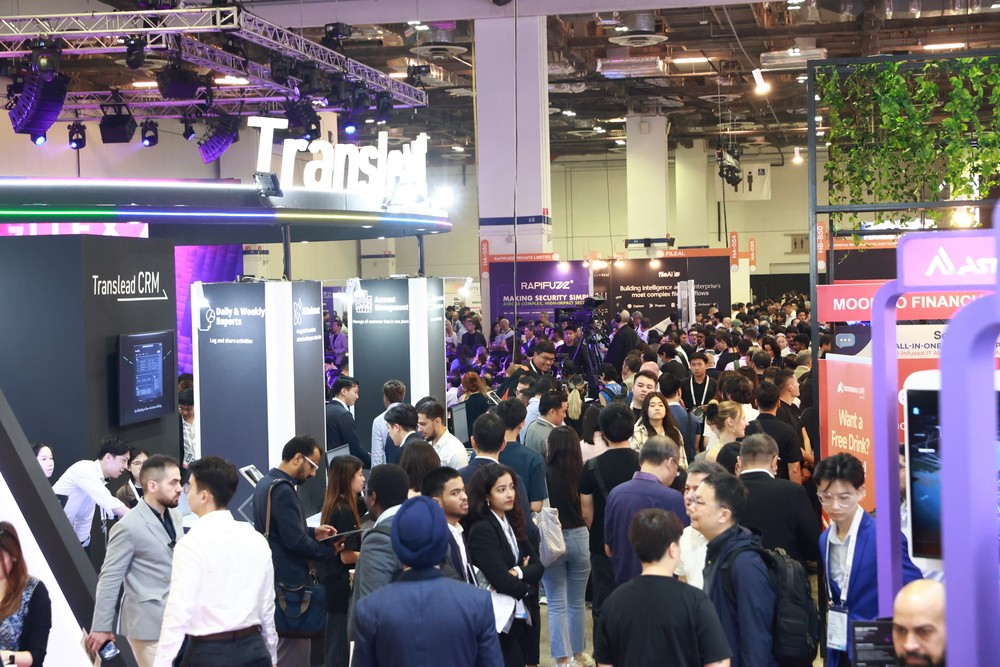
The second edition of GITEX AI ASIA Singapore concluded at Marina Bay Sands, marking one of the most influential gatherings of industry leaders from more than 110 countries, alongside over 550 enterprises and startups, 175 speakers, and investors managing upwards of US$ 350 billion in assets.
[For more news, click here]
Over the course of the event, the summit set the tone for a new phase of Asia’s rise in the global innovation economy. With ASEAN moving towards a landmark pact designed to harmonise trade rules, cybersecurity standards, data flows, and digital payments1 – set to unlock a US$ 2 trillion digital economy by 2030 – the summit and showcase explored the most decisive elements of this new regional digital architecture. From converting AI into deployable industrial advantage to defining frameworks on policy and governance, from building resilient networks to unlocking new capital corridors, GITEX AI ASIA 2026 served as a global arena shaping Asia’s collective economic leverage.
Across the show floor, the focus remained firmly on operationalising AI at scale across networks, enterprise systems, cybersecurity, and data infrastructure.
Among the leading participating names was H3C, a digital and AI solutions company that has emerged as China’s leading player in the hyperconverged infrastructure market.
At GITEX AI ASIA, the company presented its industry-leading solutions designed to accelerate digital transformation, with a representative from H3C sharing: "H3C is committed to being a trusted partner for customers pursuing digital transformation. At GITEX AI Asia, we're showcasing our full-stack digital infrastructure capabilities — spanning computing, storage, networking, security, and edge — along with our integrated platform for cloud, AI, and intelligent connectivity."
Continuing China’s domination in AI-led innovations, iFLYTEK offered an exclusive preview of its new AI glasses ahead of their official launch in May. The lightweight wearable was designed for real-time translation and intelligent assistance, reflecting the company’s push to embed AI more seamlessly into everyday communication scenarios.
At GITEX AI ASIA, their representative shared: “As the industry shifts from technical competition in large model computing power and algorithms, to the deep integration of AI into daily work and life that reshapes service experiences, solutions like our AI glasses signal a shift - where AI is no longer a feature, but an invisible layer enhancing how we communicate and connect. At iFLYTEK, we see this as a pivotal moment to reimagine human interaction at a global scale.”
Forescout, a global cybersecurity company working with Fortune 100 enterprises and government entities, demonstrated a wider industry recalibration around visibility, control, and asset intelligence in increasingly complex digital environments.
Evan Duman, Regional Sales Director – ASEAN at Forescout, elaborated: “At GITEX AI Asia 2026, Forescout showcases how organisations can achieve complete visibility and control across all connected cyber assets, including IT, OT, IoT and IoMT environments. As digital environments become increasingly connected, maintaining visibility into every device and system is critical to reducing cyber risk and strengthening operational resilience.”
Also drawing strong attention was Datalec Precision Installations, the global data centre specialist, which unveiled its integrated “AI-Ready Data Centre”. Peter Cole, Executive Vice President, DPI APA, shared: “Asia-Pacific is at the centre of the global AI and cloud revolution, and that transformation depends on robust, efficient and scalable data infrastructure. At Datalec Precision Installations, our mission is to make it faster and easier for operators to bring AI-ready capacity online, without compromising on quality, resilience, or sustainability.”
Throughout the event, it became clear that cybersecurity is no longer a support function but one of the principal conditions for digital growth. ASEAN’s cybersecurity market, worth US$ 5.5 billion in 2025, is projected to nearly triple to reach US$ 14 billion2 by 2031 - as governments and businesses confront the risks created by cloud adoption, AI, IoT and increasingly connected economies.
Opening this year’s conference, David Koh, Commissioner of Cybersecurity and Chief Executive of the Cyber Security Agency of Singapore, framed the strategic importance of cybersecurity as a shared responsibility between government, industry and academia. He pointed to a fourfold increase in advanced threat attacks between 2021 and 2024, and the urgency of driving collaborative efforts through platforms such as GITEX AI ASIA.
The sense of urgency carried forward in a key session on “Hyperconnected ASEAN”, where Dr. Megat Zuhairy, Chief Executive of Malaysia’s National Cyber Security Agency discussed the paradox of building more advanced as well as vulnerable digital economies. Dr. Zuhairy noted: “Across ASEAN, digital growth is outpacing cyber resilience. We must design tech-neutral laws, strengthen regional cooperation and ensure there is clear leadership and honest communication when incidents occur. Otherwise, a single attack can quickly erode trust not just in one institution, but in an entire system.”
The corporate lens brought further depth to the industry conversations. Alvaro Garrido, COO T&O and CIO Information Security & Data at Standard Chartered, examined what ‘secure-by-design AI’ looks like in banking. He shared insights on shifting focus from technology towards a people-centric approach, with training, trust and ethics at the core of AI transformation in one of the world’s most tightly regulated sectors. Magnus Ewerbring, CTO APAC at Ericsson, widened the discussion further, asking whether Southeast Asia can sustain its pace of digital progress while balancing citizen trust and data protection.
Asia’s next growth edge was shaped through two key forces: stronger digital infrastructure and companies built to scale across borders. Spearheading discussions on 6G and international expansion, ecosystem leaders examined how the region can turn network depth, regulatory discipline and market reach into a lasting competitive advantage.
Dian Siswarini, President Director of PT Telkom Indonesia, Indonesia’s largest digital telecommunications company, positioned the race to 6G as central to architecting a unified, coherent roadmap for nation-wide digitalisation and AI-led economies. Dian shared: “AI is transforming everything about how we design networks, from massively scaled data centers to where we place compute at the edge. To compete in an AI-native, 6G world, we must treat digital infrastructure as a strategic asset - not just for connectivity, but for national competitiveness.”
Shih Guan Chua, Managing Director & Global Head of Digital Economy Group at DBS, named World’s Best Bank 2025 by Euromoney, widened that perspective further, outlining how Singapore and wider Asia are evolving into command centres for globally scalable companies. His remarks underlined political stability, strong infrastructure, and access to capital as key factors enabling businesses to build with confidence and grow across markets.
Related Articles


