
Technology
Oct 2, 2026
Technology
You can’t change what you can’t measure – how tech is determining the next era of sustainability.
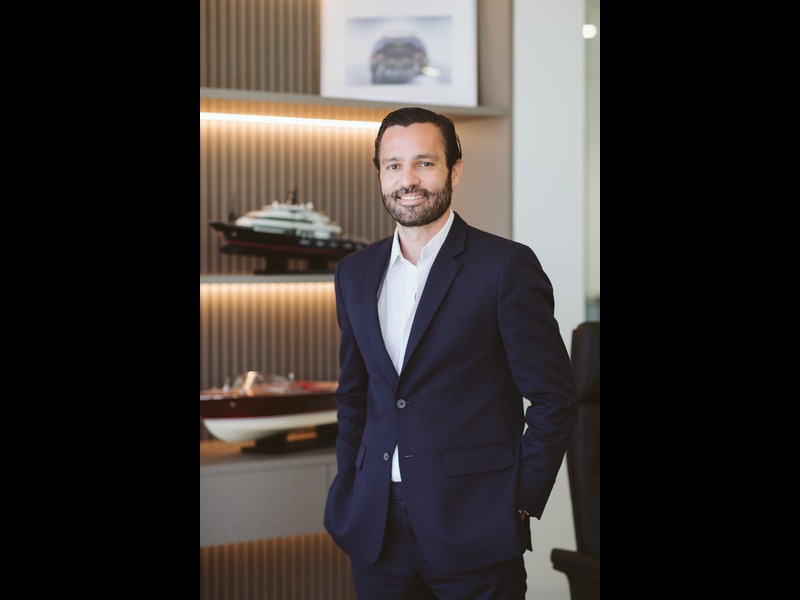
By Simon Hacker, CEO & Founder, Alpha Nero
In recent years, sustainability has shifted from being a corporate goal to a measurable obligation. While the intention is undoubtedly there, the capacity to act has often fallen short. The problem isn’t a lack of willingness; it’s a lack of clarity.
From my experience, whether collaborating with manufacturing teams, architects, developers, or asset managers, the same challenge consistently emerges – organisations want to reduce their environmental impact but lack the data and tools to do so confidently and systematically.
Our motivation for creating Leaf by Alpha Nero, our carbon accounting platform, was simple: you can’t change what you can’t measure. Without being able to see the impact you are making, improvement becomes impossible. However, we also realised that measurement alone isn’t enough. For data to be truly valuable, it needs to be analysed, interpreted, and converted into actionable business insights. This is where technological advancements, such as AI, have shifted the focus from theoretical sustainability to practical, operational sustainability.
By creating Leaf, we unify real emissions data by harnessing operational excellence, predictive modelling and scenario planning, including the ability to measure by project and locations. This helps companies understand their current sources of emissions and also identifies the most carbon-efficient version of the project before it even begins.
The platform fully complies with the Greenhouse Gas Protocol and records Scope 1, 2, and 3 emissions. Its revolutionary aspect lies in the intelligence layered on top. The cutting-edge technology powering the platform detects patterns that would be nearly impossible to identify manually, such as inefficiencies in logistics chains, the impact of material choices throughout a project’s lifecycle, and energy usage trends that might otherwise go unnoticed.
Today, companies across the UAE are under increasing scrutiny to report environmental performance. The Federal Decree-Law No. (11) of 2024, Net Zero 2050 commitments, and the UAE Energy Strategy 2050 are reshaping expectations around transparency and accountability. International investors and regulators expect audit-ready sustainability reporting. Customers are demanding verifiable responsibility. And procurement standards across global supply chains are tightening rapidly. Sustainability is no longer a messaging exercise; it is an operational metric.
However, when we engaged with clients from hospitality, logistics, retail, construction, real estate, and professional services, the frustration was evident. Many wanted to make progress but were overwhelmed by the complexity. Data sets were scattered across suppliers, energy providers, spreadsheets, and procurement platforms. Methodologies differed from country to country. Some tools available on the market were built for European emissions profiles, rendering them less accurate for GCC-based businesses. Others required sustainability teams that many companies do not have.
Leaf was initially developed to solve our own problem of complete carbon transparency across our manufacturing and fit-out projects. But as we refined it, we realised the scope was much bigger than solving an internal operational need. The same system that helped us design lower-emission interior solutions could also help a logistics provider evaluate fleet options, a hotel benchmark energy usage across properties, or a developer compare suppliers for large-scale construction. It became clear that sustainability challenges were not sector-specific – they were structural.
This is where scenario planning has become not just useful, but necessary. Leaf’s scenario-modelling capabilities can simulate the carbon impact of decisions before a project even begins. It can compare different suppliers, materials, shipping routes, or HVAC systems, calculating their environmental and financial implications in real time. Instead of reacting to environmental outcomes after the fact, businesses can now design preventative strategies from the start. This shifts sustainability from a corrective cost to strategic foresight.
What we’ve seen is that when environmental insights are integrated directly into design, procurement, and operational planning, sustainability becomes commercially advantageous. Energy efficiency reduces expenditure. Optimised logistics minimise waste. Transparent reporting increases investor trust. Compliance strengthens eligibility for tenders and partnerships. These are business outcomes, not environmental side notes.
There is also an important cultural shift happening. Sustainability used to be handled by isolated, specialised teams. Today, it is becoming a shared responsibility across design, finance, supply chain, procurement, operations, and leadership. The role of technology is to enable that shift by making data accessible, interpretable, and easy to act on, thereby making sustainability more intuitive and credible. Leaf was built to allow that cross-functional clarity.
We are proud to be collaborating with organisations such as Sustain UAE, Ehfaaz, Emirates Nature–WWF, and Beeah – groups that are pushing boundaries in sustainability practice across the region. But just as important as our partners is the fact that Leaf is built in the UAE. It reflects regional realities, regional emissions profiles, and regional business structures. And while it is globally aligned, its strength is in being locally intelligent.
The UAE is striving towards a more carbon-neutral future. But progress will not come from policy alone. It will come from businesses being equipped with the tools to act confidently, accurately, and measurably. The companies that succeed in the next decade will be those that integrate sustainability into their operational strategy, not as an external obligation, but as a function of performance, innovation, and resilience.
Once sustainability is measurable, it stops being abstract. And once it stops being abstract, it becomes scalable. That is where real change begins – not in targets or declarations, but in daily operational decisions, backed by intelligence, foresight, and accountability.
If we are going to build a sustainable economy, we must first build the systems that allow sustainability to be understood. Leaf is our contribution to that step forward.
Related Articles