
Technology
Sep 11, 2026
Technology
The bank just handed one of its most strategically important regional roles to a 30-year industry veteran. Here's what that tells us about where global finance is heading.
by Kasun Illankoon, Editor in Chief at Tech Revolt
[For more news, click here]
The appointment of a single banking executive rarely makes headlines outside of specialist finance circles. But when Citi moves to install one of the Middle East's most recognized dealmakers at the helm of a business spanning 59 markets, it signals something bigger than a personnel change. It signals a bank recalibrating its entire theory of where growth comes from next.
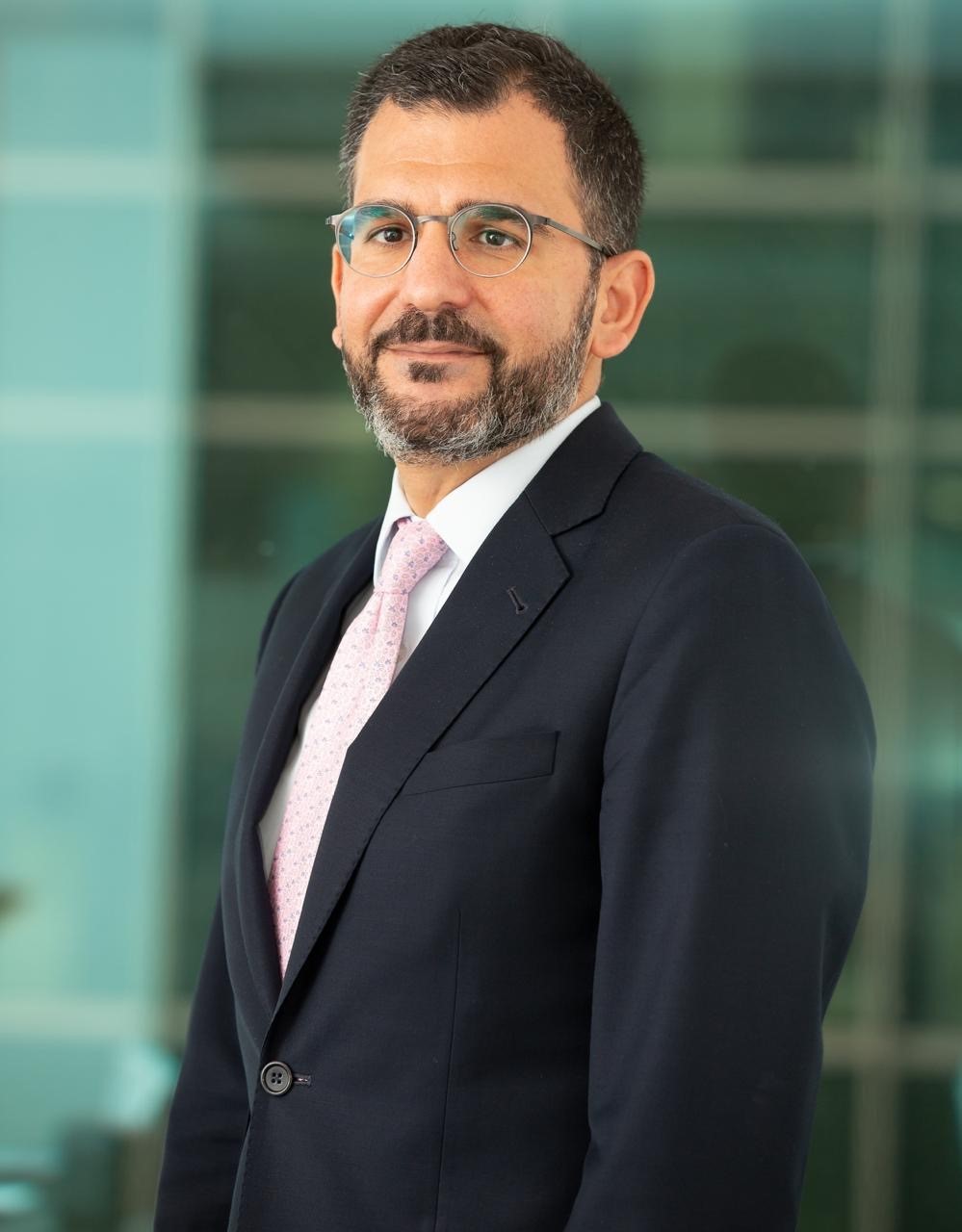
That is essentially what happened when Citi announced this week that Karim Tannir will join as its Middle East and Africa Cluster and Banking Head, based in Dubai, effective August. The move is part of a broader set of senior leadership shifts across Citi's Banking and International franchise, and it arrives at a moment when the geopolitics of capital, cross-border investment flows, and the competition for sovereign wealth mandates are more intense than they have been in decades.
Tannir is not a name that requires introduction in regional banking circles. With more than 30 years of experience operating across the Middle East, he has spent a career advising governments, sovereign entities, financial institutions, and blue-chip corporates on some of the region's largest and most consequential strategic and financing decisions.
His resume traces the arc of modern Gulf finance. He spent more than 25 years at J.P. Morgan, rising to Vice Chairman for EMEA, a role that placed him at the center of the bank's most significant client relationships across Europe, the Middle East, and Africa. More recently, he served as HSBC's Head of Banking for the Middle East, North Africa, and Turkey, covering a region that has become one of the most fought-over territories in global investment banking.
His expertise is genuinely multi-disciplinary: corporate and investment banking, capital markets, strategic advisory, and the kind of long-cultivated relationships with both public and private sector decision-makers that simply cannot be manufactured on a short timeline. That combination is exactly what banks are competing for right now, as Gulf sovereign wealth funds deploy capital at unprecedented scale and governments in the region pursue economic diversification programs that require complex, bespoke financial structuring.
For Citi, landing Tannir is not merely filling a vacancy. It is a statement of competitive intent.
The other major move in this reshuffle is the elevation of Ebru Pakcan to Chief Operating Officer for International and Legacy Franchises. The role is a promotion that reflects both Pakcan's track record and Citi's continued focus on operational discipline, governance, and the careful wind-down of legacy businesses that have historically complicated the bank's balance sheet story.
Pakcan has led Citi's MEA business for five years, a tenure during which the bank delivered double-digit growth across the Middle East, Africa, and Central Asia. That is a significant achievement in a region that rewards consistency and penalizes banks perceived as opportunistic visitors rather than committed long-term partners. Under her leadership, Citi entrenched what the bank describes as its position as the leading international bank in the region, a claim that will now be tested by a new chapter of competition.
Her background spans Global Head of Trade, Global Head of Payments, and Head of Treasury and Trade Solutions for EMEA, giving her a breadth of product management experience that makes her well-suited for an operational oversight role. The COO position will have her overseeing governance and operating effectiveness across Citi's international and legacy franchise businesses, with an eye on scalability as the bank continues its multi-year transformation.
The third element of this reshuffle deserves more attention than it typically gets in financial press coverage. Mary McNiff, who is stepping down from the COO role that Pakcan is assuming, will continue leading Citi's firm-wide policy simplification programme.
That might sound like internal housekeeping. It is not. Regulatory complexity and the cost of compliance have become existential concerns for large global banks operating across dozens of jurisdictions. Simplifying the policy architecture that governs how a bank like Citi operates at scale is genuinely difficult work, and doing it without creating new vulnerabilities in risk and controls requires both deep institutional knowledge and serious organizational authority.
The fact that McNiff is staying on to lead this effort, rather than simply stepping away, suggests Citi views it as a strategic priority rather than a bureaucratic one.
Underneath all of this is a fundamental shift in what global banking looks like in 2025 and beyond. Cross-border capital flows have grown more complex in an era of geopolitical fragmentation, sanctions regimes, currency risk, and the emergence of new regional financial hubs competing for business that once flowed automatically through London or New York.
"As cross-border activity becomes more complex and more critical for our clients, the strength of our international franchise matters more than ever," said Ernesto Torres Cantu, Head of International at Citi. The statement reads like a strategy memo compressed into a single sentence, because that is essentially what it is.
Citi's particular competitive advantage in this environment is the breadth of its network. Most banks have retreated from emerging markets or consolidated their international footprint over the past decade. Citi maintained its presence, and that now looks prescient. A network that spans 59 markets in MEA alone is not something a competitor can replicate quickly.
Vis Raghavan, Head of Banking, put it directly: "Clients value stability, connectivity, and judgement, and that is exactly what our global network is delivering." That framing is deliberate. In a world where clients have experienced counterparty risk in ways they did not anticipate, the promise of institutional stability and consistent coverage is a genuine differentiator.
The Gulf is no longer a region where global banks show up for the big mandates and then disengage. The scale of transformation underway in Saudi Arabia, the UAE, Qatar, and across the broader region has created sustained, recurring demand for sophisticated financial services across infrastructure, capital markets, privatizations, and cross-border M&A.
Tannir's appointment puts Citi in a strong position to compete for that business, not only because of his personal relationships but because of the signal it sends to clients and regulators alike. Bringing in a figure of his stature, rather than rotating in a generalist from another geography, communicates that Citi is treating the region as a long-term strategic priority rather than a cyclical trade.
"Karim is one of the Middle East's most respected banking leaders, with strong client relationships and deep regional insight," Torres Cantu said. "Our franchise in the region continues to perform with momentum, and we remain committed to the Middle East for the long term."
In global banking, credibility is built over decades and can be lost in a single downturn or a single bad decision. The leaders Citi has assembled for this next chapter have spent their careers building exactly that kind of credibility. Whether the bank can translate that into sustained franchise growth against formidable competition is the question that will define the next several years of this story.
Related Articles