

Technology
Oct 23, 2026
Technology
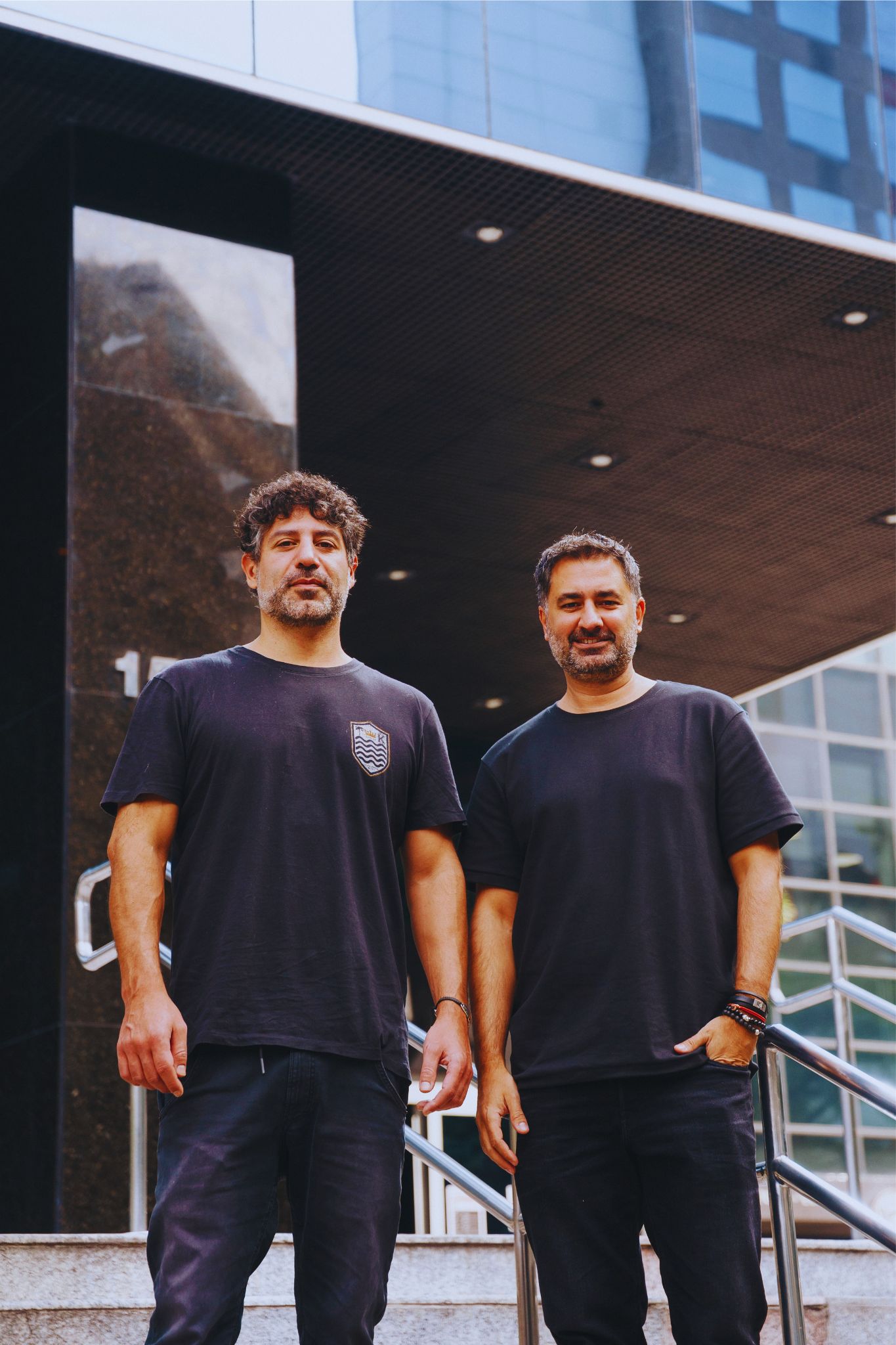
A two-year-old B2B marketplace built by the founders of Trocafone has quietly signed up 20,000 buyers, processed $27 million in GMV, and figured out the one thing that has stopped every other player in this market: how to sell excess inventory without cannibalizing the brands that supply it.
[For more news, click here]
BackChannel co-founders Guillermo Freire and Guillermo Arslanian previously built and scaled Trocafone, one of Latin America's most recognized recommerce platforms.
Every year, manufacturers and major consumer brands across Latin America quietly absorb a cost that almost no one talks about publicly: the write-down of excess inventory. Overruns happen in fashion, in footwear, in beauty, in food. They happen because forecasting is imperfect, because retail orders get cancelled, because a trend moves faster than a production line. The product exists. It is good product, often branded product. And it routinely ends up nowhere useful.
That problem has a new answer. BackChannel, a B2B marketplace founded in 2024 and headquartered in Brazil, has built what it describes as a new-generation platform for the structured commercialization of excess stock, connecting manufacturers and major brands with B2B buyers of every scale, including small and medium-sized businesses that previously had no viable route to acquiring premium inventory at competitive prices. The company presented its model at Web Summit Rio 2026, and the numbers it brought to that stage are difficult to ignore.
In its first operational year, BackChannel recorded $4.8 million in GMV (approximately R$25 million). Its projection for 2026 is $27.3 million (R$150 million). The platform currently serves more than 20,000 B2B buyers and over 100 active large-format sellers. The average transaction ticket is approximately $9,100 (R$50,000), and the platform takes a 12 percent commission on each deal.
The pedigree behind BackChannel matters here. Guillermo Freire and Guillermo Arslanian, the company's co-founders, previously co-founded Trocafone, the recommerce platform that became one of the best-known consumer electronics resale businesses in Latin America. They understand, from direct experience, the operational and trust-layer challenges of building secondary market infrastructure at scale in a region where supply chains are fragmented and institutional mistrust between buyers and sellers can stall even the best ideas.
Their pitch at Web Summit Rio was not a funding narrative. It was a thesis. And it is one that carries some weight in the context of what is actually happening in B2B commerce across the region.
"Latin America has one of the most fragmented supply chains in the world, which has always been seen as a problem. But it is exactly that fragmentation, previously viewed as inefficiency, that creates a unique opportunity to connect supply, demand, and operational intelligence at scale across the region," said Guillermo Freire, co-founder and CEO of BackChannel.
The reason excess inventory marketplaces have struggled to reach meaningful scale is not a demand problem. Small and medium businesses across Latin America want access to branded, quality inventory at prices they can actually work with. The demand has always been there. The supply side is where everything breaks down.
Manufacturers and large brands are structurally reluctant to offload excess stock through secondary channels because of a single, well-founded fear: that the discounted inventory will surface in markets where it competes directly with their authorized distributor network, eroding the pricing architecture they have spent years defending. One brand seeing its own products at 40 percent off in an adjacent channel is not a data problem. It is a relationship problem with consequences that last.
BackChannel's answer to this is technological. The platform uses artificial intelligence for both seller onboarding and price calibration, the specific combination designed to ensure that promotional offers on the platform are structured in ways that do not create channel conflict. The AI layer essentially acts as a guardrail, making it safe for brands to participate without risking the commercial relationships they cannot afford to damage.
That is the unlock. Not the marketplace itself, not the buyer network, not even the brand relationships. The willingness of manufacturers to supply the platform at all is entirely dependent on the credibility of that channel protection mechanism. BackChannel's investment in solving it technically, rather than relying on contractual agreements that are difficult to enforce, is what separates it from earlier attempts in this space.
BackChannel has raised the equivalent of $7.7 million (R$42 million) across two consecutive rounds: $3.1 million (R$17 million) in October 2025, followed by a $4.6 million (R$25 million) seed round led by Sunna Ventures, with participation from Positive Ventures, Norte Ventures, and Accion Ventures. Capital is being directed toward commercial expansion, technology development, and the introduction of financial services including credit solutions for small businesses on the platform.
The category expansion is sequenced carefully. BackChannel launched in fashion and footwear, which makes sense: high volume, strong brand participation, and a large base of small buyers who understand the product. It is now moving into beauty, personal care, furniture, and food. Each category adds supply density and deepens the case for small-business buyers to consolidate their sourcing through the platform rather than maintaining parallel supplier relationships.
The financial services layer is the long game. A marketplace that processes $9,100 average transactions with verified B2B buyers on both sides is sitting on exactly the kind of structured commercial data that makes credit underwriting tractable. Lending to small businesses in Latin America has historically been expensive and inaccessible because the data to assess creditworthiness is thin. BackChannel's transaction history changes that calculus. It is a classic fintech wedge, and the founders have clearly planned for it from the beginning.
The company's category expansion from fashion and footwear into beauty, personal care, furniture, and food reflects a deliberate strategy to build supply density across the platform before introducing financial services for small-business buyers.
For US audiences watching the next generation of B2B platforms emerge globally, BackChannel is worth close attention for reasons that go beyond its impressive early metrics. It is demonstrating something specific: that the most interesting marketplace opportunities of the next decade may not be in creating new demand, but in structuring supply that already exists but has no efficient path to market.
Excess inventory is not a Latin American problem. It is a global one. The fashion industry alone destroys billions of dollars in unsold goods every year. The difference in more developed markets is that the secondary channel infrastructure is more mature, but not necessarily more intelligent. What BackChannel is building, an AI-calibrated, channel-conflict-aware excess inventory network, is a model that travels.
The company is still early. Its projection from $4.8 million to $27.3 million in GMV in a single year is ambitious, and the gap between projection and execution in high-fragmentation markets is real. But the architecture is sound, the founders have done this before in adjacent territory, and the investor syndicate behind the seed round has a track record in Latin American fintech and commerce infrastructure that carries weight.
When Freire stood on Stage 4 at Web Summit Rio and framed Latin America's supply chain fragmentation as the opportunity rather than the obstacle, it was not a rhetorical flip. It was an argument that the market data, and BackChannel's own early numbers, have started to substantiate.
The Founder Community That Kicks People Out to Keep the Room Worth Being In
Europe's Largest Private Tech Provider Is Betting on the Middle East's Infrastructure Moment
Hub71 Welcomes Record AI Startups Strengthening Abu Dhabi Innovation
Related Articles


