

Big Tech
Oct 13, 2026
For more than a decade, Siri has been the most underachieving product Apple ever shipped. It set the alarm. It played the song. It told you the weather in a city you were not in. And for years, that was more or less enough. Then came the large language model era, and suddenly the gap between what Siri could do and what people expected of an AI assistant became impossible to ignore.
[For more news, click here]
This week, at Apple's annual Worldwide Developers Conference in Cupertino, the company is making its most direct attempt yet to close that gap. Thousands of developers from roughly 60 countries have descended on Apple's Silicon Valley headquarters for an event that is, more than any other WWDC in recent memory, not really about software. It is about survival in the AI era.
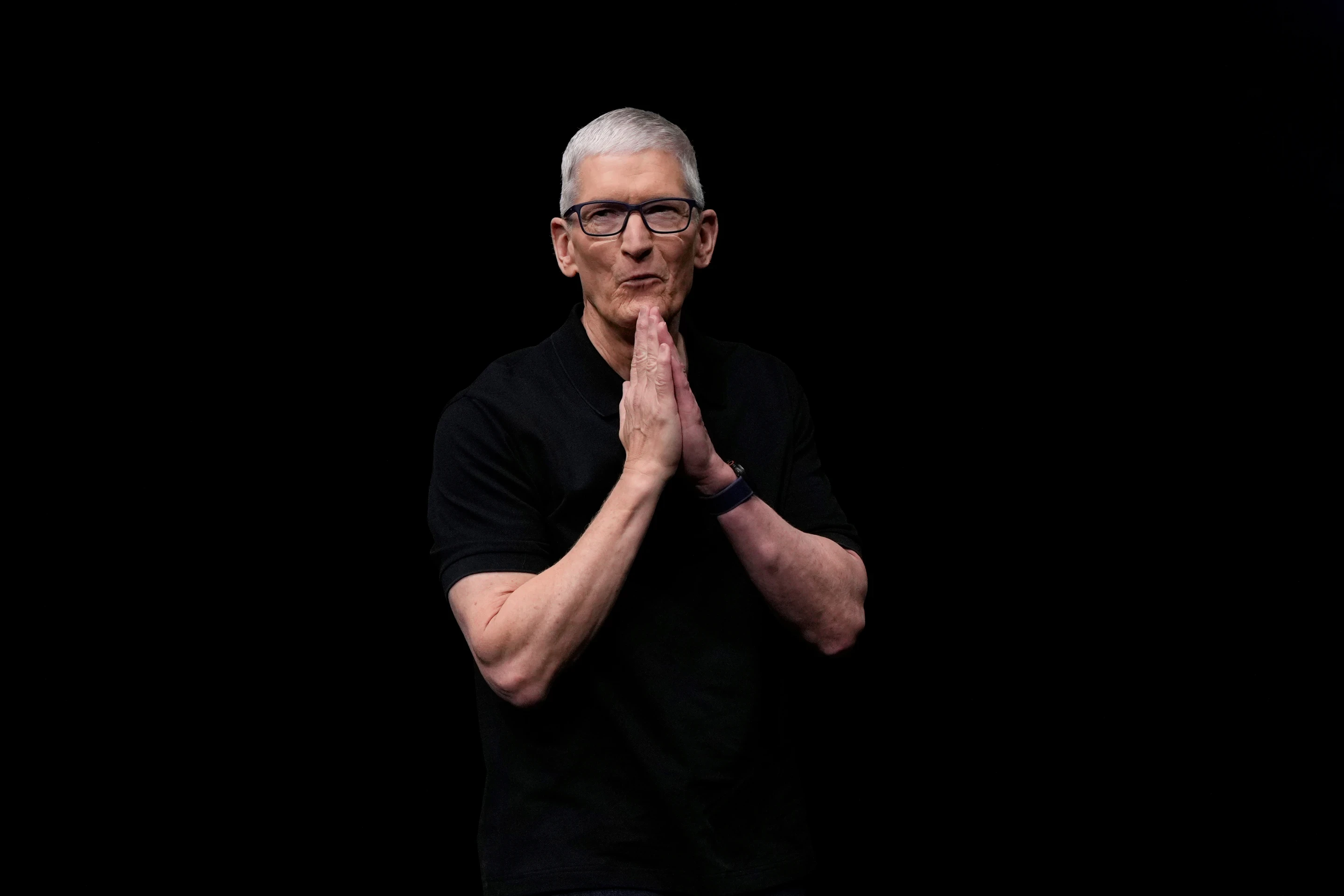
The timing is layered with significance. Tim Cook, who announced his retirement in April after a 15-year tenure that lifted Apple's market value by more than four trillion dollars, is attending his final WWDC as CEO. His successor, John Ternus, who spent the past five years overseeing the engineering underpinning the iPhone, iPad, and Mac, steps into the role in September. The handover comes at precisely the moment when artificial intelligence has become the defining battleground of the technology industry, and Apple finds itself with more ground to recover than it has faced since the pre-iPhone era.
The company's AI journey over the past two years has been, in polite terms, rocky. Features that were announced with considerable fanfare in 2024 arrived late, arrived incomplete, or did not arrive at all. The upgraded Siri that Apple promised nearly two years ago is only now, according to multiple reports, close to something developers and consumers can actually use. Even at WWDC, there is a possibility that the new Siri ships with a beta label attached, a signal that the work is ongoing even as it is unveiled.
What Apple is building, based on analyst expectations and pre-conference reporting, is less an incremental update and more a fundamental reimagination of what the voice assistant is supposed to be. Emarketer senior analyst Gadjo Sevilla described 2026 as "a transition year" for the conference, but was careful to frame what that transition actually involves.
"While hardware products are rarely launched at a developer show, we could see hints of Apple's expansion into foldables, wearables, and smart home products by way of developer and ecosystem updates," Sevilla said.
On the question of Siri specifically, his expectations are high. Sevilla anticipates the assistant will be reimagined as a proper AI chatbot, one that can hold conversations across sessions, remember what was discussed previously, and handle multiple tasks within a single request. That is a substantial departure from the transactional, command-and-response model that Siri has operated on for most of its existence.
"An upgraded, agentic version of Siri — capable of managing conversations and tasks across iPhones, Macs, and iPads — could become as ubiquitous as features like AirDrop and Handoff, which already unify Apple's ecosystem," Sevilla said.
The more architecturally interesting story is how Apple is approaching the AI capability gap. Rather than trying to build every component in-house, the company has made a series of deliberate partnerships that reflect a pragmatic calculation: catching up quickly matters more than owning the entire stack.
Apple currently uses Google's Gemini model to help power certain AI features. Reports ahead of WWDC suggest the company is also planning to open Siri to third-party AI models, allowing developers to choose from options including OpenAI, Anthropic, and Google's Gemini within their applications. The approach mirrors, in many ways, Apple's longstanding search deal with Google, where the company chose integration over competition in a domain it did not intend to own outright. The AI infrastructure powering the upgraded Siri is expected to run partly on Nvidia's Blackwell B200 data centre GPUs supplied through Google's cloud systems, with on-device processing handling queries where privacy and speed are prioritised.
This is not a company ceding ground. It is a company choosing where to compete. Apple has always understood that its strongest position is at the level of the user experience, the hardware and software integration that makes a feature feel native rather than bolted on. The bet is that the same philosophy applies to AI: let others build the underlying models, and focus on making the interaction feel like Apple.
Ternus arrives as CEO with an unusually strong mandate. Twenty-five years at the company, the last five spent deep inside the engineering that defines Apple's flagship products, gives him a technical credibility that few incoming chief executives can claim. The challenge he inherits is not one of product quality in the traditional sense. Apple's devices remain best-in-class across almost every metric that hardware reviewers measure. The challenge is narrative: convincing consumers, developers, and the market that Apple belongs in the same conversation as the companies that have moved fastest in the AI era.
WWDC is his first major stage, even if he is not yet officially in the role. What happens this week will set the tone for how the Ternus era begins, and whether Apple's AI reset lands as a genuine turning point or another round of promises to be revisited at the next conference.
Cook's legacy is one of extraordinary commercial discipline. He turned a brilliant product vision into a machine that generated wealth at a scale the technology industry had never seen. The AI era requires something different: speed, iteration, and a willingness to ship things that are not yet perfect. Whether the new Siri, launching potentially in beta, with third-party model partnerships and cloud infrastructure it does not own, represents that shift is the question that WWDC 2026 will begin to answer.
The button on your phone is about to mean something different. Apple is betting that, after two years of stumbles, this is the version that sticks.
Salesforce Q1 FY2027: What the Numbers Say About Enterprise AI's Next Chapter
Nvidia Q1 FY2027 Earnings: The AI Infrastructure Story That Is Reshaping Global Tech
Why YouTube's FIFA World Cup Deal Could Signal the Beginning of the End for TV Broadcasters
Related Articles


