MENA News
Sep 30, 2026
MENA News
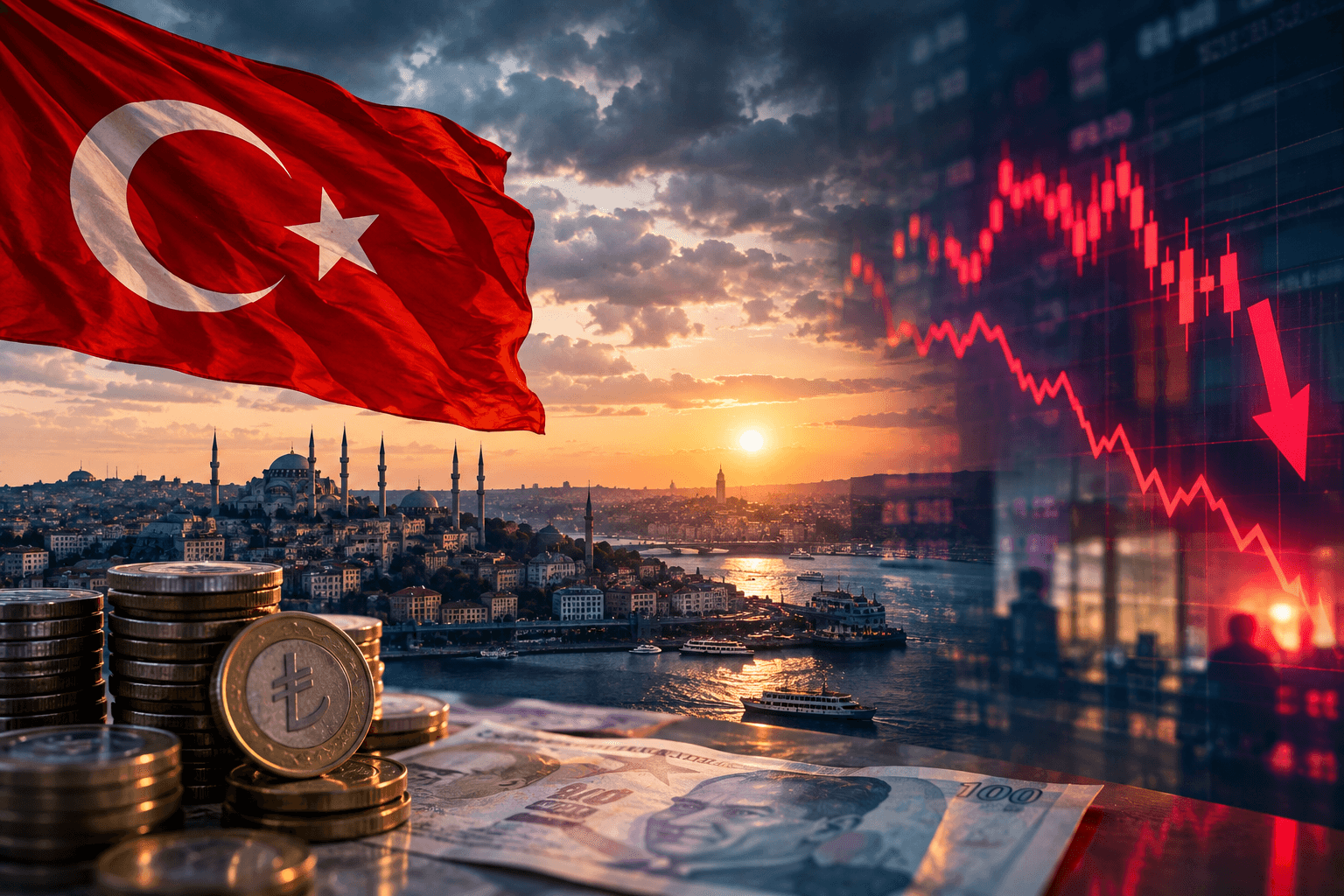
Turkey’s main stock index had its worst month since 2008 in September after regulators ordered 131 investment funds holding more than $20 billion to be liquidated amid a market manipulation probe. Investors are now getting partial payouts, and a separate survey shows Turkish manufacturing shrank again in September as the war in the Middle East pushed up costs and hit orders.
[For more news, click here]
In 2025, a hedge fund run by Tera Portföy reported a return of 4,233%, according to an account of the crisis by the Turkish news site Bianet, in a year when Istanbul’s main share index rose 14.6%. The number of people holding the fund went from 11 to more than 43,000.
Tera’s funds are now among 131 that Turkey’s Capital Markets Board, known as SPK, ordered liquidated on 17 September. Together they managed more than $20 billion for 455,758 retail investors, and the fallout dragged Borsa Istanbul’s main index into a bear market by the end of the month.
Turkey’s factories also had a weak September, with S&P Global saying on Thursday that its Turkey Manufacturing Purchasing Managers’ Index fell to 47.9 from 48.1 in August as companies blamed the war in the Middle East for weaker orders and higher costs.
The funds at the center of the investigation bought large stakes in thinly traded companies, in some cases a quarter or more of a company’s shares, according to Bianet. Their buying pushed prices up, the higher prices lifted the funds’ reported returns, and those returns brought in more savers, whose money went into more buying.
That cycle started to break in late August, when SPK limited how much of a fund’s assets could be concentrated in individual companies. The selloff picked up speed on 14 September over worries about funds heavily exposed to illiquid stocks. Analysts allegedly spoke about how some funds were forced to sell their more liquid holdings to meet redemption requests, which pulled down the wider market and set off more withdrawals.
The BIST 100 index closed down 2.79% on Wednesday, more than 20% below its 11 May record close, and ended September down 16.65%. In the week to 18 September it fell more than 8%, its worst week since March 2025, when the jailing of Istanbul Mayor Ekrem Imamoglu set off a sharp selloff.
An index of the 484 stocks outside the top 100, which had beaten the benchmark since the start of 2025, fell roughly 35% in September, its worst month in lira terms since it was launched in 2009, and smaller companies took far heavier losses than the market’s biggest names. The blue-chip top 30 lost 9.8%. Among the 70 stocks that make up the rest of the top 100, 15 lost between 50% and 90% of their value during the month, according to LSEG data, even though Istanbul caps daily losses on individual shares at 10%.
Regulators have also widened their investigation into alleged manipulation in stocks and funds, and Justice Minister Akin Gurlek said on Wednesday that the number of suspects had risen to 217, with 56 jailed pending trial, as of publication.
SPK said on Thursday it would make interim payments to investors in liquidated funds run by Tera Portföy, Pusula Portföy, Atlas Portföy, and Hedef Portföy. Anyone whose net investment is below 1 million lira, about $20,400 at the current rate of roughly 49 lira to the dollar, will get all of it back, while those with more will receive 1 million lira for now. The payments will start with money market funds, the regulator said.
A PMI reading below 50 means activity is shrinking, and Turkish manufacturing conditions have now weakened month after month for two and a half years. In September, input cost inflation hit a four-month high as fuel, oil, and transport costs rose with the conflict. New orders slowed again, export orders eased as demand abroad stayed weak, and manufacturers cut jobs, purchasing, and inventories. Delivery times grew longer as well, with sea freight delays and material shortages adding to the disruption.
The average PMI reading for the third quarter came in slightly above the second quarter’s, which suggests “some tentative signs of recovery,” said Andrew Harker, Economics Director at S&P Global Market Intelligence.
Partial Payouts for Fund Investors
SPK said on Thursday that investors in funds run by Tera Portföy, Pusula Portföy, Atlas Portföy, and Hedef Portföy would start getting money back, beginning with money market funds. Anyone whose net investment is under 1 million lira, about $20,400, gets the full amount, while larger investors get 1 million lira and wait for the rest as the liquidation continues.
DeepSeek Taps CITIC Securities to Prepare a Shanghai IPO as Chinese AI Firms Rush to List
Exclusive: Why Saudi Arabia’s Tech Growth Can’t Be Measured by Funding Alone
Anthropic’s IPO Filing Details Losses, Founder Control, and AI Safety Risks
Related Articles