

AI
Oct 16, 2026
A new joint platform called SUSE AI Factory promises to make deploying AI in regulated, security-sensitive industries less of a nightmare, and the timing couldn't be more critical.
[For more news, click here]
For most large enterprises, the promise of artificial intelligence has arrived faster than the infrastructure to support it. Data science teams build impressive demos in sandboxed environments, executives greenlight ambitious AI roadmaps, and then everything stalls somewhere between the proof of concept and the production server. The culprit is almost always the same: a messy tangle of security requirements, compliance obligations, fragmented tooling, and the basic challenge of getting AI systems to run reliably at scale without handing sensitive data over to a third party.
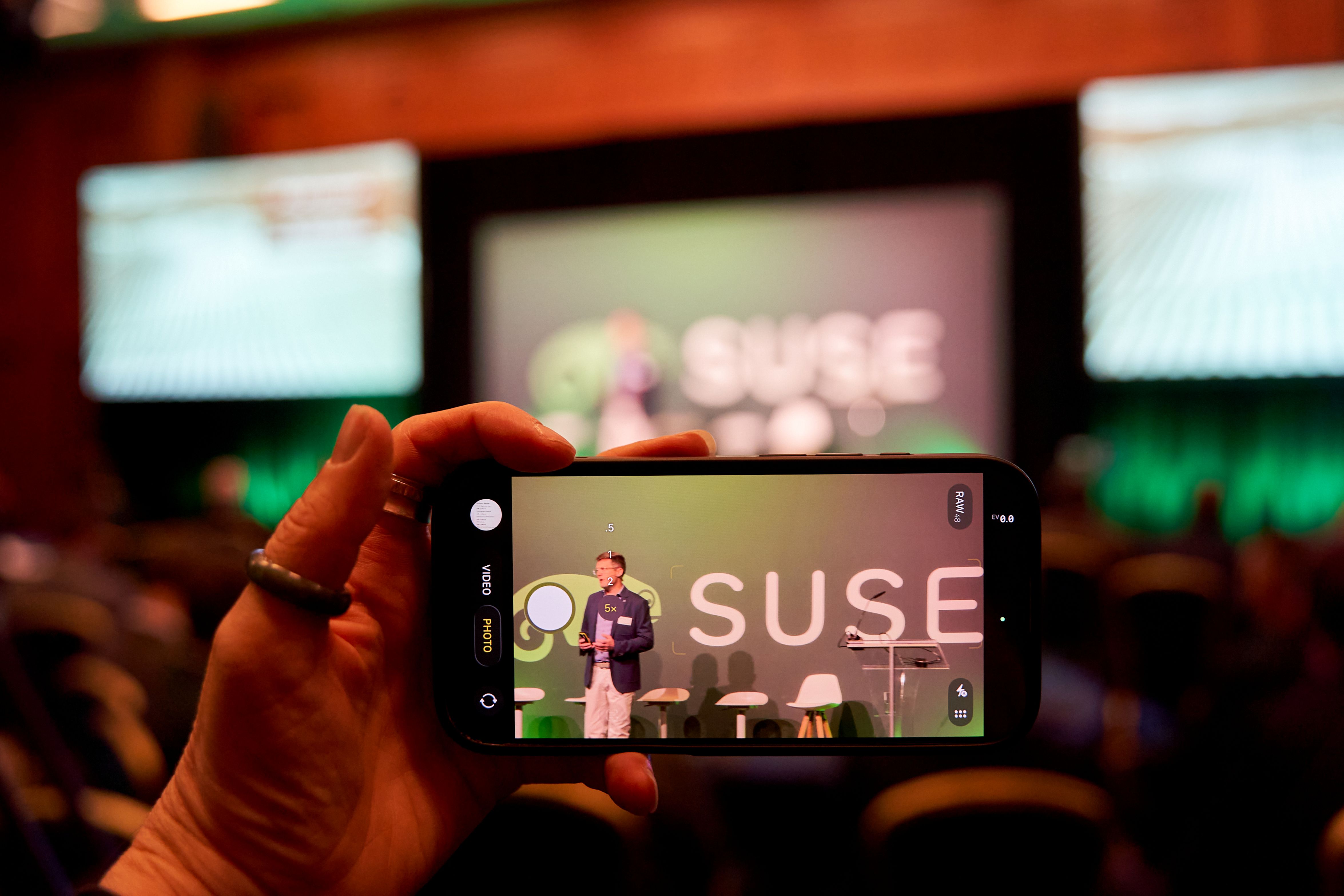
That gap between AI ambition and AI reality is exactly what SUSE, the Germany-based open source software company, is trying to close with its newly announced SUSE AI Factory with NVIDIA. Unveiled at SUSECON 2026 in Prague, Czech Republic, the platform represents one of the more comprehensive attempts yet to give enterprises a single, integrated software stack for building, deploying, and managing AI applications, from the edge of a factory floor all the way to a core data center or public cloud.
The announcement is significant not just for what the platform does, but for what it signals about where enterprise AI infrastructure is heading.
The challenge facing large organizations is not a lack of interest in AI. It is a lack of confidence that AI can be deployed safely, predictably, and in compliance with the growing web of regulations now governing data use and algorithmic decision making.
In Europe, the EU AI Act has introduced sweeping new obligations for companies deploying high-risk AI systems. In regulated sectors like finance, healthcare, and defense, the rules are even stricter. Organizations operating in these spaces cannot simply pipe sensitive data to an external model hosted on someone else's cloud. They need control over where their data lives, how their models behave, and who can audit the entire process.
At the same time, the pressure to actually ship AI products is intense. IDC projects that by 2028, 60 percent of Global 2000 enterprises will operate what it calls "AI factories" as core infrastructure, and that those organizations will deploy AI five times faster than those without such setups. The race is on, and the companies that figure out the operational side of AI fastest will hold a meaningful competitive advantage.
This is the tension SUSE AI Factory is designed to resolve.
At its core, SUSE AI Factory is a full-software stack that standardizes how AI applications are assembled and run inside an enterprise. Think of it less like a single product and more like a blueprint factory — one that gives organizations pre-validated, tightly integrated architectural templates for common AI workloads, so teams do not have to reinvent the wheel every time they want to spin up a new application.
The platform combines SUSE's existing infrastructure strengths, particularly its Rancher Prime Kubernetes management platform and its hardened Linux distribution, with a suite of NVIDIA's most advanced AI software. That includes NVIDIA NIM microservices for deploying optimized AI models, NVIDIA NeMo for building and managing AI agents, NVIDIA Run:ai for GPU orchestration, and the NVIDIA OpenShell secure runtime. The stack also incorporates NVIDIA NemoClaw and open Nemotron models, with components that leverage SUSE's own K3s lightweight Kubernetes technology to enable more secure autonomous AI agents.
The result is a platform that handles the full lifecycle of an AI application. Developers can build and test in a sandbox environment. Platform teams can then push to production through either a Rancher-based management interface or automated GitOps workflows — meaning deployments can be version controlled, audited, and rolled back just like code. The entire process is meant to reduce the setup time and operational overhead that currently makes enterprise AI so expensive and slow.
"AI developers, users and operations teams are in a catch-22 with AI, they want to innovate quickly but must secure these types of workloads, agents and processes, to ensure full auditability before fully running them in production," said Thomas Di Giacomo, Chief Technology and Product Officer at SUSE. "SUSE AI Factory with NVIDIA gives them a one-stop solution for end-to-end stability, security and sovereignty, while benefitting from today's and future AI innovation."
Of all the features SUSE is highlighting, digital sovereignty may be the most consequential for enterprise buyers, particularly those operating outside the United States.
The term refers to an organization's ability to maintain control over its own data, infrastructure, and algorithms rather than ceding that control to external cloud providers or software vendors. For European companies navigating the EU AI Act, for government agencies handling classified or sensitive citizen data, and for businesses in sectors with strict data residency requirements, sovereignty is not a nice-to-have. It is a prerequisite.
SUSE AI Factory addresses this directly by allowing organizations to deploy NVIDIA's latest AI technology within their own private infrastructure, keeping sensitive logic and proprietary data on premises or in air-gapped environments. The platform extends zero-trust security frameworks to AI workloads, wrapping NVIDIA deployments in governance controls that make the underlying infrastructure more predictable and auditable.
"Enterprise adoption of AI is accelerating, creating demand for infrastructure that ensures data control and governance for regulated workloads," said John Fanelli, Vice President, Enterprise Software at NVIDIA. "Our collaboration with SUSE addresses this requirement by delivering an open, full-stack AI Factory built on a foundation of security and sovereignty."
The platform also addresses a practical pain point that often goes unmentioned in AI announcements: support. When something goes wrong in a complex multi-vendor AI stack, organizations frequently find themselves bouncing between vendors trying to figure out who owns the problem. SUSE is positioning itself as a single point of accountability across the entire stack, including the NVIDIA components, which could prove meaningfully valuable for enterprise buyers who have been burned by that kind of support fragmentation before.
Fujitsu subsidiary Fsas Technologies Europe has signed on as a launch partner, and its endorsement offers a window into why enterprises are drawn to this kind of integrated approach.
"Businesses are ready to use AI, but they need confidence that their data remains under control," said Udo Würtz, Chief Technology Officer at Fsas Technologies Europe. "As a launch partner, SUSE AI Factory provides a stable, prescriptive foundation to combine NVIDIA's unmatched computing power and AI platform with SUSE's secure, open source infrastructure. By easing the integration, the unified solution allows us to focus on applying Fujitsu's industry-leading expertise in delivering a sovereign, end-to-end solution that meets the strictest data governance standards."
That framing, confident data control enabling faster deployment, is likely to resonate broadly. Enterprises are not looking for more AI tools. They are looking for confidence that the tools they have will actually work in the real world, at scale, without creating new regulatory exposure.
A preview of SUSE AI Factory with NVIDIA is being demonstrated at SUSECON 2026 in Prague, Czech Republic, with general availability expected later this year. The platform will be available across deployment environments, from local developer workstations to edge clusters operating in fully disconnected, air-gapped settings.
The broader trajectory here is clear. As AI moves from experimental to operational across industries, the infrastructure layer is becoming as strategically important as the models themselves. The organizations that get their AI factory running smoothly — that can move a new application from concept to production in weeks rather than months, while keeping their data under control and their compliance teams satisfied — will be the ones that actually capture the value that AI promises.
SUSE and NVIDIA are betting that a tightly integrated, sovereignty-first, full-stack platform is the right answer. Given the scale of the problem they are trying to solve, and the urgency with which enterprises need to solve it, the bet looks well-timed.
Related Articles


