

AI
Oct 22, 2026
For years, the cybersecurity conversation in the Middle East focused on using AI to defend networks faster. A new partnership between Al-Futtaim Technologies and AIShield argues that the AI models themselves are now what needs defending.
by Kasun Illankoon, Editor in Chief at Tech Revolt
[For more news, click here]
Here is a phrase that has started appearing in security conversations across the Gulf with increasing regularity: "Security for AI." It sounds like a minor semantic adjustment on the more familiar "AI for Security," but the distinction it encodes is significant. One describes a tool. The other describes an entirely new threat category that most enterprise security architectures were not built to address.
Al-Futtaim Technologies, part of Al-Futtaim Contracting, has announced a strategic partnership with AIShield that positions this distinction as a formal strategic commitment. The collaboration extends Al-Futtaim Technologies' cybersecurity portfolio to cover the security of AI and machine learning systems themselves, protecting the models, pipelines, and generative AI environments that enterprises across the region are now embedding into critical operations. It is, as the company frames it, a deliberate move beyond traditional cybersecurity models and product resale agreements into something more architecturally fundamental.
The timing reflects a genuine shift in the regional threat landscape. As organisations across retail, finance, education, government, and large-scale commercial environments integrate AI into core workflows, they are creating a new class of exposure that conventional security tools were not designed to detect or mitigate.
The premise behind this partnership is worth examining closely, because it challenges a widespread assumption in enterprise security: that protecting the infrastructure an AI system runs on is sufficient to protect the AI system itself. It is not. AI and machine learning models carry their own distinct vulnerability surface, one that can be exploited independently of the network perimeter around them.
The specific attack categories that this partnership is designed to address are illustrative. Model extraction attacks allow adversaries to reconstruct a proprietary model by probing its outputs, effectively stealing intellectual property without ever breaching the underlying infrastructure. Adversarial attacks manipulate model inputs in ways that cause the AI to produce incorrect or harmful outputs, potentially with significant downstream consequences in high-stakes decision environments. Prompt injection exploits vulnerabilities in how large language models process inputs, allowing bad actors to override instructions or extract sensitive information embedded in the model's context.
None of these attack vectors are addressed by a firewall, a SIEM platform, or an endpoint detection tool. They require a fundamentally different category of protection, one that understands how AI models behave, how they can be manipulated, and how to detect when that manipulation is occurring in real time.
What the AIShield integration brings into Al-Futtaim Technologies' portfolio is advanced runtime protection capability: the ability to continuously monitor AI models during live operation, not just scan them during development or testing. This matters because the security posture of an AI model at the point of deployment is not static. The inputs it receives in a production environment are different from those used in testing, and adversarial actors are actively probing for the gaps between the two.
The runtime monitoring layer integrates with the enterprise security ecosystems organisations already have in place, including SIEM, WAF, DLP, SOC, and XDR environments. That integration architecture is deliberate. It avoids creating a parallel security operation specifically for AI, which would increase complexity and cost while fragmenting visibility. Instead, AI model security becomes part of a unified operational picture, observable through the same tools and workflows that security teams already use.
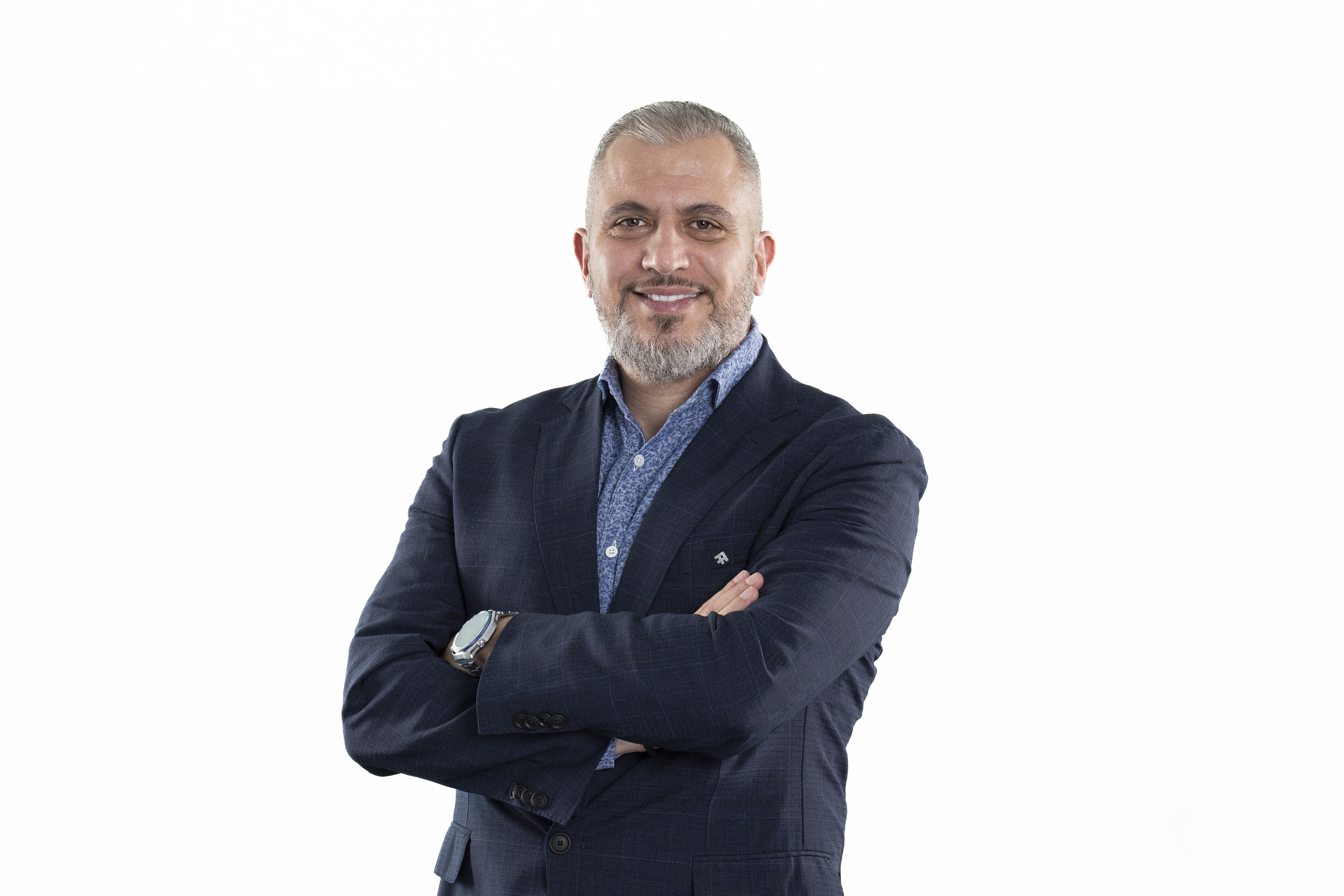
"With AI rapidly becoming embedded across enterprise operations, organisations are facing an entirely new category of cybersecurity risks," said Razi Hamada, General Manager, Al-Futtaim Technologies
"With AI rapidly becoming embedded across enterprise operations, organisations are facing an entirely new category of cybersecurity risks. Through our work with AIShield, we are helping businesses strengthen trust, resilience, and governance across their AI environments by securing the full AI lifecycle, from development to deployment and beyond. This reflects our commitment to staying ahead of evolving cybersecurity challenges while enabling organisations to innovate with confidence."
The phrase "full AI lifecycle" is doing significant work in that statement. Most organisations currently think about AI security in terms of access controls and data governance, protecting what the model can see rather than protecting the model itself. Al-Futtaim Technologies and AIShield are extending that perimeter to cover development, testing, deployment, and ongoing runtime operation. It is a more complete picture of the actual exposure surface.
The partnership also carries a compliance dimension that will become increasingly relevant as AI regulation matures. Organisations operating across the Middle East are navigating a complex and evolving set of governance requirements, and this collaboration is explicitly designed to support alignment with the frameworks that are setting the international standard.
OWASP's AI security standards and the MITRE ATLAS framework for adversarial machine learning provide a practical taxonomy of AI-specific threats and mitigations that security teams can work against. The EU AI Act, meanwhile, is establishing binding requirements for high-risk AI systems that will affect any organisation with European market exposure or multinational operations. Aligning AI security practices with these frameworks now positions enterprises ahead of the compliance curve rather than scrambling to catch up when requirements become mandatory.
For the UAE specifically, this matters in the context of the country's broader positioning as a global hub for AI innovation. A reputation for responsible, secure AI deployment is a strategic asset, not just a compliance checkbox. Enterprises that can demonstrate robust AI governance are better placed to attract investment, win regulated-sector contracts, and build the kind of institutional trust that sustains long-term AI programmes.
Al-Futtaim Technologies operates across a notably diverse set of sectors, covering retail, finance, education, government, and large-scale commercial environments through its "Partners of Possibilities" framework. That breadth gives the company a comprehensive view of how AI adoption is actually playing out across the regional economy, and the risks that are emerging as that adoption accelerates.
The decision to extend its cybersecurity portfolio into AI model security is a response to what it is observing across that client base. As organisations move from AI pilots to embedded, mission-critical deployments, the question of how to secure the AI itself is becoming unavoidable. The partnership with AIShield gives Al-Futtaim Technologies the capability to address that question directly, with a technical integration that works within existing enterprise security architectures rather than requiring organisations to build a separate security layer from scratch.
The broader argument this partnership makes is one the industry has been slow to internalise: that the arrival of AI in enterprise operations does not just change what security tools can do. It changes what needs to be secured. The organisations that recognise that distinction early, and build their security posture accordingly, are the ones that will be able to scale AI adoption with confidence rather than managing an accumulating backlog of model-level risk. In the Middle East, where that scaling is already well underway, the window for getting the architecture right is now.
CPX Holding Rebrands as UAE Cybersecurity Moves from IT Function to National Priority
Liferay AI Hub Gives Middle East Enterprises a Low-Code Path to Governed AI Agent Deployment
UAE Organisations Show Stronger Resilience Against Cyber Attacks
Related Articles


