

Sep 29, 2026
Abu Dhabi Hackathons Test Developer Judgment as AI Coding Agents Go Mainstream
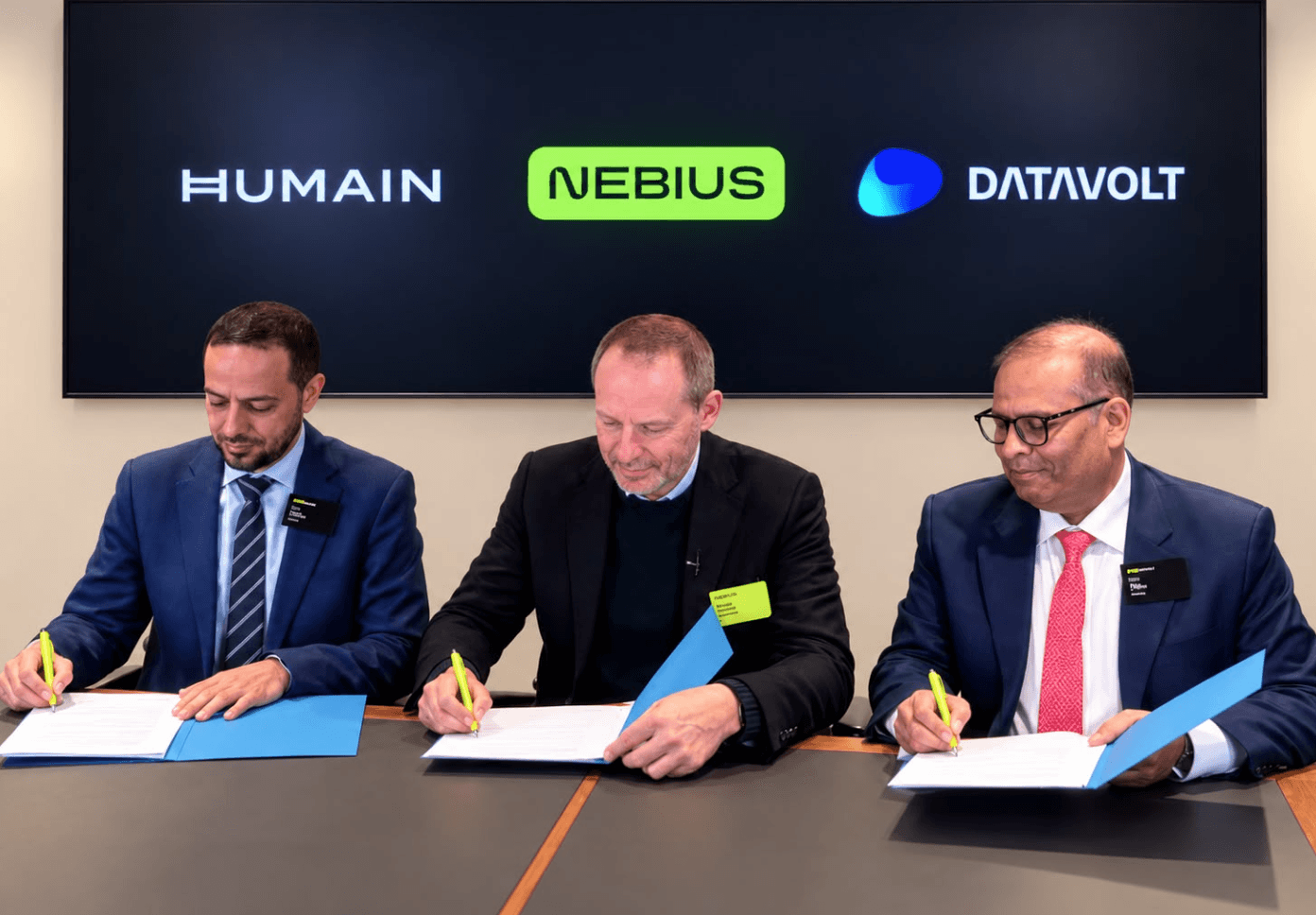
The proposed agreement brings a potential international customer into Saudi Arabia’s expanding AI infrastructure market, six weeks after construction began on the first phase of the planned campus.
[For more news, click here]
HUMAIN and DataVolt have reached a preliminary framework agreement with Nebius for up to 50 megawatts (MW) of AI data center capacity at Oxagon, NEOM’s industrial development on Saudi Arabia’s Red Sea coast. Announced on October 21, the proposed allocation would make Nebius the campus’s first customer and account for half of the initial 100 MW currently under construction. The companies expect the allocated capacity to become operational in phases from the fourth quarter of 2027, although they have not disclosed the financial value or final commercial terms of the arrangement.
The timing puts the agreement at an important stage in the project’s development. HUMAIN and DataVolt announced the start of construction on August 31, with the initial facility forming part of a planned 360 MW first phase. Bringing Nebius into the picture six weeks later gives the developers a prospective customer as work progresses, rather than leaving the question of demand until the facility is ready.
Nebius Adds a Potential Source of Demand
Nebius operates an AI cloud platform that provides computing resources to businesses developing and running AI systems. Under the proposed arrangement, the company is expected to deploy NVIDIA-powered infrastructure at Oxagon to support its cloud services. Access to the planned capacity could expand its infrastructure footprint while giving HUMAIN and DataVolt an international customer with a direct need for large-scale computing resources.
The arrangement also fits Nebius’s broader approach to expanding its cloud capacity. In July, the company outlined a partnership model under which external partners finance, own, and operate AI data centers, while Nebius supplies its technology platform and brings the resulting computing capacity to market. The company said the model would allow it to expand available capacity without funding every facility itself. The financial and operating structure of the Oxagon agreement has not been disclosed, so it is not yet clear whether the same model will apply.
For DataVolt, the work ahead involves delivering infrastructure that can support the demands of AI cloud computing. High-density workloads require substantial power, specialized cooling, reliable networking, and computing equipment capable of operating at scale. Having a prospective customer identified during construction may help the partners plan deployment around expected requirements, but the commercial outcome will depend on the final agreement and delivery of the facility.
A Commercial Milestone for Saudi Arabia’s AI Plans
The project is part of Saudi Arabia’s broader effort to build an AI industry that extends from data center infrastructure to cloud services and applications. HUMAIN, backed by the Public Investment Fund, is developing capabilities across the AI stack, while DataVolt focuses on developing, owning, and operating digital infrastructure. At Oxagon, their plans extend well beyond the first facility: the initial 100 MW is part of a 360 MW first phase, while the wider campus is planned to reach 1.5 gigawatts.
Oxagon’s industrial land, energy resources, and subsea connectivity to Europe and Africa are among the features intended to support large-scale computing operations. Yet the project’s commercial prospects will also depend on attracting businesses prepared to use that capacity. Data centers require substantial upfront investment, and their long-term economics depend on the relationship between construction costs, operating expenses, utilization, and customer commitments.
Nebius’s proposed allocation provides an early indication of potential demand, but it does not establish how much capacity the company will ultimately use or how much revenue the campus could generate. There is also a timeline detail to watch: the October framework announcement anticipates phased operations from the fourth quarter of 2027, while NEOM’s August construction announcement said the initial 100 MW was expected to be available in 2028.
The immediate priorities are to finalize the commercial terms and deliver the planned infrastructure. For Nebius, the agreement could provide additional computing capacity for its AI cloud business; for HUMAIN and DataVolt, it offers a prospective customer as they develop the larger campus. The next stage will show whether the preliminary framework translates into a firm commitment and capacity that can be brought into service on schedule.
Related Articles
HUMAIN Expands MIS AI Data Center Project to 250 MW
Saudi Arabia Is Building the Infrastructure Behind Its AI Ambitions at LEAP 2026
Gulf Service Providers Expect AI Network Services to Drive New Revenue, Ciena Survey Finds
Related Articles