

AI
Oct 23, 2026
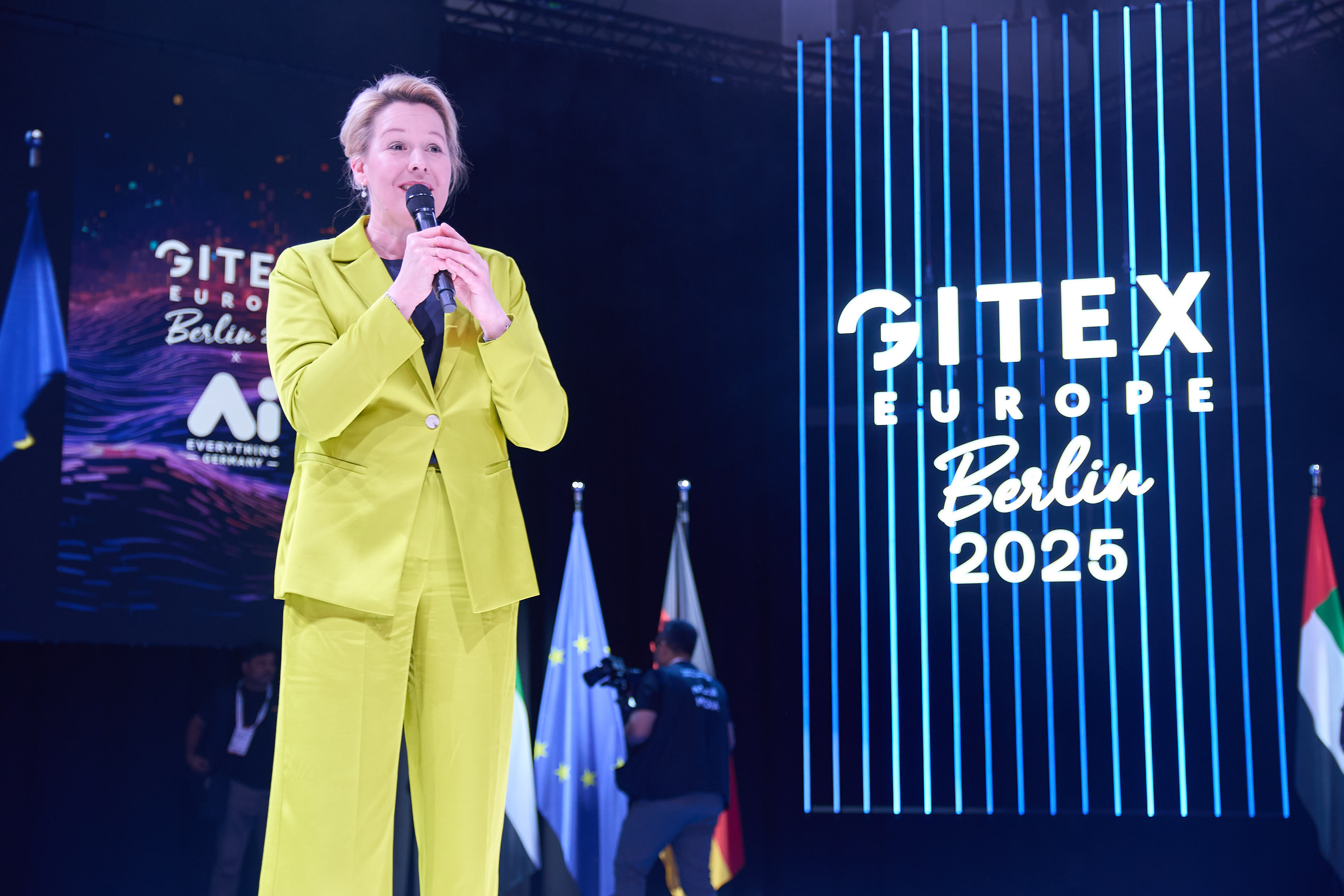
From €169 billion in startup ecosystem value to a trillion dollars in investor capital converging on Messe Berlin this June, Europe's second GITEX AI EUROPE is less a tech event than a geopolitical statement about who builds the intelligence economy next.
[For more news, click here]
There is a question that serious technologists across Europe have been circling for the better part of three years, and it is not about which large language model is smartest or which chip is fastest. It is a harder question, and a more political one: who controls the infrastructure that intelligence runs on? When the second edition of GITEX AI EUROPE opens at Messe Berlin on 30 June 2026, that question will move from policy white papers into the rooms where investment decisions actually get made.
The event, organised by inD, the international arm of the world's largest tech event network, and supported by the Berlin Senate Department for Economics, Energy and Public Enterprises and Berlin Partner for Business and Technology, is not a replica of GITEX Global transplanted to Central Europe. It is something more deliberate: a platform built specifically for the moment when Europe transitions from consuming AI to governing and producing it.
The choice of Berlin is not incidental. According to the Dealroom 2025 Report, the German capital commands €169 billion in startup ecosystem value, is home to 57 unicorns, and has assembled more than 9,000 AI professionals, the fourth-largest AI talent pool in Europe. Those are not vanity metrics. They are the evidence base for a city making a credible argument that frontier technology can be built here at scale, under European governance, without Silicon Valley's supply chain or China's state direction. Franziska Giffey, Berlin's Vice Mayor and Senator for Economic Affairs, Energy and Public Enterprises, put it plainly:
"As one of Europe's leading innovation hubs, Berlin brings together world-class research, a dynamic startup scene, established industry and international talents. Hosting GITEX AI EUROPE strengthens Berlin's position as a gateway for investment, technological collaboration and sustainable economic growth. At the same time, it provides a unique platform to shape a European digital future that combines innovation with security and technological sovereignty."
That phrase, technological sovereignty, is doing significant work in European policy circles right now. It is the term governments reach for when they want to say, without sounding protectionist, that they intend to have meaningful control over the digital infrastructure their economies depend on. GITEX AI EUROPE 2026 is designed to be the event where that ambition meets operational reality.
The exhibitor lineup at this year's event reads as a register of the companies that have understood where enterprise AI is actually going. AWS, Cloudflare, HPE, Red Hat, Salesforce and ManageEngine anchor a show floor that spans 950 enterprises and startups from more than 80 nations. For the first time, national tech pavilions from Austria, Canada, Greece and Japan will make GITEX AI EUROPE the most internationally diverse tech showcase on the European continent.
Germany's own industrial depth is front and centre. BASF, the world's largest chemical company and a significant force in advanced materials for electronics and semiconductor industries, and Bosch, the global engineering conglomerate, represent the incumbent industrial economy's stake in the AI transition. Their presence alongside DeepL, the Cologne-based AI translation company widely regarded as the most accurate in the world, makes an argument about what European AI actually looks like when it is built for real enterprise conditions rather than benchmark performance.
Leonardo Doin, Head of Voice at DeepL, framed the company's participation in terms that cut to the core of the event's broader thesis:
"Language is still the largest invisible barrier in global business, and DeepL Voice is built for the complexity global enterprises face: high-stakes conversations, multiple languages, zero tolerance for mistranslation. At GITEX AI EUROPE, we're looking forward to showing what European AI looks like when it's built for global scale."
The Policy Conversation That Makes This Different
What separates GITEX AI EUROPE from the standard enterprise tech event calendar is the degree to which government leaders are participating not as keynote decorations but as active participants in the debate about infrastructure decisions. Germany's Federal Minister for Digital Transformation and State Modernisation, Dr. Karsten Wildberger, will take on the questions European policymakers have been avoiding: whether the continent can regulate, power and connect data infrastructure fast enough to make sovereign AI ambitions real rather than aspirational. His perspective on the matter is worth noting:
"To become more sovereign, we must not copy what other players can do better but focus on our own strengths and potential. Germany has a strong industrial base with comprehensive know-how and industrial data. This, and the fact that we are building new compute infrastructure, will help secure our economic and industrial growth and competitiveness."
That positioning matters because it identifies something the European AI debate often sidesteps: that sovereignty is not achieved by restriction but by investment. Germany's industrial data advantage, accumulated over decades of manufacturing expertise, is a genuine asset in the AI economy. The question is whether the infrastructure to leverage it can be assembled quickly enough.
The conference programme, which spans 70-plus hours of content across three stages, is designed to force that question into operational specificity, covering compute and data capacity, energy readiness, the development of local hyperscale models, and the high-impact use-cases that will determine whether European AI finds paying customers at scale.
Perhaps the most concrete signal of where GITEX AI EUROPE sits in the global funding ecosystem is the investor roster attending this year's edition. The North Star Europe programme, which presents 500-plus startups across quantum security, industrial AI and deep tech, will connect those companies with 600-plus investors managing US$1 trillion in assets. Among them are KfW Capital, which has invested €2.5 billion across 132 European venture capital funds, and UniCredit, the pan-European banking institution with US$865 billion in total assets.
These are not peripheral participants. They are the institutions that will determine which European AI companies get the capital to build infrastructure at a scale that can compete globally. Their presence in Berlin at the end of June is a statement about where they believe the next cycle of AI investment is concentrated.
The unicorn leadership headlining the AI Power Play conference agenda adds a further dimension. Niklas Ostberg, CEO of Delivery Hero, the German-born global delivery platform generating nearly €15 billion in annual revenue across 70-plus countries, brings the perspective of a company that has already navigated the transition from European startup to global enterprise. Ryan Foutty, VP of Business at Perplexity, the $20 billion AI orchestration company backed by NVIDIA, Jeff Bezos and Yann LeCun, will bring the argument about where AI interfaces are heading. Foutty's read on the market is worth taking seriously:
"Search has been largely unchanged for the last 30 years. When we set out to turn the search engine into the answer engine, it was widely unpopular. Now, people see the vision we had. The next step and natural evolution of the answer engine is the action engine, which is an interface where agents can do real work on your behalf. At GITEX AI EUROPE, I'm looking forward to discussing how enterprises can move beyond the pilot phase and make AI the default surface for how work gets done."
The second edition of any event is always more revealing than the first. Inaugural editions run on novelty and ambition. Second editions run on evidence: who came back, who sent senior people instead of communications teams, and whether the conversations produced actual decisions. GITEX AI EUROPE's 2026 numbers, 950 enterprises and startups, 600-plus investors, more than 150 speakers from over 80 nations, and a European tech market forecast to surpass €1.5 trillion in value in 2026, suggest the evidence is positive.
The event that opens in Berlin on 30 June is not a celebration of what European AI has already achieved. It is a working session on what the continent needs to build next: the compute infrastructure, the governance frameworks, the cross-border partnerships and the patient capital that transforms momentum into durable market position. Berlin has the startup density, the political will and, as of this summer, the world's attention.
Whether that is enough to close the gap with the United States and China is a question the next decade will answer. But the conversation, finally, is happening in the right rooms with the right people in the room.
Europe's Largest Private Tech Provider Is Betting on the Middle East's Infrastructure Moment
Related Articles


